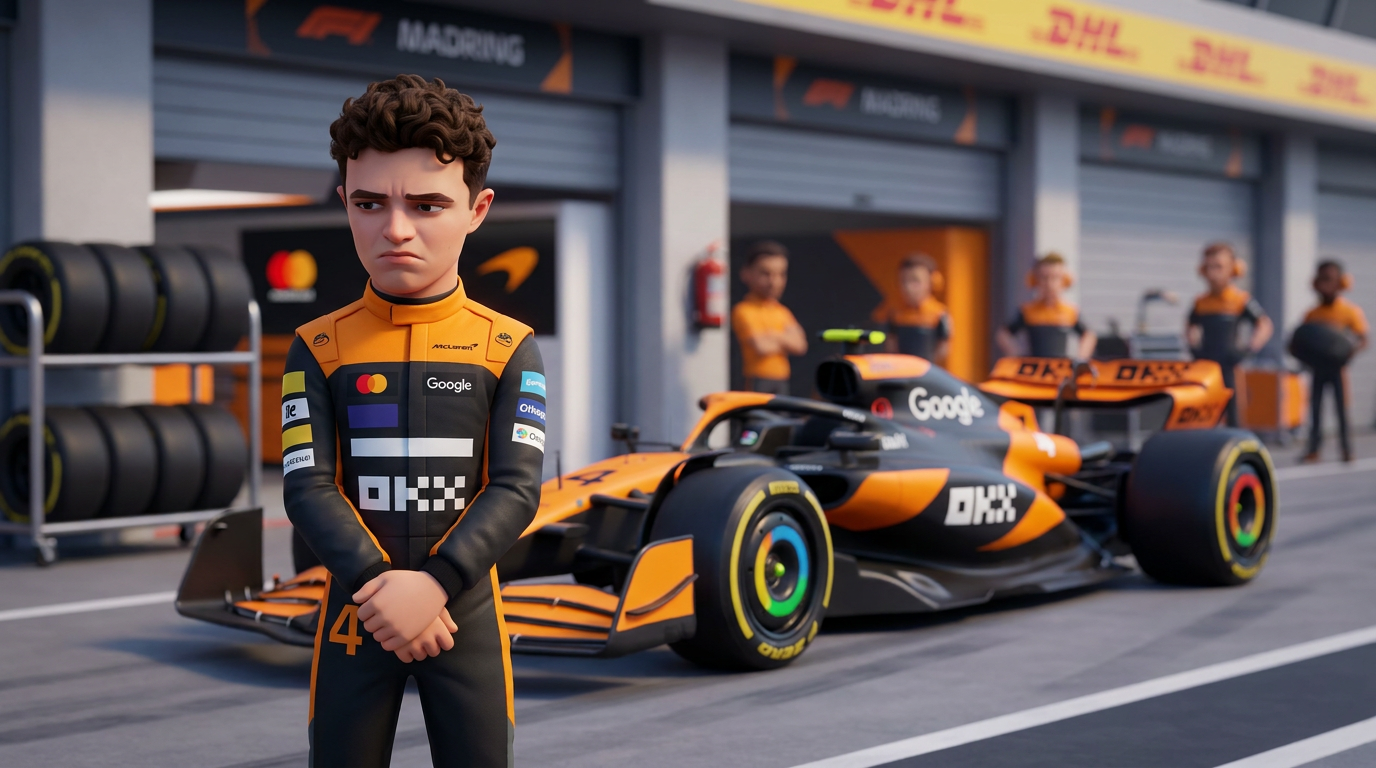
Lando Norris lost the Spanish Grand Prix after a VSC gave Kimi Antonelli a cheaper pit stop. F1 should close the loophole with a temporary pit-lane freeze.
Lando Norris controlled the Spanish Grand Prix on Sunday, September 13, until a Virtual Safety Car gave Kimi Antonelli a cheaper trip through the pits, turning a likely McLaren victory into the Mercedes driver's eighth win of 2026. Antonelli did nothing wrong. Formula 1's rules did.
Madrid exposed an old weakness
The Virtual Safety Car slows the field without gathering every car behind a physical Safety Car. Drivers must stay above a prescribed time delta, preserving the gaps between competitors on track.
That protection disappears when a driver enters the pits.
At Madring, the intervention's timing suited Antonelli's strategic sequence and cost Norris the lead. Norris called the situation “unfair” and demanded a rules change. We agree. A safety procedure shouldn't hand one competitor a decisive pit-stop discount because of the exact moment race control presses a button.
Antonelli earned the available result
This isn't an argument against Antonelli. He took Mercedes' opportunity and left Spain with 292 points, holding an 81-point championship lead over teammate George Russell. His victory was valid under the regulations.
Legality, though, doesn't make the mechanism fair.
Any neutralization can affect a race. Drivers may lose tire temperature, teams may adjust strategy, and existing gaps can move slightly. The issue arises when entering the pit lane turns a safety intervention into an outsized competitive advantage. Norris' work before the VSC then counts for less than fortunate timing.
A pit-lane freeze is the cleanest answer
Formula 1 should briefly close the pit lane at the start of every VSC, with exceptions for damaged cars or genuine safety concerns. Race control would announce the closure alongside the VSC, then reopen the lane once the field had settled to the required delta.
That would remove the immediate lottery while still allowing later strategic changes. The rule would also be easy for spectators to follow. With the pit lane closed, no driver gets an instant discounted stop. After it reopens, every team has access to the same opportunity.
Exceptions need strict limits. A car with a puncture, failing component or unsafe condition must be permitted to stop, but race control could demand proof and prohibit unrelated tire changes where practical.
Transparency matters too
Formula 1 should explain why each incident calls for a VSC instead of a full Safety Car. Track workers, vehicle recovery and debris present different risks, so race control needs discretion. It can still communicate the reasons.
A brief written explanation during the race would give teams and viewers the key facts. It would also reduce suspicion when a decision changes the order, as happened on September 13.
Predetermined circuit guidance would help as well. Pit-lane geometry and lap length influence the size of a VSC gain, so race officials should calculate the effect before each Grand Prix and publish the applicable procedure.
The title margin makes reform urgent
Antonelli leads Russell by 81 points with nine races remaining. Norris is fourth on 186, already 106 behind the championship leader. Every contender raced under the same written rules in Spain, but that doesn't excuse a system that can overturn a controlled race through fortunate timing.
F1 can't remove fortune, and it shouldn't try. Traffic, weather and mechanical failures belong in racing. A preventable flaw in a safety procedure is different.
Baku should start the process
Norris travels to Portimão on Monday, September 14, to test McLaren's MCL-HY hypercar before the next F1 round in Azerbaijan. Formula 1 should use that interval to open a formal VSC review, with a pit-lane freeze ready for evaluation before another leader pays the price.