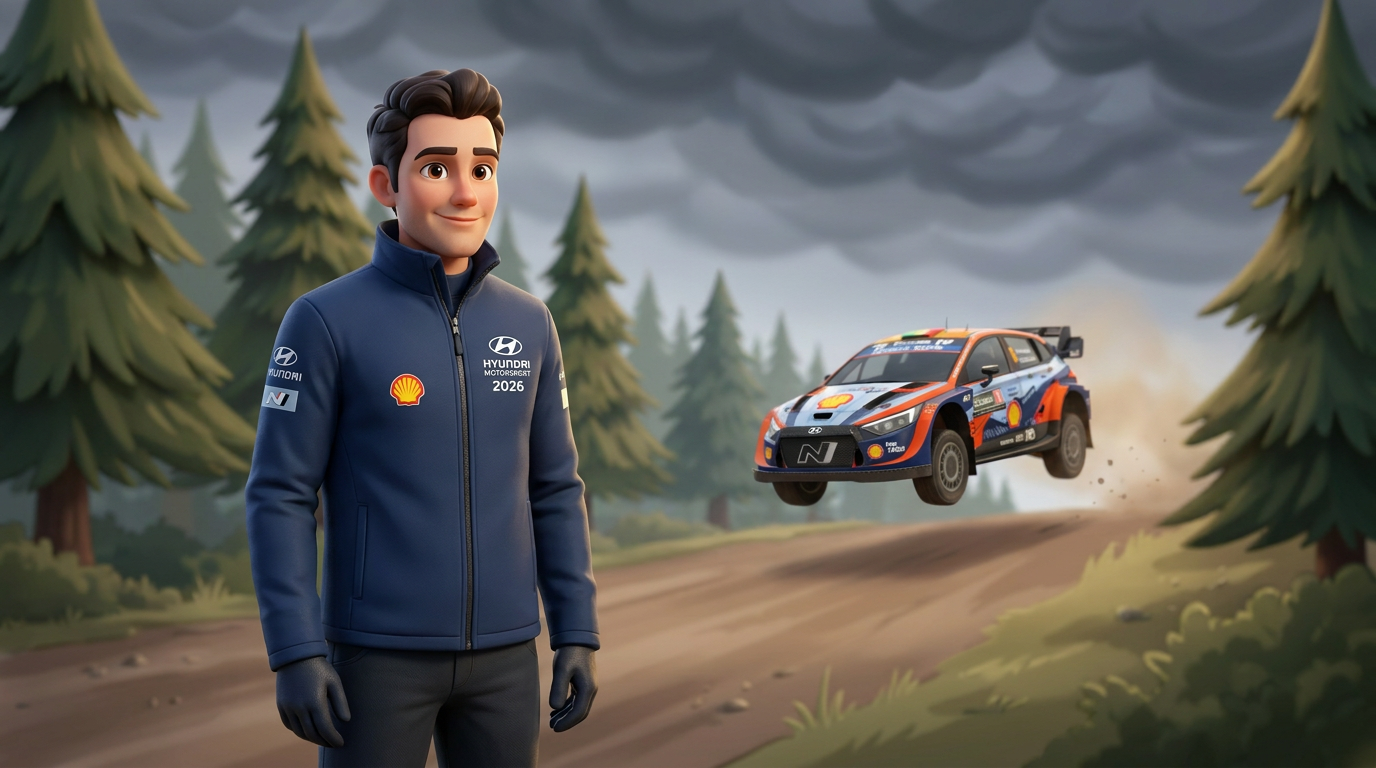
Thierry Neuville’s concern deserves attention, but slowing Rally Finland would treat the symptom while weakening one of the WRC’s defining challenges.
Rally Finland delivered spectacular competition, multiple crashes and an immediate debate over whether the event had become too fast. That discussion is worthwhile, but simply slowing the rally is the wrong response.
Speed alone does not define danger
Thierry Neuville voiced his concern after a bruising event, while other WRC drivers disputed the idea that outright speed was the main issue. Katsuta offered the stronger diagnosis: Finland pairs jumps and compressions with roadside hazards that leave virtually no room for error.
The difference is important. Cutting the average speed does not automatically make a stage safer when a misjudged landing can still send a car toward an unforgiving obstacle. Finland’s identity depends on commitment, rhythm and precision. Breaking that flow with artificial chicanes risks turning a coherent sporting test into abrupt braking zones, which carry hazards of their own.
The FIA should target consequences
Recent events provide enough evidence for a detailed review. Ogier had a major accident while leading, Evans rolled during his victory fight and Fourmaux’s challenge fell apart as torrential rain transformed the conditions. Each incident was different. That is exactly why a blanket response would be inadequate.
Stage-by-stage intervention is the better approach. The FIA and organizer should examine:
- jump profiles and landing zones where cars become unsettled;
- trees, rocks and ditches located near likely accident trajectories;
- weather protocols when grip changes rapidly at extreme speed;
- pacenote information and reconnaissance procedures around compressions;
- the location of any chicane, using one only where no better solution exists.
Avoidable risk should not be accepted. The goal should be to reduce the severity of mistakes without removing the skill that makes Finland exceptional.
Protect the challenge, not the speedometer
Pajari’s second consecutive WRC win, secured at home after his Estonia breakthrough, demonstrated why this event matters. Drivers must trust their notes, read the road and commit across terrain that rewards courage while punishing imprecision.
Before the championship heads to Paraguay from August 27-30, the FIA should start a transparent review based on accident data and driver feedback. Fans deserve visible action and an authentic Rally Finland. The priority is safer outcomes, flowing stages and resisting any attempt to govern this great rally by average speed alone.