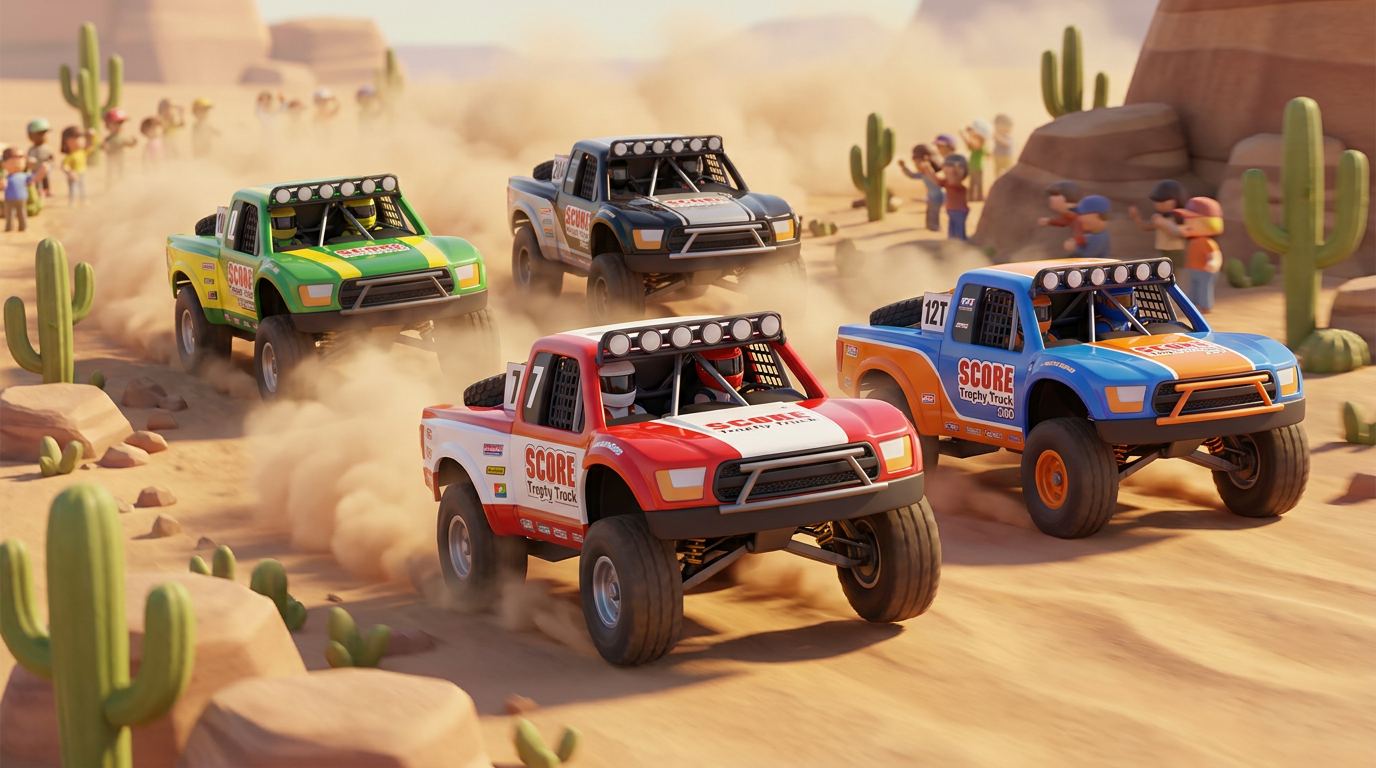
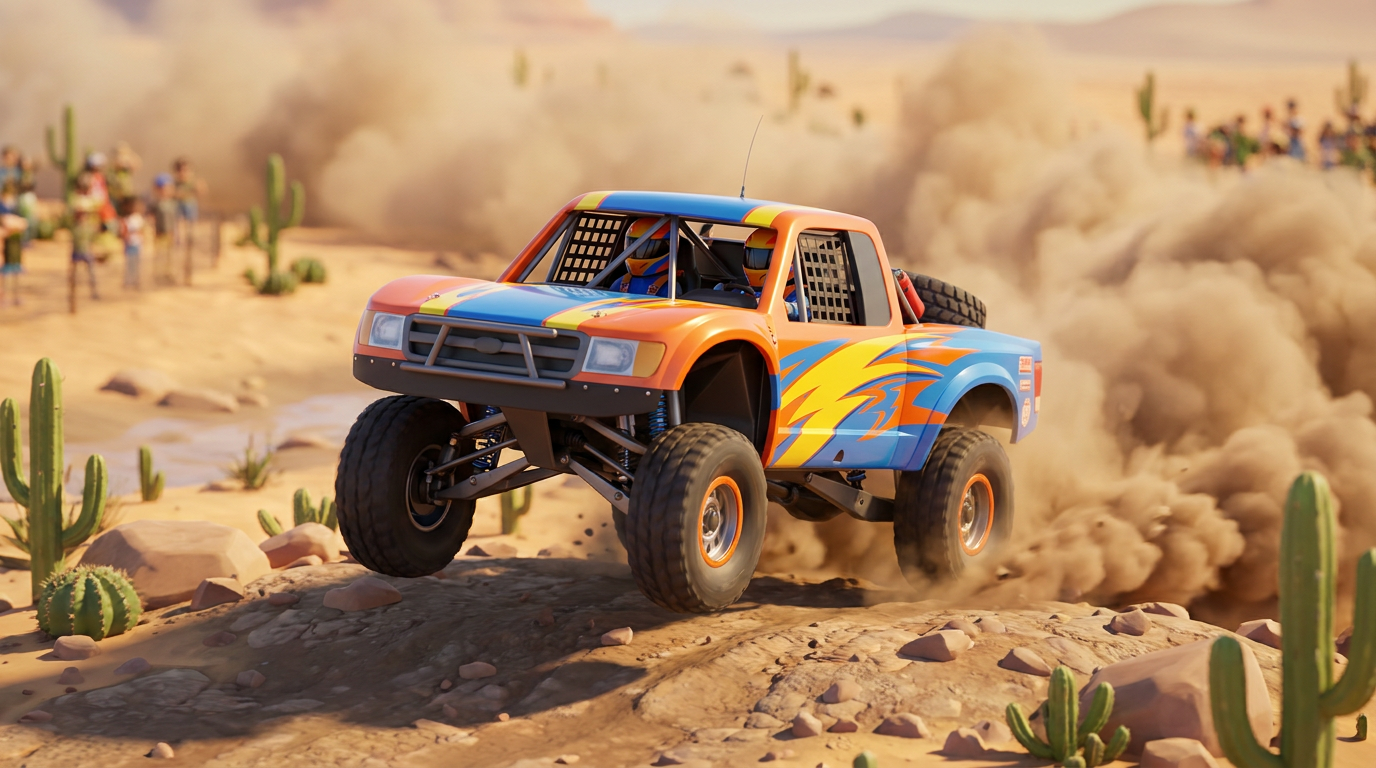
Roughly 850 hp, massive suspension travel and hundreds of punishing desert miles make SCORE Trophy Truck a compelling candidate for motorsport's toughest machine.
A SCORE Trophy Truck combines roughly 850 horsepower with massive suspension travel, then unleashes it across hundreds of miles of open desert. Gravel traps don't wait beyond the racing line. Miss the mark, and the scenery becomes the barrier.
That formula makes the unlimited class a strong answer to a loaded question: What is the toughest race car on earth?
Unlimited means engineering freedom
Trophy Truck tops SCORE International’s four-wheel desert racing hierarchy. The class is commonly called unlimited because builders enjoy far greater freedom than engineers working within tightly prescribed circuit-racing formulas.
These are purpose-built competition vehicles under pickup-style bodywork, not modified showroom trucks. A fabricated chassis sits beneath the composite skin, engineered to survive at speed. The engine, cooling system and driveline must continue working for hours as vibration and impact loads pound the vehicle.
Power drives much of the appeal.
Producing around 850 hp, a Trophy Truck can accelerate hard across dry lake beds and long desert roads. Peak output tells only part of the story. The engine also needs usable torque through deep sand, up steep climbs and over loose surfaces where traction changes by the yard.
Suspension does the impossible work
Huge suspension travel defines the Trophy Truck's appearance. The wheels can move through an extraordinary range while the chassis stays comparatively controlled above them.
It has to. The “track” can feature embedded rocks, drainage cuts and sudden compressions. Circuit engineers chase millimeters of ride height, while SCORE suspension must absorb terrain that can launch the truck into the air.
The dampers must satisfy conflicting demands. They need enough compliance to absorb repeated bumps and enough control to settle the truck after landing. Go too soft, and the chassis can bottom out. Too stiff, and the impacts travel into the frame, components and crew.
Every landing draws from the truck’s durability budget.
The desert has no run-off
A Formula 1 car competes inside a defined venue. WRC crews race on closed stages, while IndyCar visits street circuits, road courses and ovals. A SCORE Trophy Truck charges along a route stretching across hundreds of desert miles, where the surface can change before the crew arrives.
Conventional run-off doesn't exist. A mistake can send the truck into a boulder, ditch or vegetation instead of a paved escape road. Dust may linger behind another competitor, cutting visibility as the terrain keeps rushing toward the crew.
The route fights back. Heat punishes cooling systems, and fine dust gets into components. Sharp rocks threaten tires as repeated impacts stress welds, suspension joints and steering hardware. One hidden hole can erase hours of clean running.
Two people manage one violent machine
The driver doesn't work alone. A navigator sits alongside, calling hazards and helping manage the course in a racing environment with few familiar visual references.
That partnership is vital across hundreds of miles. The driver must balance outright speed with mechanical sympathy, choosing which bumps to attack and which hazards require restraint. Under constant vibration, the navigator processes information while keeping the truck on route.
Both stay strapped into a hot, noisy cabin while the suspension cycles beneath them. Physical conditioning counts. Concentration is just as important, because a one-second lapse can put an 850 hp truck on the wrong side of a rock or send it into an unseen compression at the wrong angle.
Repairability is part of performance
In many racing series, a damaged car heads back to a garage filled with specialized equipment. Desert racing scatters support across a vast route, so Trophy Trucks are designed with service access and field repairs in mind.
Redundancy adds weight, and weight costs speed. Builders must determine which components require protection, how much spare capacity the cooling system needs and where reliability takes priority over outright performance. Leading early means little if the truck stops deep in the desert.
Trophy Truck toughness therefore goes beyond bodywork that withstands a hard landing. The whole vehicle must endure punishment and retain enough speed to win. Engine output, suspension control and serviceability serve one objective: keep moving.
Why the toughest label fits
Other race cars withstand greater cornering loads, reach higher top speeds or comply with tighter technical regulations. Trophy Truck earns its case through serious speed and sustained exposure to uncontrolled terrain.
Roughly 850 hp supplies the violence. Massive suspension travel makes it usable. Hundreds of desert miles expose every weak weld, poor setup choice and lapse in concentration.
The next obstacle won't have a curb, painted line or marshal post. It waits somewhere ahead in the dust, and the truck must survive it without slowing down.