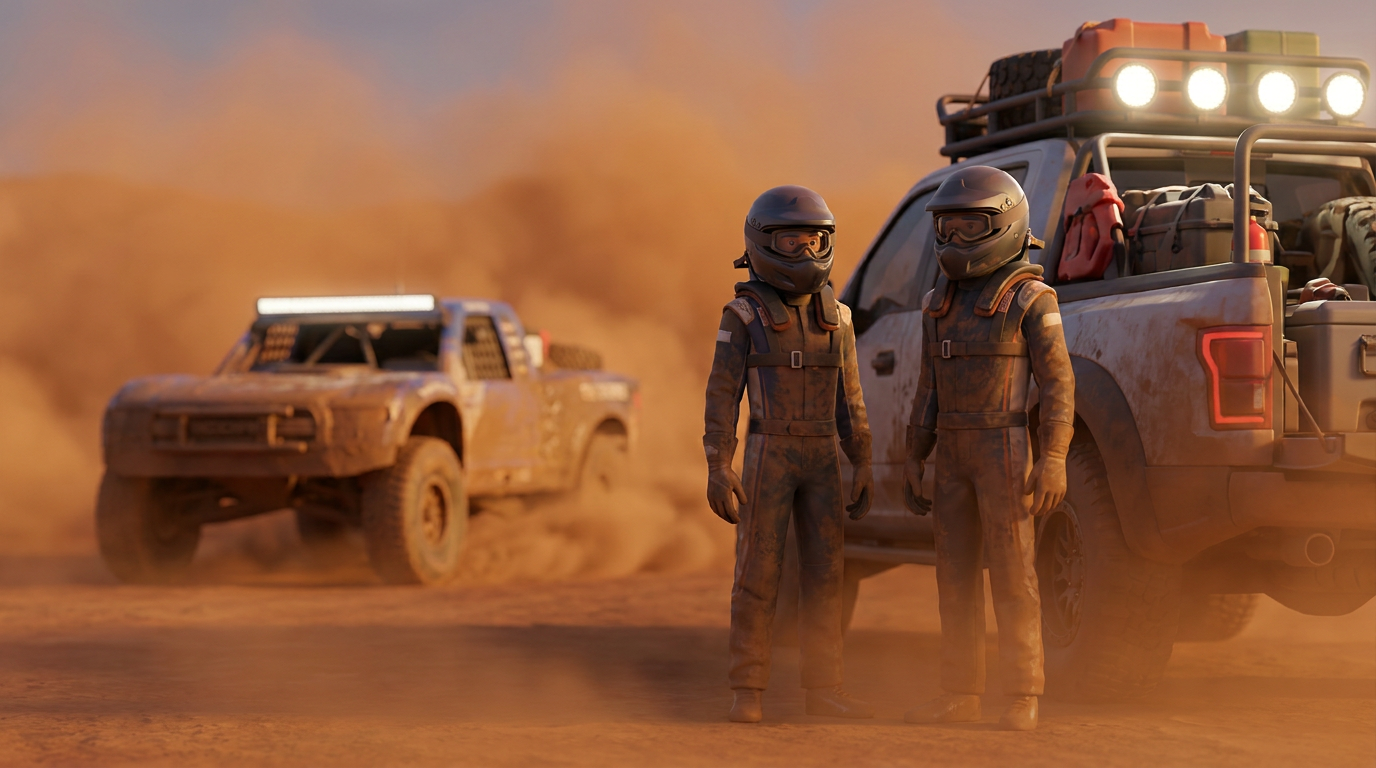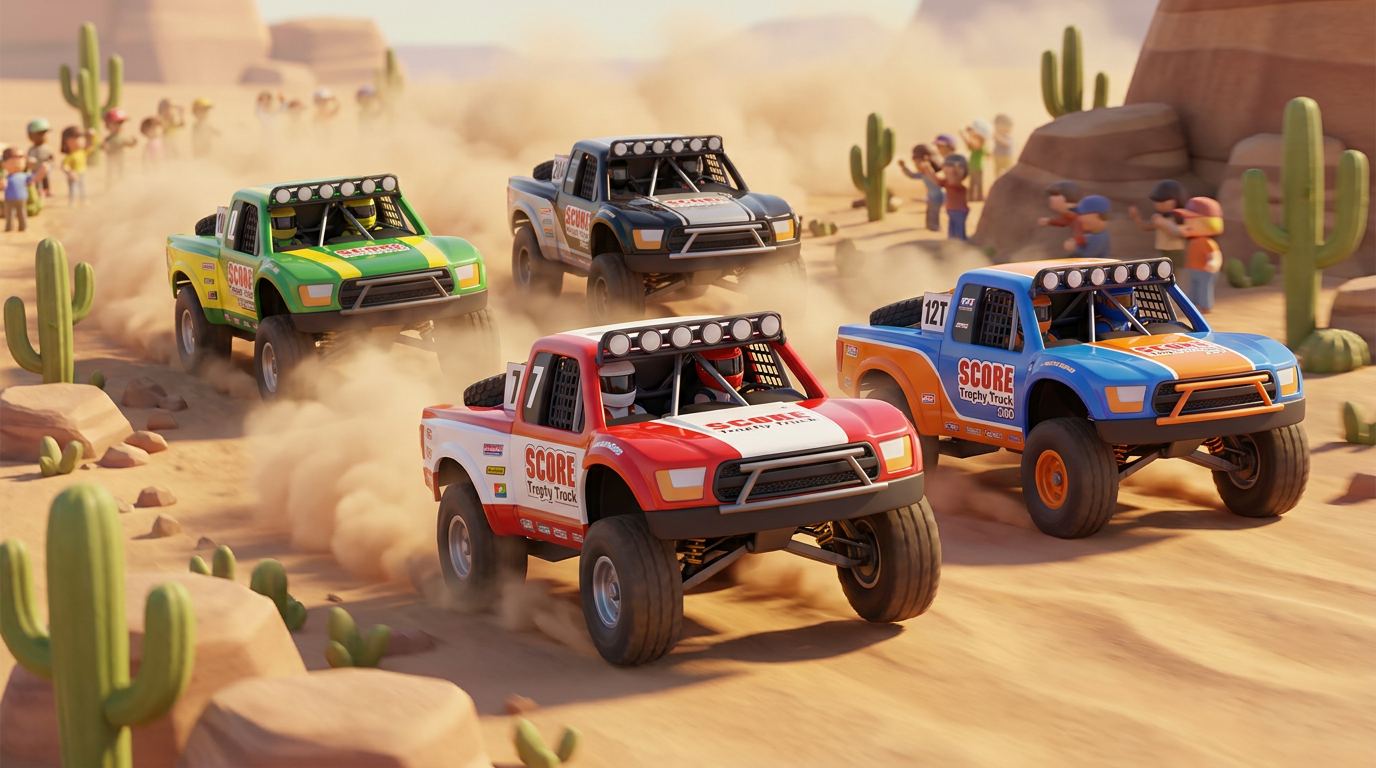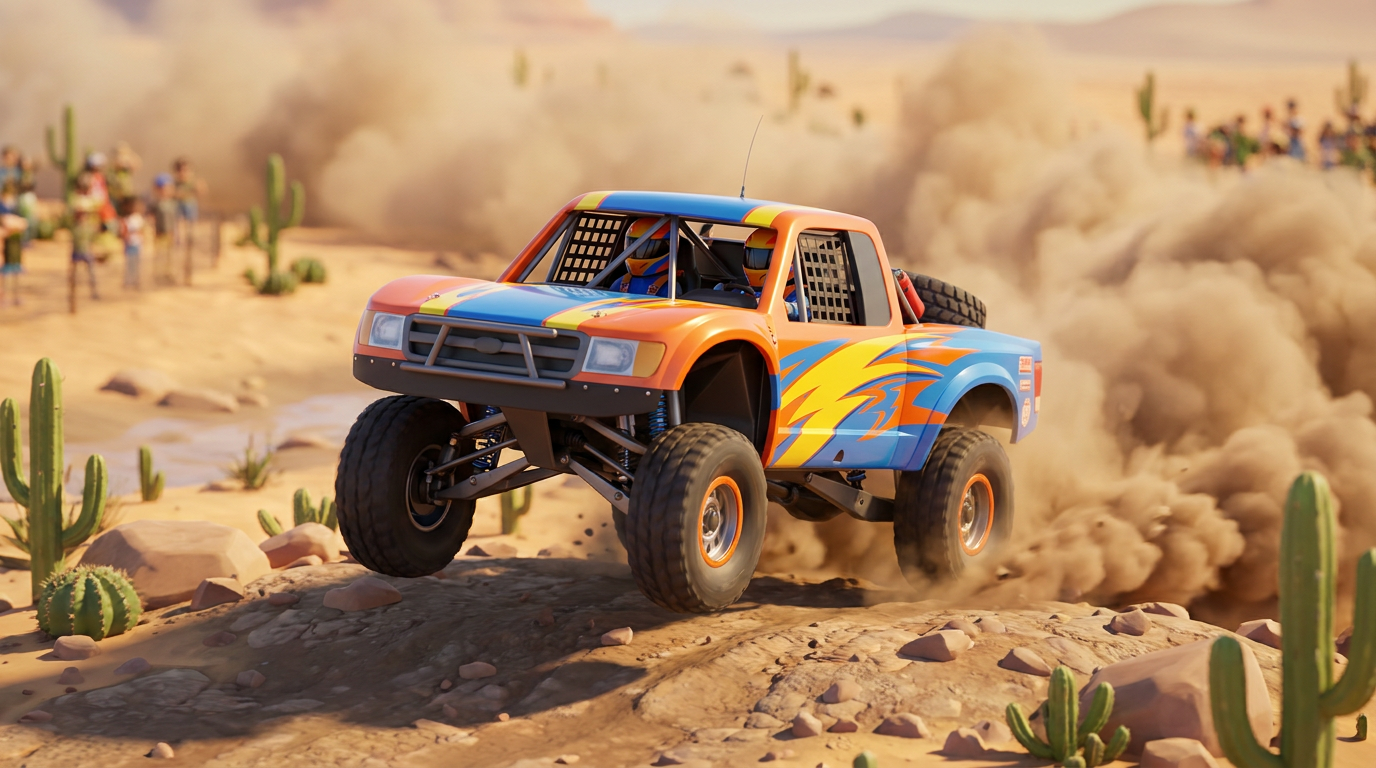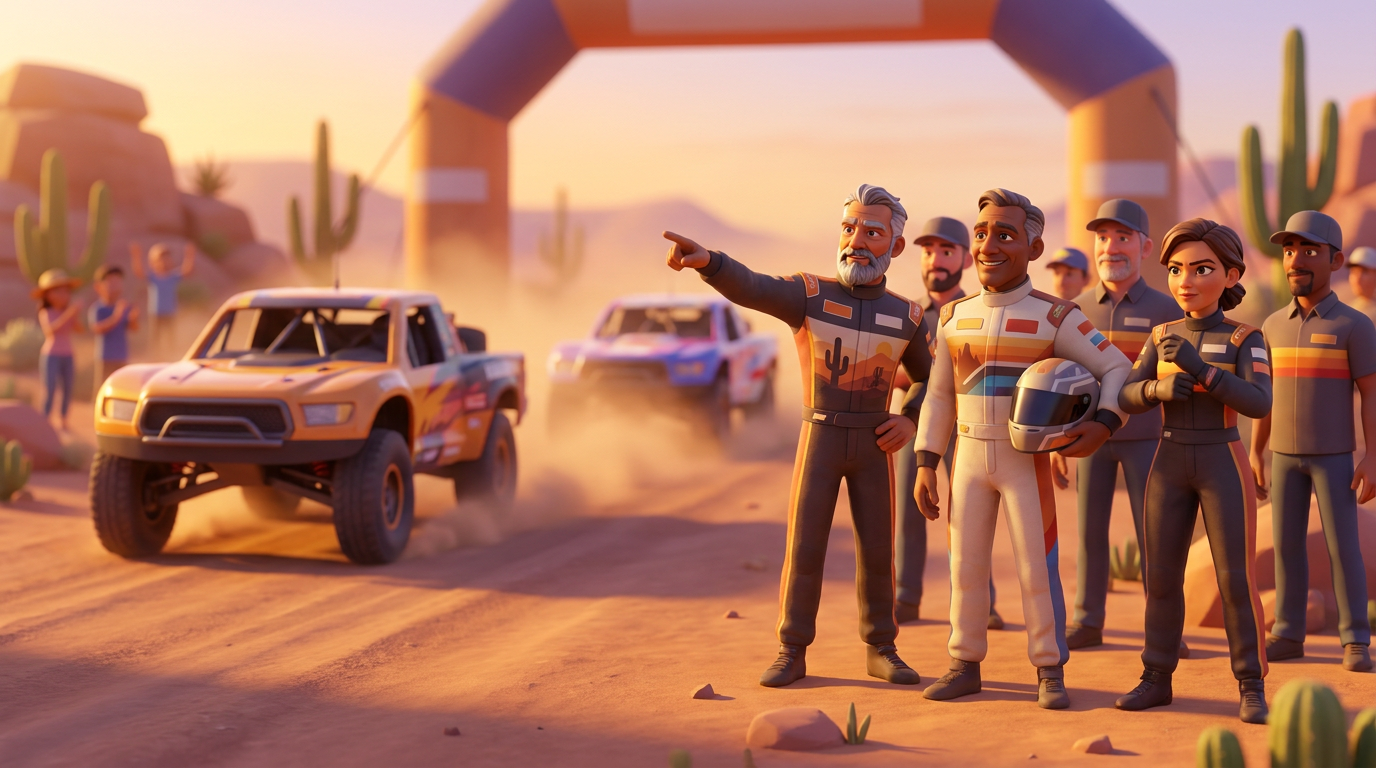
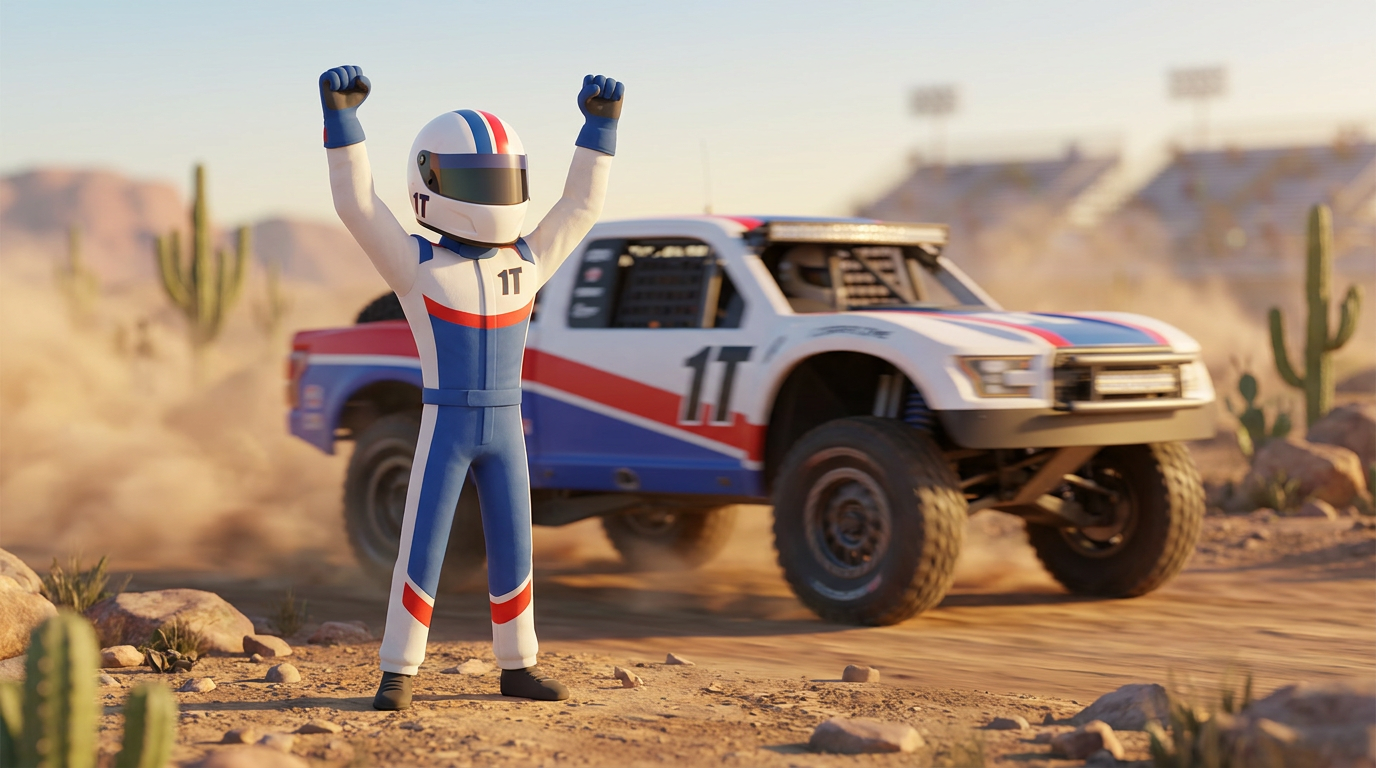
Sam Baldi leads SCORE Trophy Truck 2WD, where lower weight and simpler hardware must compensate for a persistent traction disadvantage.
Sam Baldi leads SCORE Trophy Truck 2WD, where teams must balance rear-drive speed against the traction sacrificed by leaving the front wheels unpowered on every mile.
Baldi controls the class fight. The job is still demanding. Baja rewards momentum, mechanical restraint and clean decisions, while a single buried rear tire can wipe out time earned over miles of faster terrain.
What two-wheel drive costs
A 2WD Trophy Truck relies on its rear tires for acceleration while the front tires handle steering. That split creates the class's defining weakness on loose climbs, in deep sand and through low-speed exits. If the rear tires spin, there is no driven front axle to pull the truck forward.
Drivers must adjust their approach to Baja. Throttle inputs need to be measured, especially across chopped-up ground where the rear tires repeatedly unload. A line suited to a four-wheel-drive truck can leave a 2WD entry searching for grip.
Recovery costs time. After losing momentum before a soft incline, a driver may need to back up for another attempt, search for firmer ground or use recovery equipment. Repeated wheelspin also increases wear and raises tire temperatures.
Where 2WD earns time back
The tradeoff has clear benefits. Removing the driven front axle, transfer case and associated hardware reduces mechanical complexity and can cut weight. With fewer driveline components, fewer parts are exposed to impacts, heat and vibration during a full SCORE desert race.
A lighter, simpler front end can improve suspension response. Because the front wheels don't transmit drive, they are free to steer and absorb bumps, which helps once the course opens and momentum takes priority over traction.
That makes Baldi's class lead significant.
Fast desert roads favor a settled truck and a driver prepared to maintain speed through rough sections. A competitive 2WD package can run strongly through whoops and flowing terrain, then limit its losses in the deepest sand and on technical climbs.
Tire management shapes the race
Rear-tire workload sits at the heart of the 2WD equation. The driven pair must put down the power while surviving sharp rocks and repeated impacts. Excess wheelspin creates further damage, particularly when a tire is already hot or losing pressure.
Baldi's advantage depends on discipline alongside outright speed. The fastest line through one section may be the wrong choice if it exposes a sidewall or demands hard acceleration from near standstill. Carrying momentum reduces stress on the truck and contains the traction deficit.
Setup carries consequences, too. Teams need enough rear compliance to keep the tires in contact over broken ground, but too much movement can compromise high-speed stability. Steering precision is equally important because each unnecessary correction bleeds momentum that a 2WD truck may struggle to recover.
The class fight stays course-dependent
Terrain can change the Trophy Truck 2WD order. Long, flowing sectors reward efficiency and reduced front-end complexity. Soft sand and stop-start technical sections put greater emphasis on rear grip, line choice and avoiding traps.
Baldi's lead is valuable, although the available standings information doesn't provide the margin. His position is established: Baldi has the upper hand. The supplied material doesn't identify his nearest challengers, their totals or the size of his advantage.
The route gives the chasing crews their chance. A clean run through traction-heavy terrain can pressure the leader without requiring a faster truck across the entire course. Baldi's clearest route to protecting his advantage is to minimize stationary time and preserve the rear tires.
Baldi controls the next move
SCORE desert racing punishes small mistakes across long distances, and 2WD increases the cost of any error that stops momentum. Baldi heads into the next phase of the class fight atop the standings with a direct technical assignment: keep the truck moving, protect the driven tires and capitalize on the faster ground.
The next SCORE round will test that advantage against the course again, with the first soft climb or damaged rear tire capable of reshaping the Trophy Truck 2WD order.