Toyota heads to Fuji Speedway tied at the top of the Hypercar drivers' standings and with nine wins from the last ten World Endurance Championship races held on its own circuit.
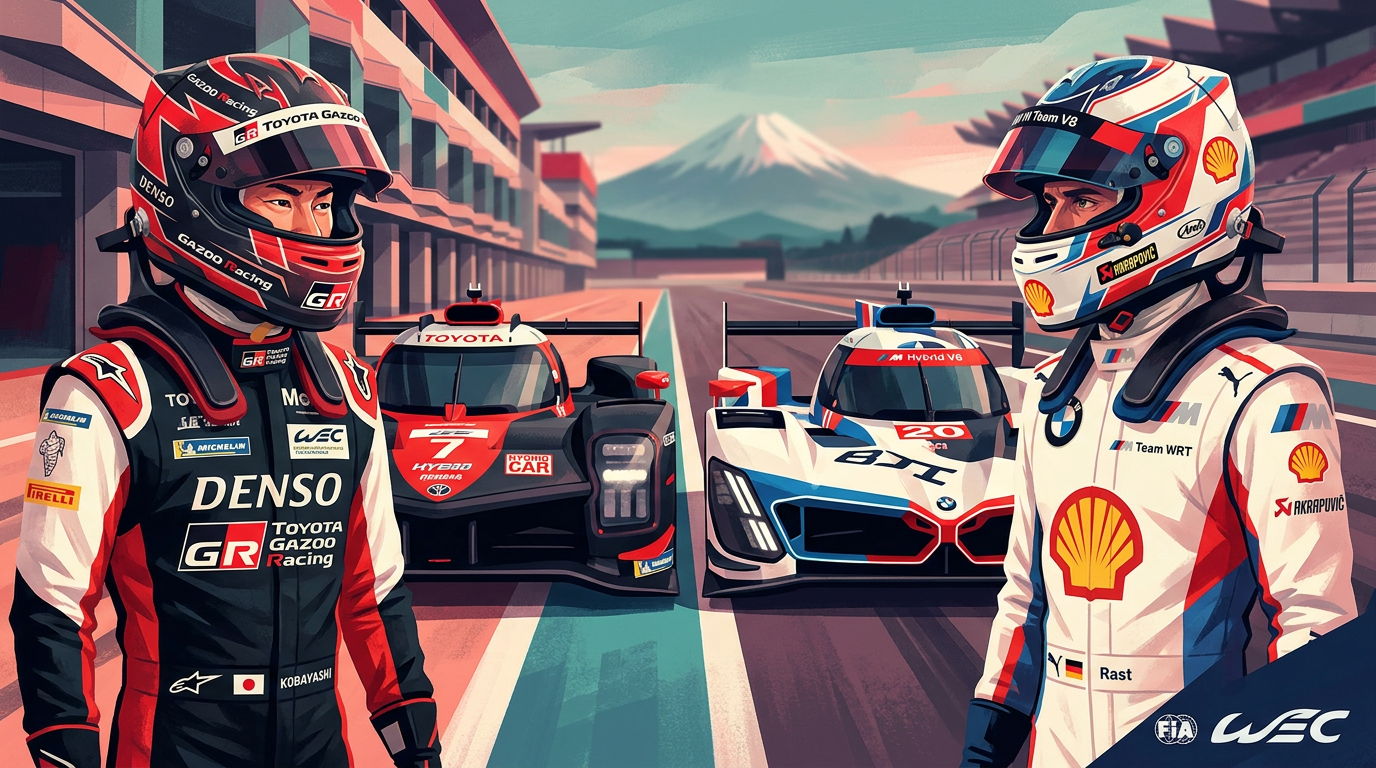
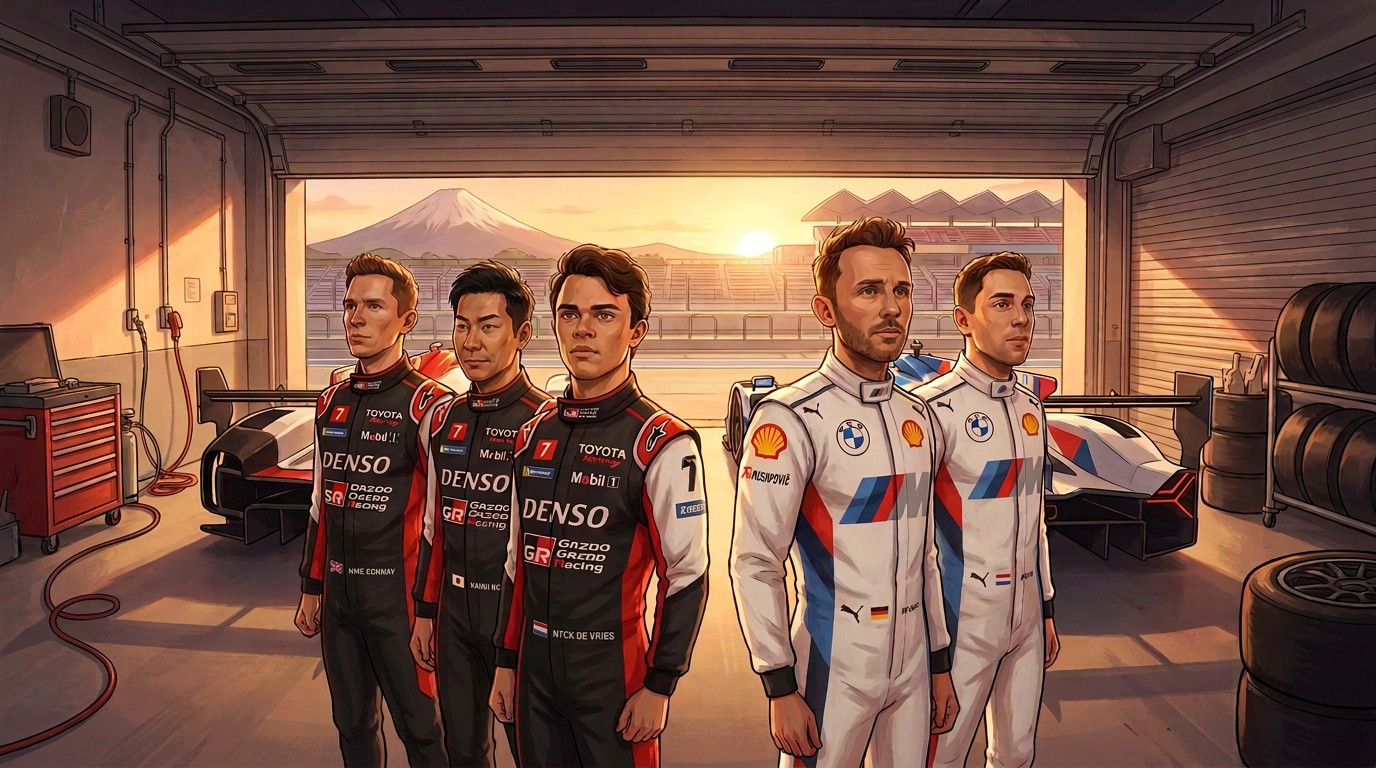
The No. 7 crew of Mike Conway, Kamui Kobayashi and Nyck de Vries sits level on 75 points with the BMW pairing of René Rast and Robin Frijns before the 6 Hours of Fuji on Sunday, September 27. Sheldon van der Linde follows on 65, the No. 8 Toyota of Sébastien Buemi, Brendon Hartley and Ryo Hirakawa holds 64, and the leading Ferrari crew sits on 57.
The verdict is simple. Toyota enters as the favorite, but a tie leaves no margin for a quiet afternoon.
A three-day build to a Sunday morning start
Round six of eight runs from Friday, September 25, through Sunday, September 27. It follows the September 4 to 6 round at Circuit of The Americas and precedes Barcelona on October 18, with the season ending at Monza on November 8.
Track action starts Friday with practice at 10:15 and 14:30 local time. Final practice begins at 09:30 Saturday, and the qualifying and Hyperpole sessions for both classes fill the afternoon. The six-hour race starts at 11:00 on Sunday.
The schedule matters.
A Sunday morning start pushes the closing hours into the late afternoon, when the light fades and track temperature drops. Teams that read the cooling asphalt correctly gain time in the final two hours, and the crews who guess wrong on tire pressures spend that period defending rather than attacking.
Toyota has provided the strongest baseline across the season. Its 140 manufacturers' points lead BMW on 131 and Ferrari on 114, with Cadillac fourth on 80 and Alpine fifth on 66.
Fuji combines conflicting circuit demands
Fuji Speedway is a 4.563-kilometer clockwise permanent circuit at the foot of Mount Fuji, with 16 corners, ten of them right handers, and roughly 35 meters of elevation change. Contrasts define it. The main straight runs close to 1.475 kilometers and rewards low drag, while the tight final sector rewards grip and rotation.
That creates a difficult compromise. Trim the car for the straight and it struggles from Turn 12 to the exit onto the pit straight. Add downforce for the infield and the Hypercars lose ground on a section where the fastest cars exceed 330 kilometers per hour.
The prime passing opportunity follows that long run, where a tow and a late brake can settle a position before Turn 1. The same straight makes multi-class traffic cheaper to clear here than at a circuit with no obvious overtaking zone, which matters over six hours of Hypercar and LMGT3 cars sharing the same asphalt.
Fuji's history supports a clear verdict: pace alone does not decide this race. Fog and rain arrive from the mountain with little warning, visibility can stop a session outright, and the 2013 race never started, with the result declared from the grid.
History gives reputations little protection
The championship has raced at Fuji since 2012. Toyota has won nine of the last ten editions, and Porsche in 2015 remains the only other winner in that run. A win on Sunday would make Toyota the first manufacturer to reach ten victories at a single World Endurance Championship circuit.
Individual records point the same way. Sébastien Buemi and Kazuki Nakajima each won at Fuji four times. The 2019 race delivered the only top class grand slam in championship history, when the No. 8 Toyota topped every practice session, took pole, led all 232 laps, set the fastest lap and won.
That history rewards familiarity rather than momentum. The season itself has argued the opposite case: Toyota won at Imola and Le Mans, BMW took Spa and São Paulo, and Ferrari collected its first win of the year at Austin. Five rounds have produced four different winning Hypercar crews.
Four winners from five races suggests an open contest. Toyota's record at this circuit tells a different story.
Strategy begins with patience
Six hours tempts teams to chase every swing in track position. That can be costly. A clean run through the middle of the race usually beats an aggressive early stop, because fuel windows and driver changes dictate the rhythm more than any single overtake.
Stopping early can deliver clear air and a cheap undercut. It can also leave a car short at the end of a stint if a full course yellow arrives and hands rivals a discounted stop. Running long brings the reverse danger, particularly when a rival uses fresher tires to attack before the braking zone at Turn 1.
Flexibility matters most. Leaders should protect tire life through the opening hours, while the manufacturers behind have an incentive to split their two cars across different plans and bet on the weather. Pit crews carry extra weight here because one slow stop can drop a car into a train of LMGT3 traffic.
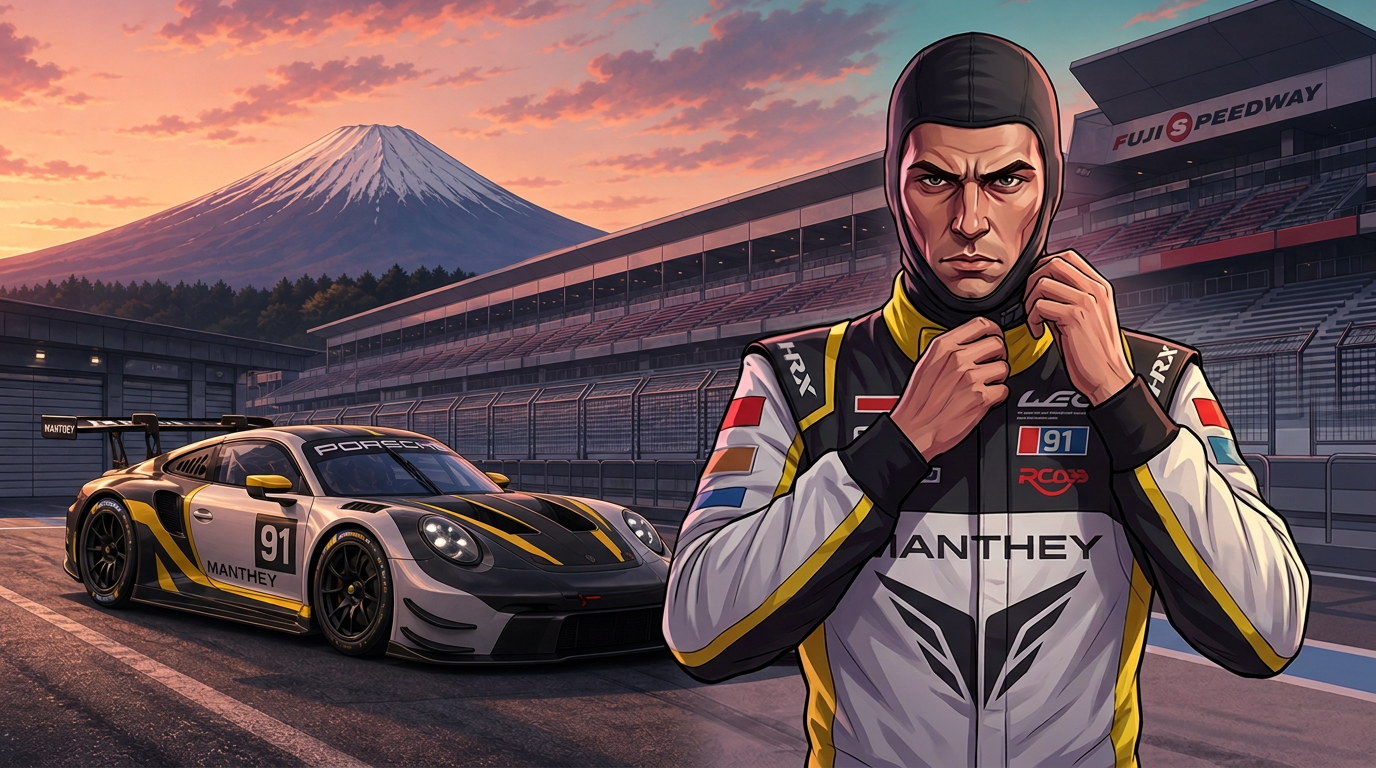
The LMGT3 fight adds its own pressure. TF Sport leads with the No. 33 Corvette on 76 points, Jonny Edgar heads the drivers on 76, and Manthey arrives still looking for a first win of the season with its two Porsches on 49 and 48 points. Genesis, last among the manufacturers on 12 points, has publicly targeted a stronger result after its best weekend of the year at Austin.
Toyota's real opponent is the weather
Toyota does not need a perfect weekend. A tie at the top and a 9 point manufacturers' cushion mean a controlled finish in the first three positions keeps the team in front of BMW with two rounds left.
Restraint will be the main test. BMW must convert its speed into points at a circuit where it has no history of winning. Ferrari needs a second consecutive strong result to turn its Austin win into a title challenge, and Cadillac and Alpine require a change in form to reach the front. On two previous occasions, in 2019 and 2022, the crew that arrived at Fuji level at the top went on to take the championship.
The first indication comes Friday at 10:15 local time, when the leaders start learning how much a tied championship allows them to risk under Mount Fuji's weather.