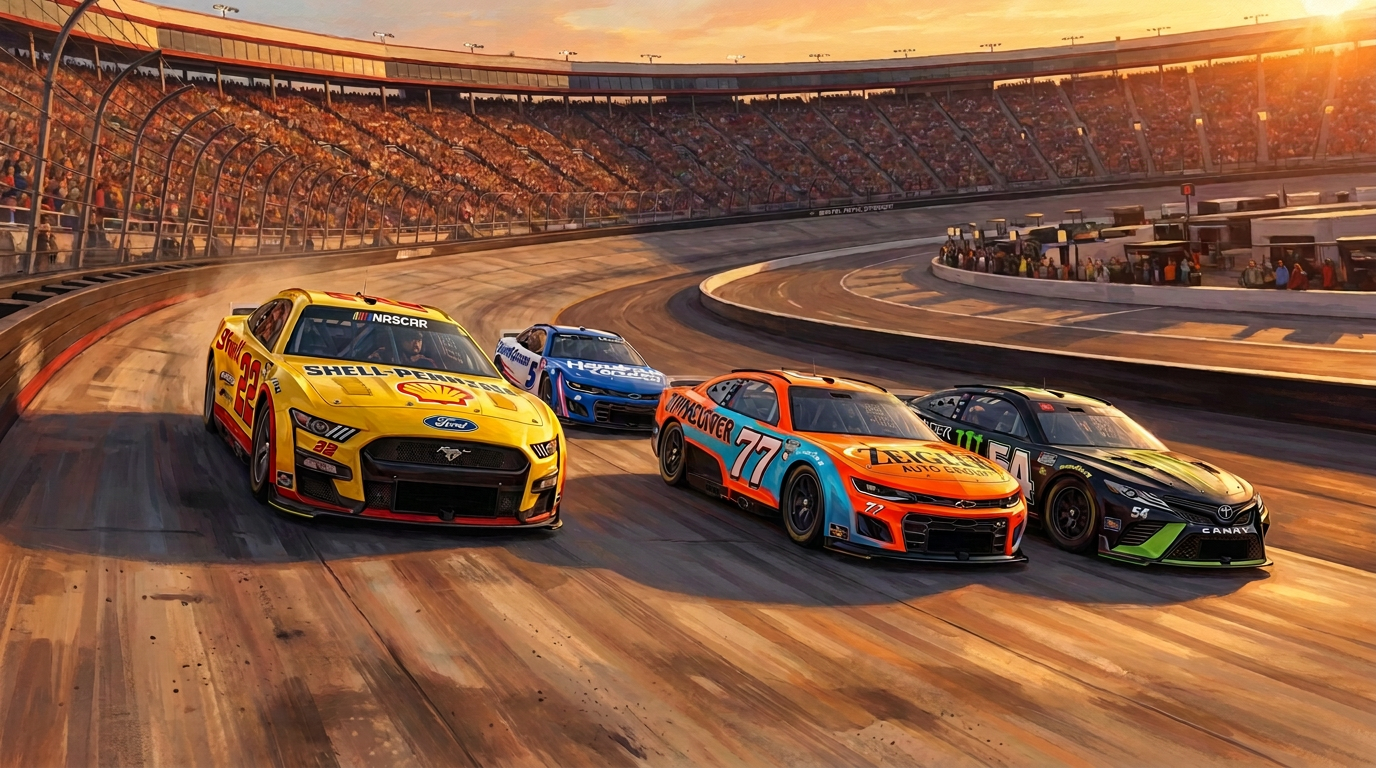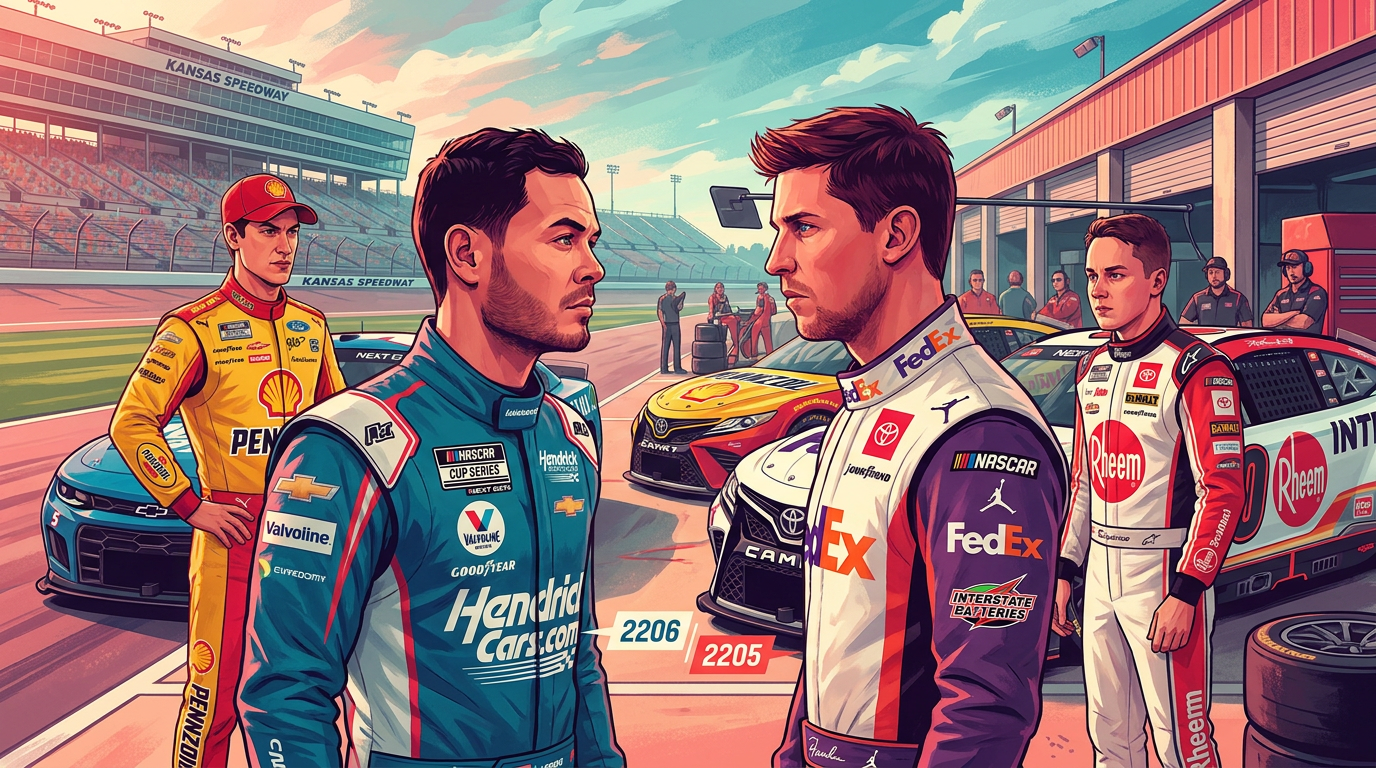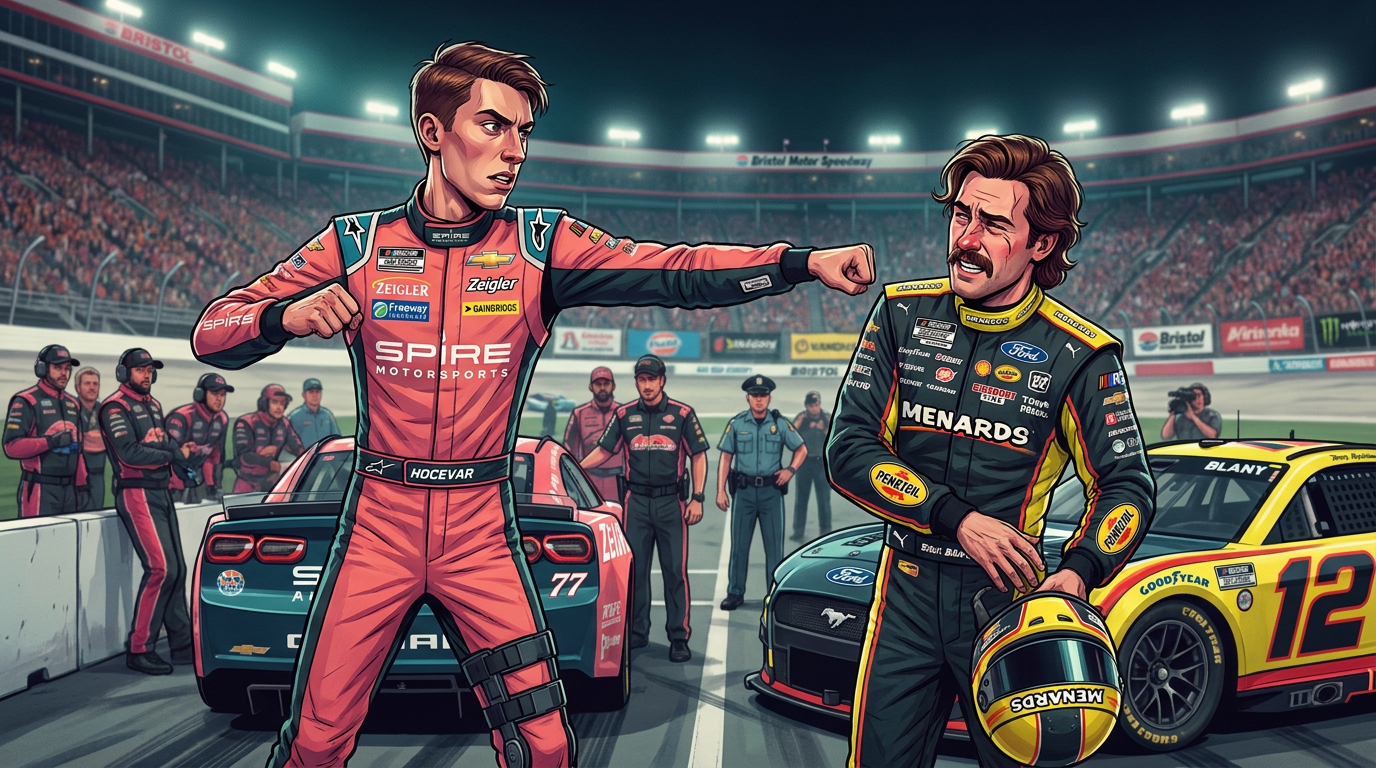

Kyle Larson arrives at Kansas Speedway with the NASCAR Cup Series points lead and the smallest possible cushion, a single point, in the middle of the Chase.
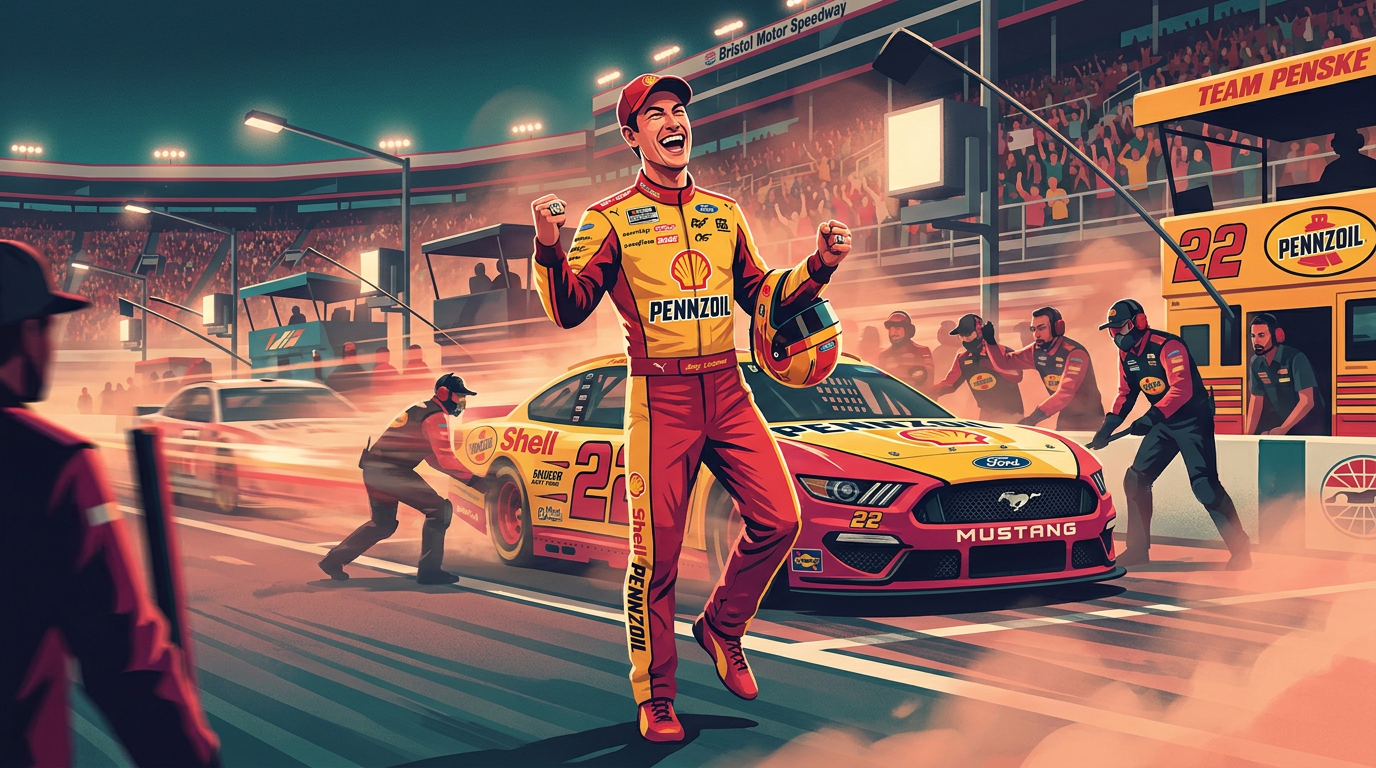
Larson holds 2,206 points to Denny Hamlin's 2,205 before the Hollywood Casino 400 on Sunday, September 27. Bristol winner Joey Logano is third on 2,190, Christopher Bell follows on 2,189, and Ty Gibbs sits fifth on 2,164.
The verdict is simple. The Hendrick and Joe Gibbs Racing leaders set the standard, but Kansas rarely respects a narrow advantage.
A short weekend raises the stakes
Race 30 of 36 and the fourth round of the 10-race Chase runs across two days of Cup activity. Practice opens Saturday, September 26, at around 10:00 a.m. ET, with qualifying following in the afternoon. The 267-lap, 400.5-mile race takes place Sunday, September 27.
Stage one ends on lap 80 and stage two on lap 165, leaving a 102-lap run to the finish. That closing stage is longer than either stage before it, and it is where the race is usually decided.
The schedule matters.
A single practice session gives teams one chance to check long-run balance before qualifying, and any car that arrives with the wrong setup spends the race adjusting rather than attacking. The format suits organized teams that trust their simulation work, which is exactly what the top of the standings reflects.
Larson has won four times this season, at Phoenix, Bristol in the spring, Michigan and Gateway. Hamlin has won three, at Martinsville, Pocono and North Wilkesboro.
Kansas combines conflicting demands
Kansas Speedway is a 1.5-mile asphalt tri-oval with progressive banking of 17 to 20 degrees in the corners, 9 to 11 degrees on the front stretch and 5 degrees on the back stretch. The lower groove offers grip and a shorter distance, while the upper lane near the wall offers momentum for anyone willing to run close to the fence.
That creates a difficult compromise. Set the car up for the bottom and it lacks the stability to use the top lane later in a run. Build it for the wall and the first laps on new tires feel loose through the center of the corner.
The prime passing opportunity comes late in a green-flag run, when tire falloff separates cars that managed their rubber from cars that used it early. Kansas has produced the closest finish in Cup history, a margin of 0.001 seconds in 2024, which is what a multi-groove intermediate can deliver when the grooves come in at different rates.
Kansas history supports a clear verdict: track position matters, but it does not decide the race the way it does on a short track. A driver who saves tires through the middle of a stint can still win from outside the top five.
History gives reputations little protection
The Cup Series first raced here on September 30, 2001, and this is the 26th Cup event at the track. Hamlin leads all drivers with four Cup wins at Kansas. Jeff Gordon, Kevin Harvick, Jimmie Johnson, Larson and Logano have three apiece, which places four of the five current championship leaders in that group.
Recent form points in several directions. Bell won the spring race here in April, Chase Elliott took the most recent fall event in 2025, and the 2026 season has produced 14 different winners across 29 rounds.
That spread rewards adaptability rather than record-book forecasts. Shane van Gisbergen won three times on road and street courses, Ryan Blaney won at Las Vegas, Chicagoland and New Hampshire, Bell collected four wins including the Southern 500, and Ryan Preece took the summer Daytona race.
Fourteen winners from 29 races suggests depth. A one-point championship lead tells a different story about who controls this stretch.
Strategy begins with patience
Kansas tempts crew chiefs to respond to every caution. That can be costly. Cautions here are historically infrequent, which stretches green-flag runs and turns fuel mileage into a live variable in the final stage.
Taking two tires can buy track position for a restart. It can also strand a driver in the middle of the field ten laps later, once the cars with four fresh tires work through the lanes. Staying out brings the reverse danger, particularly when the leaders can use the upper groove to clear traffic without losing momentum.
Flexibility matters most. Drivers near the front should protect tire life through the opening stage, while teams further back have an incentive to split their strategies and gamble on the timing of a caution. Pit crews carry extra weight because a slow stop at a 1.5-mile track buries a car in traffic that takes a full run to escape.
Stage points complicate the math. With one point separating the top two, ten stage points at lap 80 can flip the standings before the final stage begins, which pushes both leaders to race hard in a segment they might otherwise use to manage tires.
Larson's real opponent is the run to Homestead
Larson took the lead with second place at Bristol on September 19, where rain canceled qualifying and placed him on pole. Logano won that night, and Hamlin finished eighth, which is how a lead of more than a race weekend turned into a single point.
Restraint will be the main test.
Hamlin needs to reverse a run of results rather than win one race. Logano and Bell sit close enough that a strong Sunday puts either of them in front, and Gibbs, Blaney and Tyler Reddick remain within 61 points with seven rounds left before the finale at Homestead-Miami Speedway in mid-November.
Kansas can create chaos, but chaos offers no strategic plan. The drivers at the top have the clearest path to control: qualify inside the top ten, take stage points without burning the tires, and keep the car out of the traffic that forms in the middle of a long green-flag run.
The first indication comes Saturday morning, when Larson and Hamlin find out how much a one-point lead is worth over a 102-lap final stage.