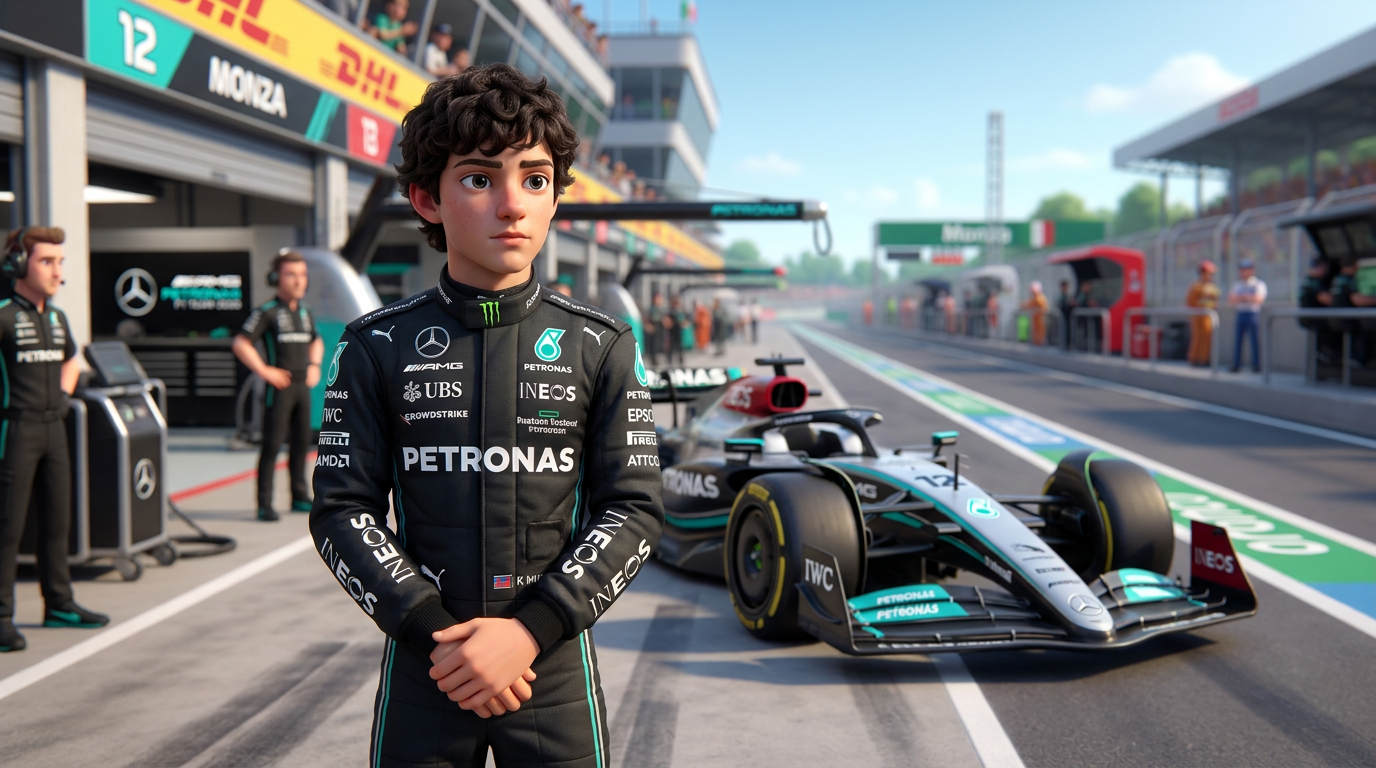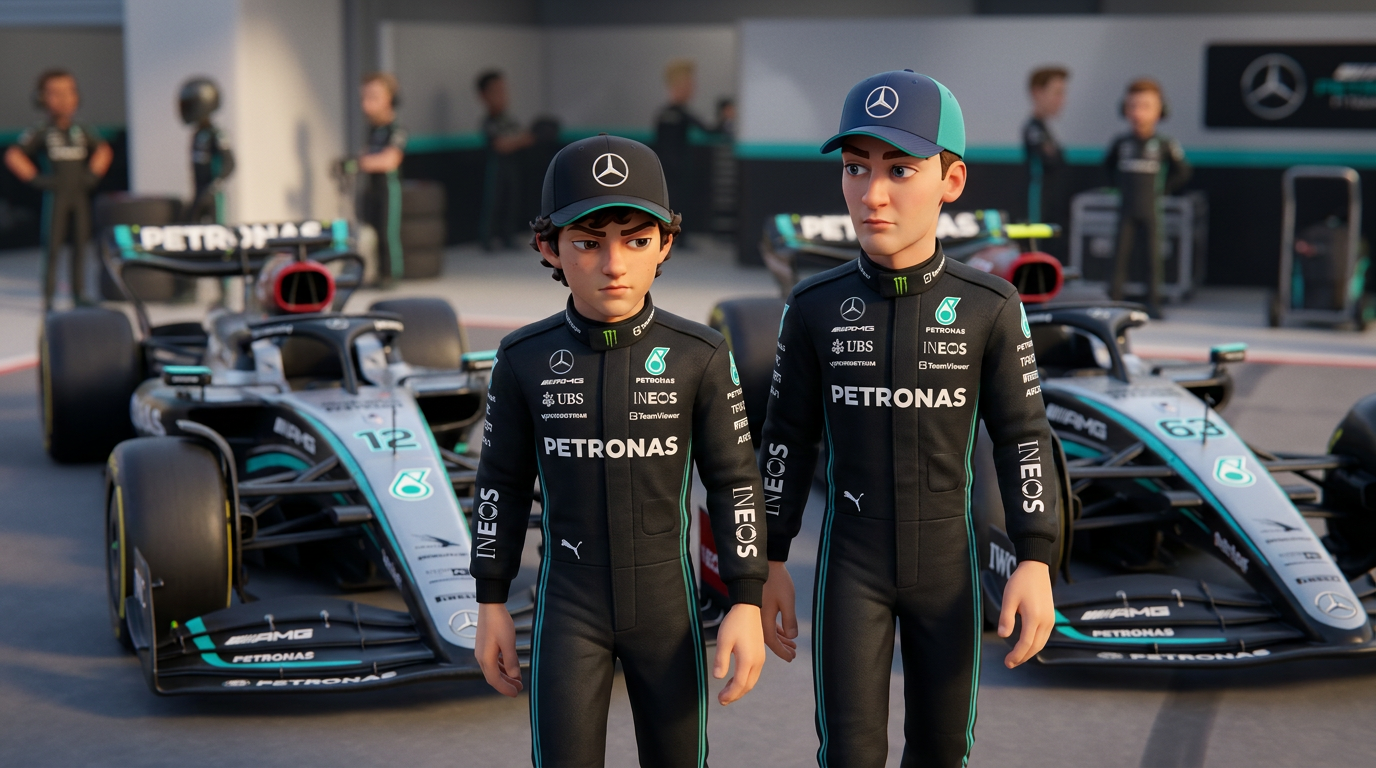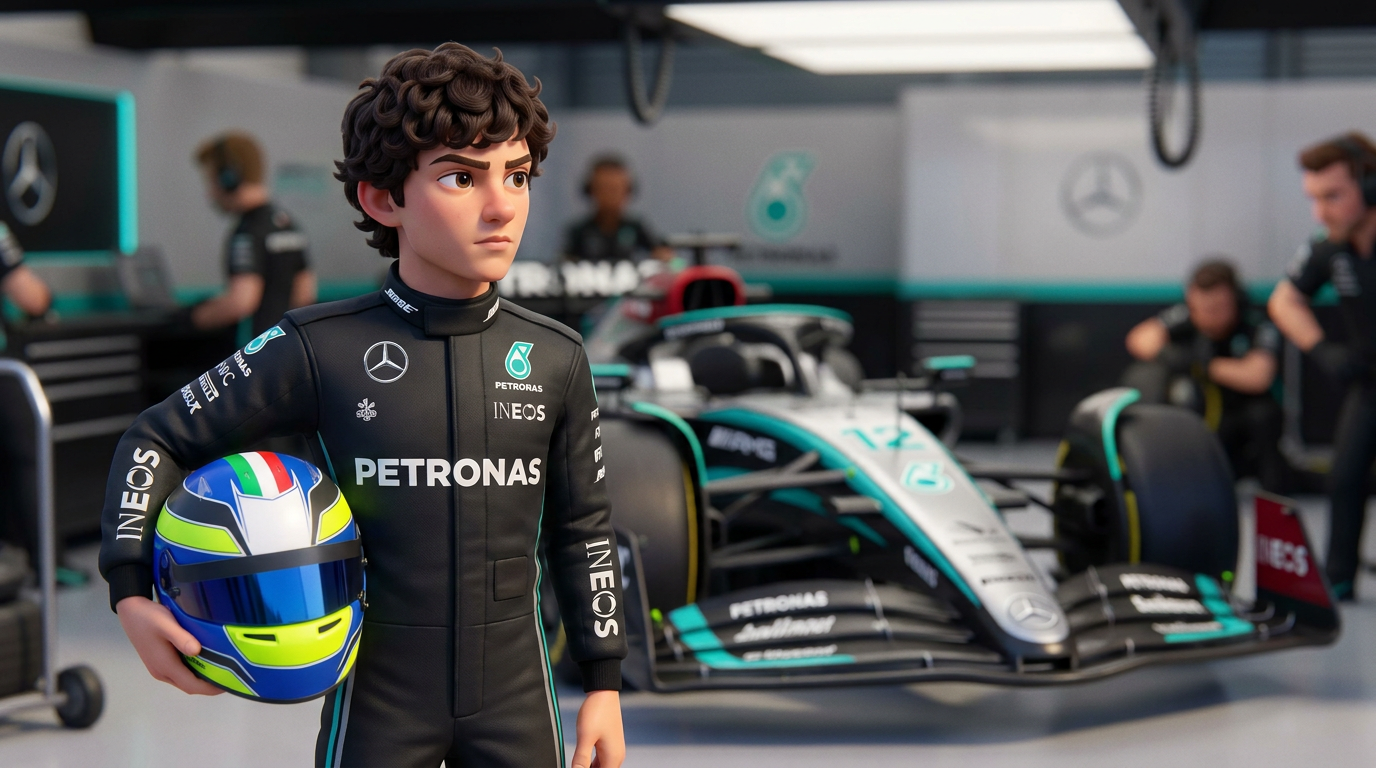

Mercedes has exhausted both drivers’ power-unit allocations, exposing Kimi Antonelli to grid penalties as his 2026 fight with Lewis Hamilton intensifies.
Mercedes has reached the second half of the 2026 Formula 1 season with both drivers having used every power-unit component in their annual allocations. Any replacement beyond those limits will trigger grid penalties, making reliability and component management potentially decisive in Kimi Antonelli’s close championship fight with Lewis Hamilton.
Antonelli and his team-mate do not have to start at the back immediately. Mercedes can rotate serviceable components within each driver’s existing pool. However, the team has no penalty-free fallback if a unit fails, sustains crash damage or reaches the end of its usable life before the season finishes.
Why Mercedes is vulnerable
The first allocation breach typically costs 10 grid places, compared with five for later additions of the same element.
Formula 1’s power-unit rules split the hybrid system into several controlled elements instead of treating the engine as a single item. They include the internal combustion engine, turbocharger, energy-recovery hardware, energy store and control electronics. Each driver can use only a prescribed number of each component during the championship without receiving a sanction.
After a driver exceeds a limit, the penalty is determined by the component and whether it represents the first or a later breach of that specific allocation. Under the established framework, the first extra example of an element typically brings a 10-place grid penalty. Further additions of the same element generally result in five-place penalties. Fitting several new elements together can create cumulative sanctions large enough to put a driver at the back of the grid.
The exact sporting outcome depends on the component Mercedes requires, the timing of its introduction and the regulations in force at that event. One consequence is already certain: every extra unit now comes with a substantial competitive cost.
A difficult equation for Antonelli
The timing is especially awkward for Antonelli. The Mercedes driver is closely matched with Hamilton in the fight for second place in the championship, so one compromised weekend can produce a meaningful points swing.
Formula 1 awards 25 points for a Grand Prix win, 18 for second and 15 for third. The differences shrink farther down the order, with 12 points for fourth, 10 for fifth and points available through 10th place. A 10-place grid penalty can turn a likely podium start into a midfield recovery drive, where traffic, tire overheating and first-lap incidents add further risk.
Antonelli’s results have placed him in contention for second, rather than leaving him to defend a respectable championship finish. That raises the cost of Mercedes’ engine problem. Strong qualifying pace has less value with an enforced grid drop looming, while Hamilton can gain ground by completing clean weekends and keeping his own reliability under control.
Penalties do not guarantee a poor result
A grid penalty hurts, but it does not guarantee a poor finish. Mercedes can select a circuit where overtaking is relatively achievable, straight-line performance carries greater weight or strategic variation often creates opportunities. It may also be better to take several components at one event than spread separate penalties over multiple weekends.
Several factors will influence that choice:
Condition of the current pool: Mercedes must determine whether its used components can safely complete the remaining mileage.
Circuit characteristics: A driver can recover more easily at a venue with genuine passing opportunities than at a track where qualifying heavily dictates position.
Sprint weekends: The additional competitive running adds mileage and can make the timing of a change harder to manage.
Championship position: The margin between Antonelli and Hamilton may decide whether Mercedes chases immediate points or accepts one heavily compromised round.
Weather and safety cars: Unpredictable conditions can aid a recovery, but they also raise the risk of incidents and component damage.
Mercedes may choose to fit a fresh package preemptively instead of waiting for a failure. A planned penalty at a chosen track is generally less costly than an unexpected retirement followed by the same component change at the next race.
Hamilton can turn pressure into points
Hamilton’s opportunity is clear. If he stays within his own usable component pool and avoids similar penalties, he can approach the second half of the season with greater strategic freedom. Antonelli may instead need to weigh maximum performance against preserving hardware.
The effects can extend beyond race-day starting positions. Power-unit mileage may influence practice programs, how much running Mercedes completes and the settings it is willing to use. The team could cut unnecessary laps or operate components more cautiously, but it must balance those measures against the performance required to qualify and race near the front.
Hamilton also knows how rapidly a points battle can change. If Antonelli takes a 10-place drop and Hamilton reaches the podium, the swing could be significant
even without a Mercedes retirement. An efficient recovery drive, on the other hand, could restrict the loss to a handful of points and keep Antonelli in second.
Mercedes faces a strategic championship test
The issue affects both Mercedes entries because neither driver has unused allocation remaining. Mercedes must distribute its serviceable hardware, track mileage and prepare for both cars potentially needing additional components before the finale. Difficult decisions could follow if those needs overlap at a circuit that offers few chances for a recovery drive.
Reliability will now carry the same importance as outright speed. Mercedes cannot reverse the mileage already completed, but it can decide how aggressively to run its existing pool and where to take any unavoidable penalty. Precise forecasting is vital. Changing too soon may surrender track position unnecessarily, while delaying too long risks a mechanical retirement and zero points.
The title picture may hinge on timing
Antonelli can maintain his challenge if Mercedes has enough healthy components to rotate through the final races. Still, his margin for error is smaller. A minor problem that previously would have led to a routine replacement now brings a direct sporting penalty, while several changes could force a back-of-grid start.
As his fight with Hamilton continues, focus will shift from outright lap time to Friday component declarations and Mercedes’ tactical decisions. The key event may be the weekend when Mercedes decides it can no longer protect Antonelli’s engine pool. His recovery from that point could decide who takes second place when the 2026 championship concludes.
Current driver's standings
Kimi Antonelli tops the 2026 Formula 1 drivers' standings with 219 points.
Official sources: Source 1