Oliver Solberg’s Rally Chile victory turned Toyota’s celebration into an internal title fight, leaving Elfyn Evans under pressure to rebuild his 17-point lead.
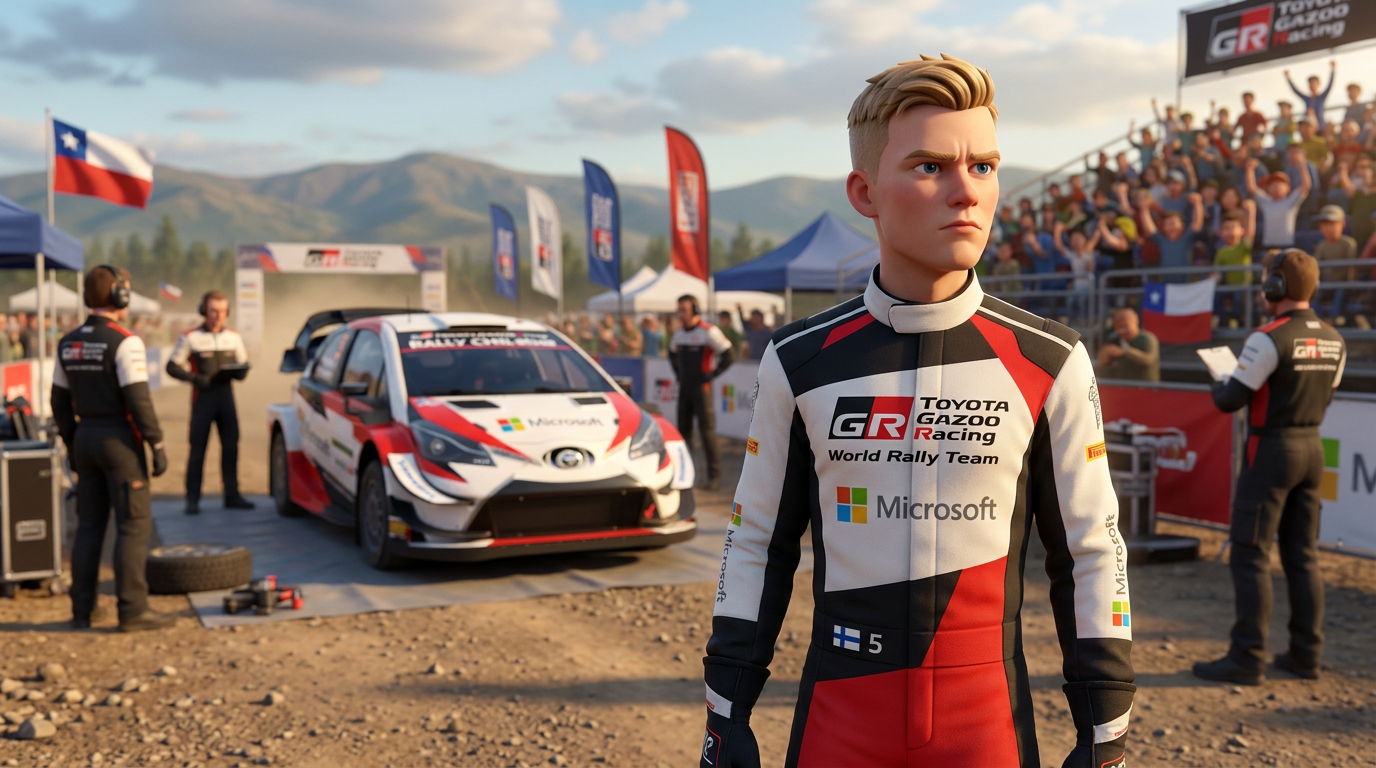
Oliver Solberg won Rally Chile Biobío on Sunday, September 13, turning Toyota’s manufacturers’ championship celebration into the opening round of an internal title fight. Our verdict is clear: Solberg must be regarded as a full-strength championship threat, while Elfyn Evans needs to quit managing his lead and begin rebuilding it.
Toyota has already secured one crown. Its drivers are free to battle for the other without the manufacturers’ standings shaping every call, which should make the final rounds compelling.
Solberg earned his new status
Chile wasn’t a victory handed to Solberg by one rival’s misfortune. He controlled the rally in changing conditions after overnight rain left Friday’s opening stages slippery, then delivered the decisive blow on Saturday’s final test.
Solberg won the stage by 3.7 seconds, taking a 19.1-second advantage over Evans into Sunday’s four remaining stages. It was the move of a title contender, pairing outright speed with the restraint he had called for before Saturday, when tire concerns prompted him to urge a “clever” approach.
Then he completed the job.
That difference matters. Thierry Neuville and Jon Armstrong rolled during the event, while the increased Rally1 tire allocation showed how much punishment crews expected. Solberg encountered the same hazards and converted his lead into victory. A driver doesn’t need years of title experience to pose a threat. Pace and judgment count, along with delivering under pressure. Solberg provided that evidence in Chile.
Evans can’t race the points table
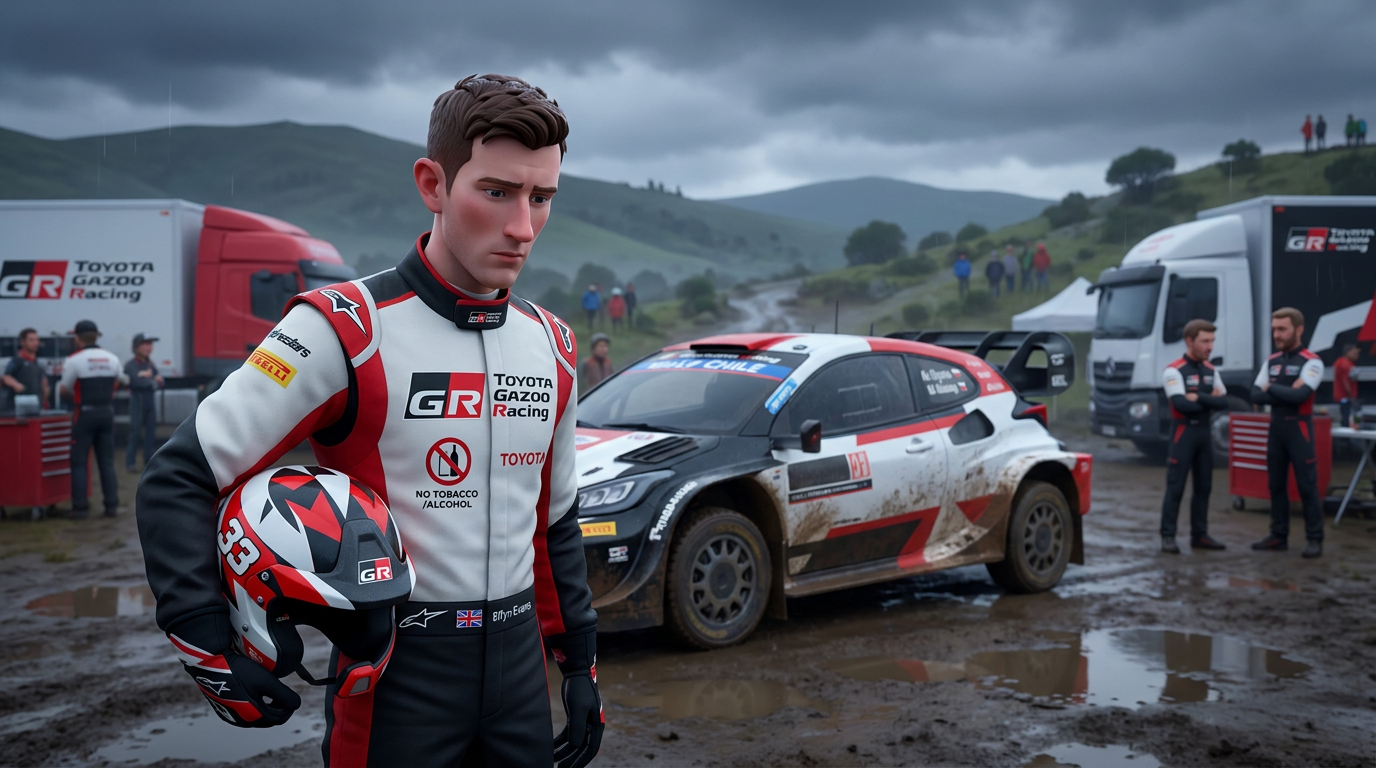
Evans departed Chile with a 17-point championship lead after a puncture on the penultimate stage wrecked his podium bid. He called the setback “harsh” and labeled his championship position “okay.” Both responses make sense. Neither can shape his approach from this point.
Seventeen points offers protection, not control.
Evans didn’t surrender the result through an obvious driving mistake, and he had already insisted extra tires were essential to prevent failures on Chile’s demanding roads. Expanding the allocation was the right response to a recognized risk. Championship math, though, makes no distinction between points lost through poor pace, an error or damaged rubber.
The tactical concern is straightforward. A championship leader can concentrate too heavily on avoiding disaster while a challenger competes without restraint. Solberg carries the momentum from winning in Chile, and Toyota’s manufacturers’ title is secure. Evans must respond by chasing stage wins instead of trying to preserve 17 points across the remaining calendar.
Pajari’s fifth place poses a tougher question
Sami Pajari reached Chile after three straight WRC victories, including Rally del Paraguay with Marko Salminen, where they scored 25 points. He came home a distant fifth in Chile and said the missing pace required a “deeper look.”
That decline makes Toyota’s drivers’ battle less predictable. Pajari’s winning streak cannot be ignored, but Chile demonstrated how rapidly form can disappear when road conditions and tire management alter the challenge.
Toyota shouldn’t set a hierarchy according to reputation or a single weekend. Results should decide it. Solberg has secured the right to equal freedom, Pajari merits an opportunity to respond, and Evans still carries the authority of the championship lead.
Toyota should resist team orders
Toyota’s manufacturers’ crown has removed the strongest sporting argument for intervening early. Its drivers should be allowed to race until a clear mathematical necessity appears.
Discipline still matters. No team wants contact or reckless tactics, nor does it want a preventable retirement. Rallying already keeps teammates apart through road order and minute intervals, so direct collisions are far less likely than in circuit racing. There is scant justification for freezing the contest that Chile brought to life.
Fans deserve a championship settled by the fastest driver over the remaining stages. Toyota gains as well. Letting Evans, Solberg and Pajari compete openly puts its lineup through a demanding test before the 2027 regulations, when a new constructor has already started testing and Project Rally One plans to enter two cars at Rally Monte Carlo.
The response begins in Italy
Rally Chile took place from September 10 through September 13. Rally Italy is the next scheduled round, running from October 1 through October 4, before Rally Saudi Arabia follows from November 11 through November 14.
Italy is now Evans’ chance to answer and Solberg’s opportunity to confirm his form. Pajari needs to rebound from fifth place, while Toyota should stay out of the battle and ensure equal opportunity. The manufacturers’ trophy has been decided. On October 1, Toyota’s drivers should be free to fight for their own.