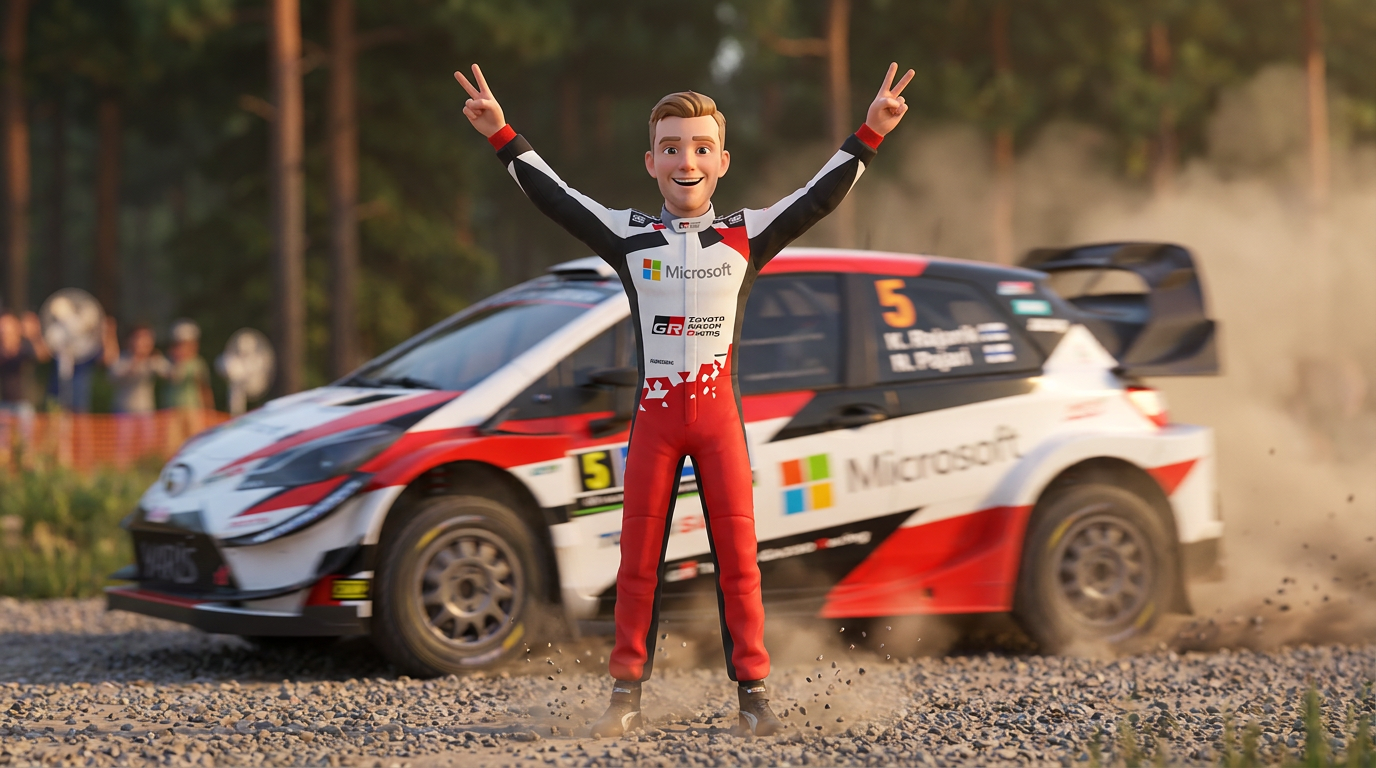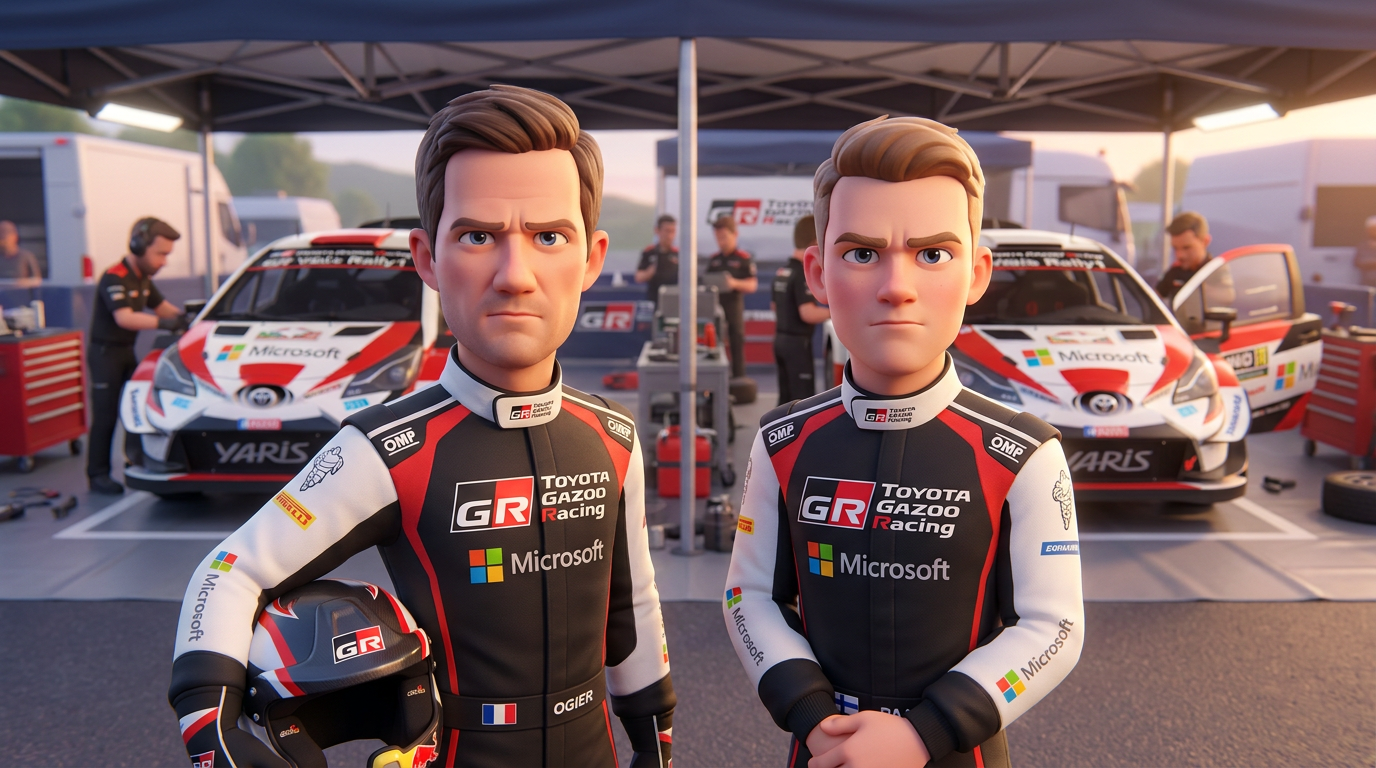
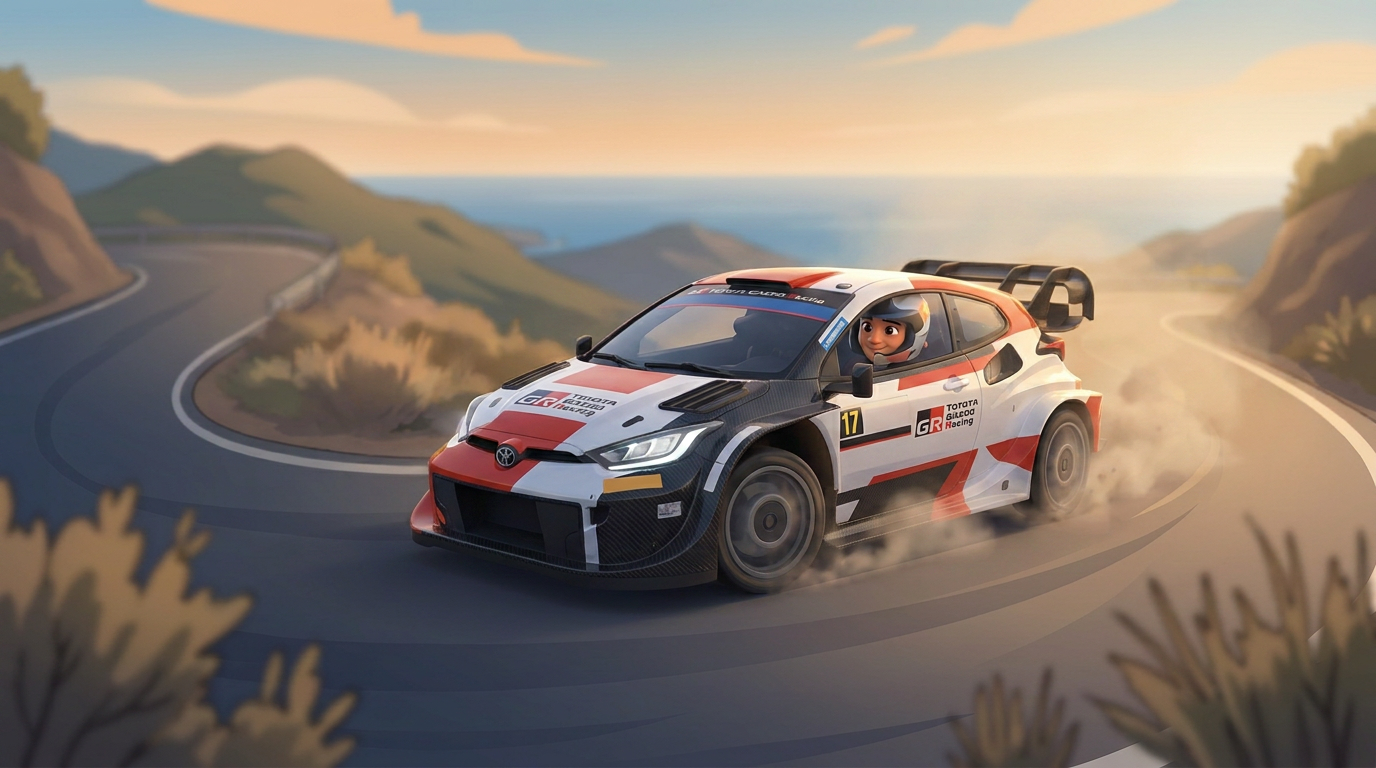
Sebastien Ogier took his first WRC win of 2026 after Toyota team-mate Oliver Solberg crashed during their final-day Rally Islas Canarias fight.
Ogier turns pressure into victory
Sebastien Ogier won the 2026 Rally Islas Canarias on 26 April after a tight battle with Toyota team-mate Oliver Solberg ended dramatically on the penultimate stage.
Ogier, driving a Toyota GR Yaris Rally1 with co-driver Vincent Landais, completed the Gran Canaria event in 2h43m18.9s. He beat Toyota team-mate Elfyn Evans by 19.9 seconds, earning his first WRC victory of the 2026 season and the 68th win of his career.
The result moved Toyota past 300 podium finishes in the World Rally Championship. The final margin, however, did not show how vulnerable Ogier’s lead had been before Solberg retired. Across much of the rally, the winner had almost no margin for error on Gran Canaria’s smooth, high-grip asphalt.
Ogier moved ahead after stage two and finished Friday 8.9s clear of Solberg. It was a useful cushion, though far from decisive, and the contest shifted as Solberg raised his pace on Saturday.
Solberg closes to within striking distance
Solberg, partnered by co-driver Elliott Edmondson, steadily cut into Ogier’s lead as the two Toyota crews exchanged fractions of a second. The fight reflected the circuit-like character of Rally Islas Canarias, where exact lines matter and slight differences in speed can reshape the classification.
They set identical times on stage 13. Solberg took another chunk out of the gap on stage 14, leaving Ogier just 3.8s ahead with four stages remaining on Sunday.
Tyre management and risk control became central to the final day. With no tyre-fitting zone available on Sunday, both crews had to preserve their rubber without sacrificing the pace needed to win. Solberg kept closing, trimming the deficit to only 2.2s before the penultimate test.
Solberg then carried too much speed into a right-hand corner. He clipped a barrier and retired immediately, bringing an end to a charge that had put him on the verge of fighting Ogier for the lead on the final stage.
“Being fast is important, but being at the end is even more.”
Ogier’s verdict identified the key difference. Solberg had enough speed to threaten one of the championship’s most accomplished asphalt drivers, while Ogier combined his pace with the need to reach the finish.
Evans inherits second place
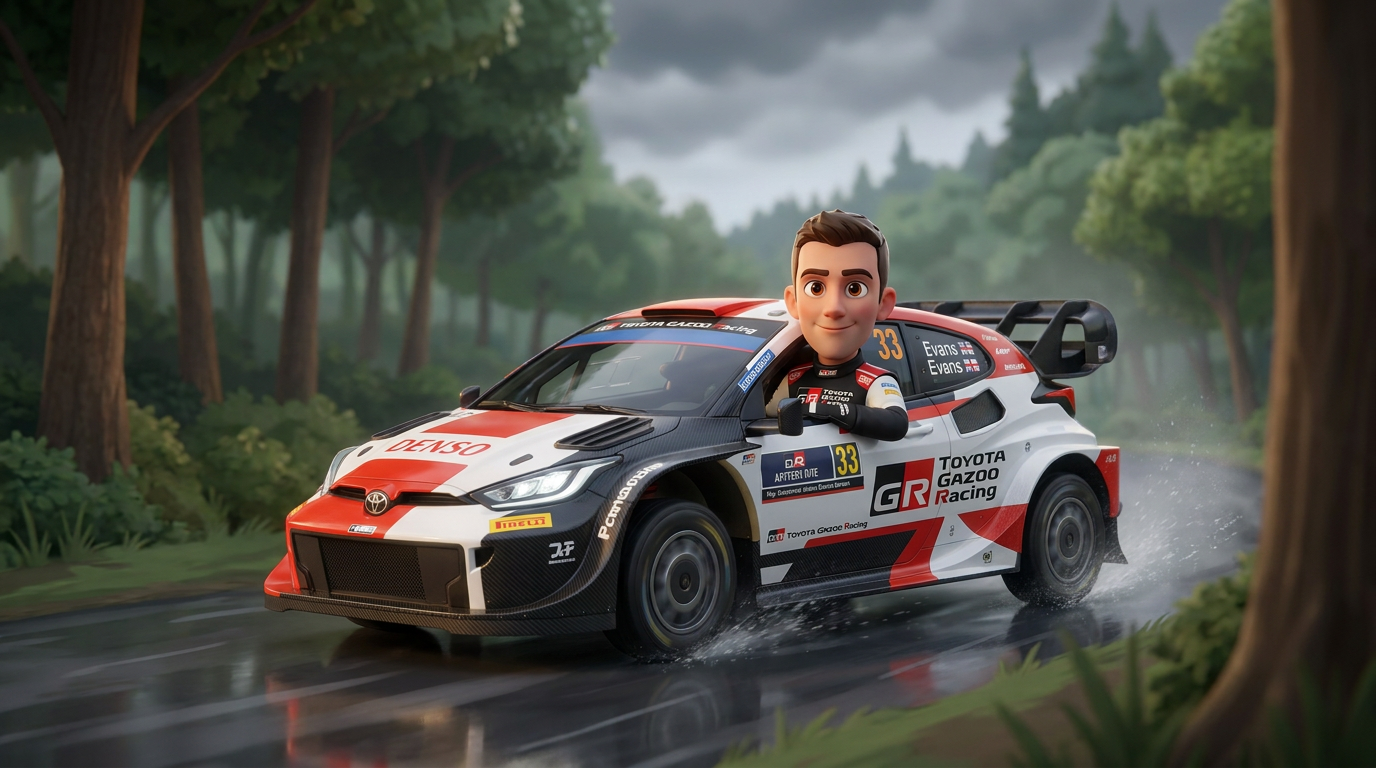
Solberg’s retirement removed the immediate threat to Ogier and promoted Evans to second place. The Welshman had also featured in the victory battle on Saturday, winning the wet stage 10 and moving to within 10.3s of the lead.
Evans dropped back on stage 11 as he struggled to find the optimum operating window, allowing Ogier and Solberg to begin the closest part of their fight. Second place still became a valuable result once Solberg was out.
Ogier managed the remaining distance and brought the Toyota home 19.9s ahead. That margin came mainly from the late turn of events, rather than sustained superiority throughout Sunday. Before the crash, the result was still open and the competition remained intense.
The supplied final classification data also lists the third-placed crew 1m40.8s behind Ogier, although the available notes do not reliably identify that crew. The established podium information confirms Ogier in first and Evans in second as Toyota marked another major WRC milestone.
Victory decided by fine margins
Ogier’s win required outright speed and restraint. He took control early, answered Solberg’s attack and kept the GR Yaris Rally1 on the road as the fight demanded maximum commitment.
Gran Canaria’s mountain roads reward precision, while their high-grip surface can tempt drivers to chase ever-smaller gains. Solberg’s challenge showed he could match Ogier on individual stages and apply pressure across a full asphalt rally. His retirement exposed the cost of stepping beyond the narrow margin between an aggressive bid for victory and a mistake that cannot be recovered.
Experience proved valuable for Ogier. After establishing the lead, he did not have to control every test. He read the changing threat, protected his tyres on Sunday and stayed in position to benefit when his nearest rival made an error.
The win followed four different outcomes in the opening rounds. Oliver Solberg won Rallye Monte-Carlo, Evans triumphed in Sweden and Takamoto Katsuta took victories in Kenya and Croatia before Ogier joined the 2026 winners’ list in Spain.
Championship momentum changes again
Evans regained the WRC championship lead with his runner-up finish, giving Toyota’s strong Canarias result broader significance. Ogier’s victory strengthened his campaign and confirmed the level of competition inside the team.
Speed gave Solberg his opportunity, but reaching the finish settled the rally. He left Gran Canaria without the result his pace suggested was possible, while Ogier secured his first win of the season and career victory number 68 with a controlled drive under pressure.
Rally Islas Canarias ran from 23-26 April as the fifth round of the 2026 WRC season. The championship was scheduled to resume at Rally de Portugal from 7-10 May, moving from Gran Canaria’s smooth asphalt to a different technical challenge.