Formula 1 will expand from six to 10 sprint events in 2027. Monaco’s selection shows why the format needs a cap and clearer sporting criteria.
Formula 1 will hold 10 sprint events across its 24-race 2027 season, up from six, and that expansion is a mistake. The calendar announced on September 16 takes a format once defined by scarcity and makes it a near-constant feature. Monaco’s first sprint exposes the problem.
Ten sprints erase their novelty
A sprint should give a season a different texture. It should appear occasionally at a circuit suited to short, aggressive racing, creating an event that stands apart from a standard Grand Prix weekend.
Ten appearances will make it routine.
That matters because Formula 1 already demands plenty from its audience. A 24-race schedule asks fans to follow a lengthy championship across multiple continents. Adding sprint competition to 10 of those weekends creates extra volume without guaranteeing better racing. Nearly half the calendar will feature the alternative format.
We don’t oppose every sprint. We oppose expansion as the objective. The format should earn its place through the racing it delivers, rather than meet a target for extra competitive sessions.
Monaco is the wrong experiment
Monaco will stage a Formula 1 sprint for the first time in 2027. That decision shows circuit suitability isn’t carrying enough weight.
The principality’s limitation is well known. Modern Formula 1 cars struggle to race side by side on its narrow streets, and a shorter distance doesn’t produce more passing space. A sprint may push drivers toward greater risks because they have less time to recover positions, but incidents and urgency can’t replace overtaking.
There’s another price. Monaco qualifying has unusual value because grid position matters so much. Another competitive session risks making the weekend busier without strengthening its best element.
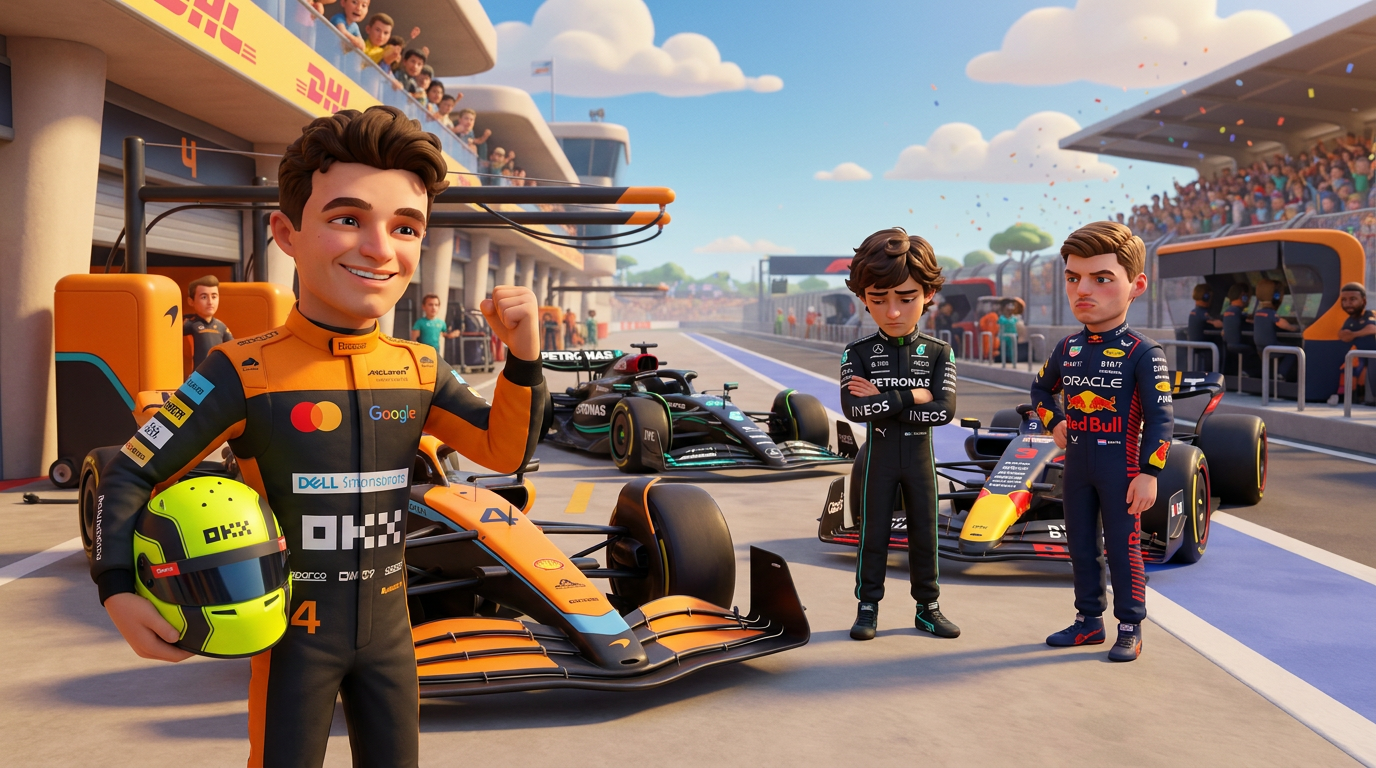
Lando Norris has called the event a “never before” challenge. That novelty will attract attention, but it doesn’t make the sporting case. Formula 1 should select sprint venues according to whether their layouts can produce a second race worth watching.
Sunday’s Grand Prix is still the championship’s core product. Its history, distance and strategic depth define Formula 1. Sprint events are most effective as rare disruptions around it.
Moving from six to 10 dilutes that hierarchy. It also distributes extra competitive opportunities unevenly across the calendar, making sprint venue selection relevant to both championships. Teams that excel at those tracks get additional scoring chances, while a weak sprint package can make a single weekend disproportionately costly.
Kimi Antonelli led the 2026 drivers’ standings with 292 points after winning the Spanish Grand Prix on September 13. George Russell had 211, with Lewis Hamilton on 191. Those gaps developed in a season where every scoring chance counted. Four additional sprints will introduce four further variables into future title fights.
Extra variables aren’t inherently unfair. Formula 1 still needs to explain why 10 makes for a better championship than six. The announcement provides the number, but the racing argument is much less persuasive.
Recent evidence argues for restraint
The Spanish Grand Prix at the Madring provided a timely warning against confusing event activity with racing quality. Antonelli covered 57 laps in 1:34:23.754, finishing 4.351 seconds ahead of Max Verstappen and 5.089 ahead of Norris. The debut still faced criticism over limited passing, while McLaren said overtaking was impossible.
The weekend succeeded away from the circuit. On track, Formula 1 left viewers talking about track design and the virtual safety car intervention that hurt Norris, rather than sustained fights for the lead.
A sprint wouldn’t have solved that.
That’s why we reject the idea that adding another race automatically makes a weekend better. Formula 1 must first provide conditions that allow the cars to compete. If a layout doesn’t encourage passing, reducing the distance largely produces a shorter version of the same issue.
Cap the format and choose better
Formula 1 should reverse this expansion before the 2027 season starts. Six sprints are enough. They should be allocated using clear sporting criteria, including proven overtaking potential and a layout that can support different approaches.
The series should also explain publicly why each circuit was chosen. Fans deserve reasoning stronger than increased “intensity.” At the right venue, a sprint can complement Sunday. At Monaco, it looks like content added because the calendar has room for it.
The next immediate checkpoint is the Azerbaijan Grand Prix from September 24 to 26. The 2026 season then continues in Bahrain from October 2 to 4, as preparations start for Formula 1’s February 2027 season launch in Milan.