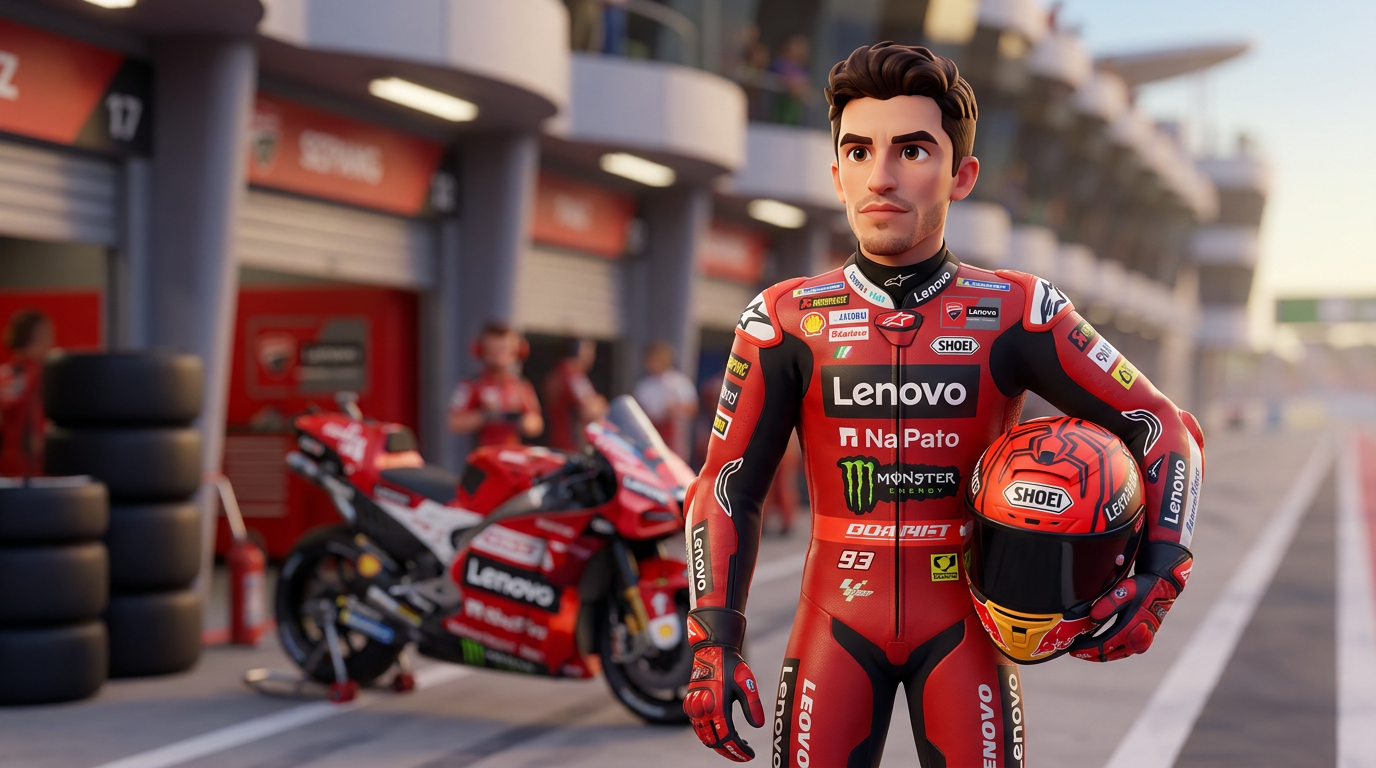
A shorter Sepang test gives MotoGP riders less time to prepare for 850cc bikes and Pirelli tires in 2027, placing greater value on experience.
MotoGP confirmed its 2027 preseason plan on September 2, with one change favoring the championship’s established greats. Sepang’s official test will drop from three days to two as riders tackle new 850cc motorcycles and the switch to Pirelli tires.
A compressed start to a new era
The Sepang Shakedown will also be cut from three days to two. Rookies are eligible to take part, meaning new arrivals lose two track days across the Shakedown and official test compared with the previous format. Veterans lose one.
Buriram comes after Sepang on consecutive weekends, tightening the first major development cycle of 2027.
Experience becomes measurable currency
Marc Marquez provides the clearest example of why repetition counts. The reigning world champion won the Sprint and Grand Prix at Aragon on August 29 and 30, scoring 37 points and climbing to second in the 2026 standings.
His Sunday was far from routine.
Marquez failed to release his rear ride-height device after the back straight while heading to the grid. The Ducati grounded through Turn 2, dropping him to third before he recovered to beat Pedro Acosta and Marco Bezzecchi. His ability to identify a problem while racing gives him an advantage that no preseason schedule can create.
The historical comparison changes again
Cross-era MotoGP rankings already demand context. Giacomo Agostini won his premier-class titles on machinery and calendars far removed from those Valentino Rossi faced, while Marquez has raced through control electronics, aerodynamic expansion and the introduction of Sprint races.
The 2027 rules create another dividing line. Engine capacity falls to 850cc, Pirelli replaces Michelin as the tire supplier, and riders have fewer official Sepang days to build a baseline. Early results will reflect adaptation alongside outright speed.
That distinction matters when assessing champions. Riders who enter 2027 with experience across several technical cycles bring a different asset than newcomers learning one MotoGP bike for the first time.
Manufacturer changes increase the difficulty
The shorter schedule also affects riders switching manufacturers. Every MotoGP machine requires different braking references, corner-entry habits and electronic settings. Pirelli’s behavior, meanwhile, will be new to the entire premier-class field.
Teams must split two Sepang days between performance work and reliability checks. A rain interruption or technical failure will take up a larger share of the available running than it did over three days.
Buriram becomes the decisive checkpoint
The back-to-back Sepang and Buriram tests will show which riders can quickly carry lessons from one circuit to another. Moto2 and Moto3 will test separately at Jerez, while MotoGP’s season launch is set for Rio de Janeiro.
The first concrete verdict comes at Sepang in early 2027, when the field starts its two-day official test on the new bikes and Pirelli tires.