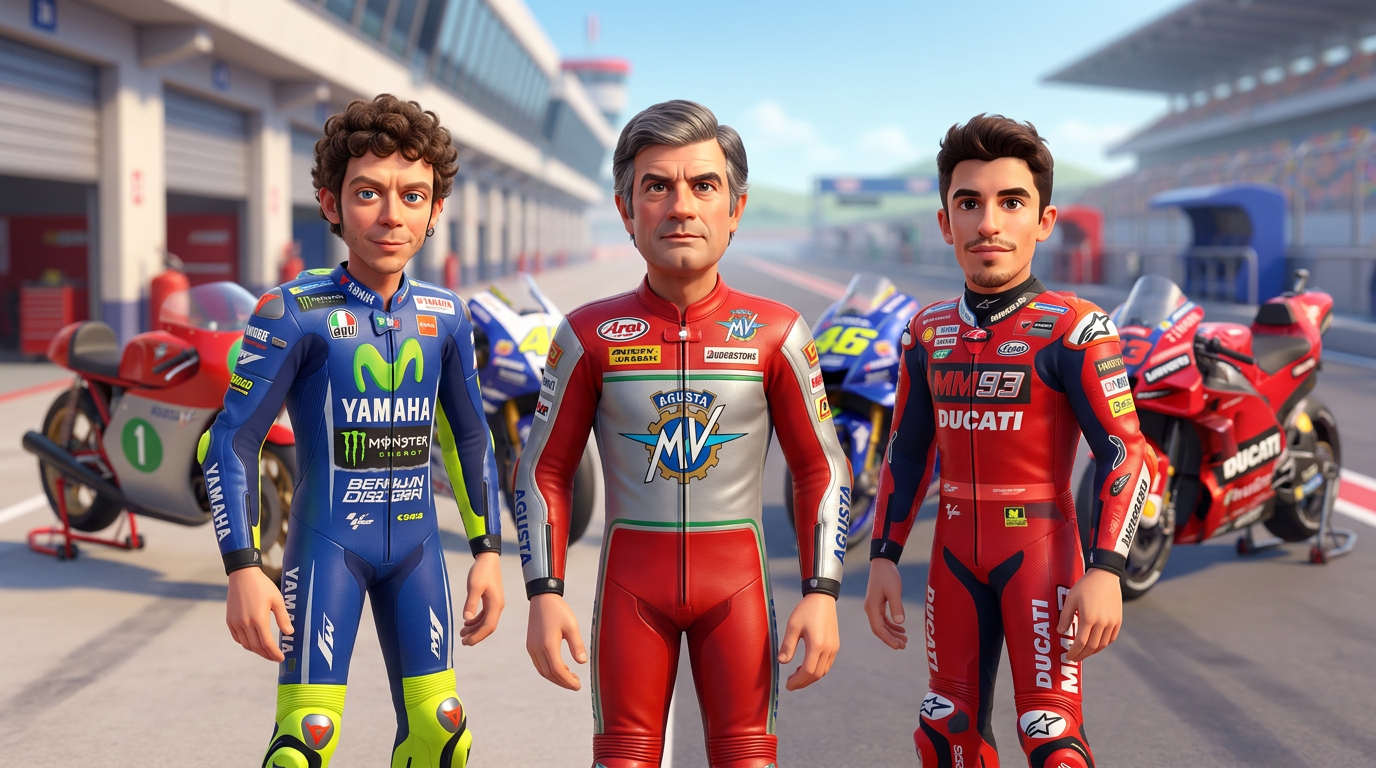
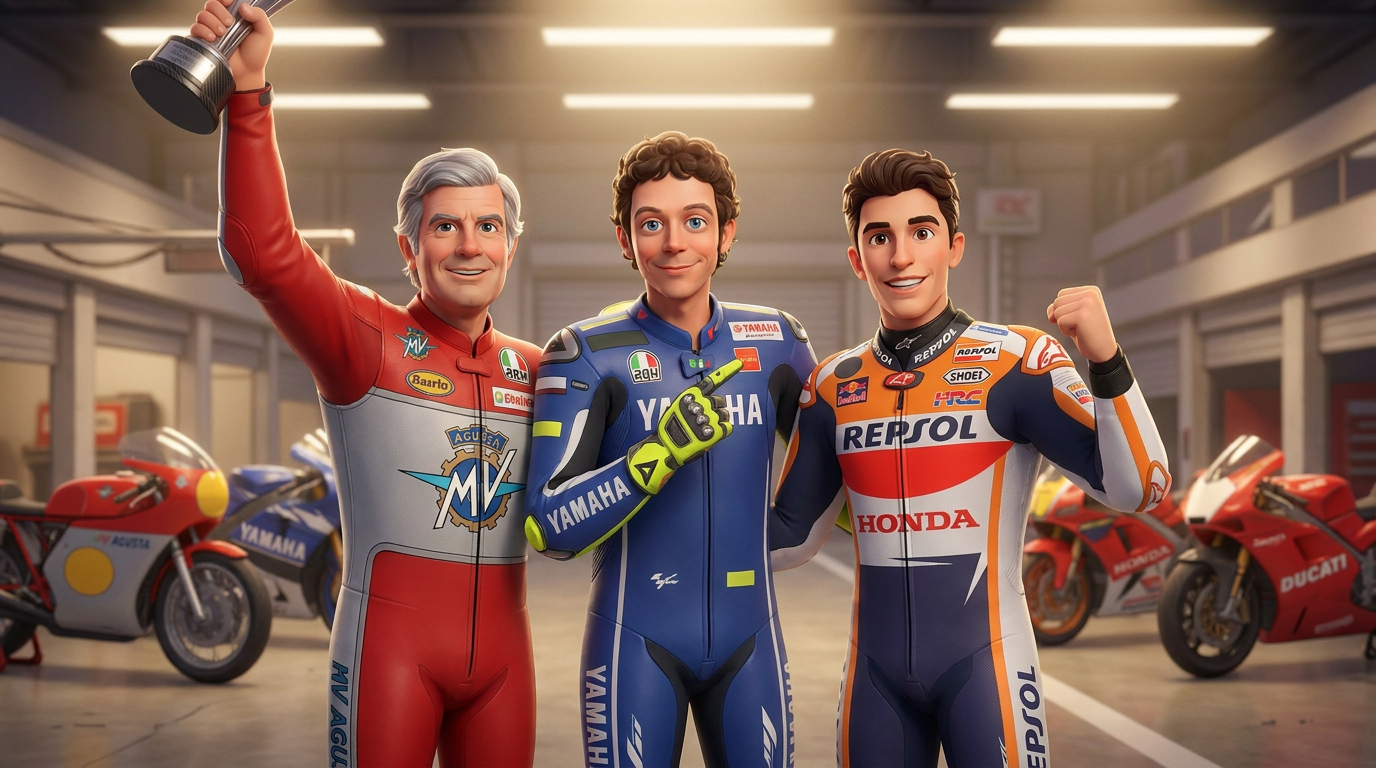
Agostini leads the historic totals, Rossi set the modern standard, and Márquez brings a peak and comeback case into the 2026 MotoGP season.
Giacomo Agostini owns the championship’s most imposing career totals, Valentino Rossi defined the modern premier class, and Marc Márquez produced a peak that changed expectations of what a rider could achieve on a MotoGP bike. No single statistic can settle MotoGP’s greatest-of-all-time argument. Mick Doohan’s concentrated dominance, Mike Hailwood’s versatility and Honda’s vast constructors’ legacy turn the debate into a comparison between distinct forms of greatness, rather than a simple leaderboard.
Start with the championship’s changing identity
The premier class began as the 500cc World Championship in 1949 before becoming MotoGP in 2002. The lineage is continuous, but the competitive conditions have changed repeatedly. Calendars expanded, machinery went from four-stroke to two-stroke and back again, safety improved, and careers generally grew longer.
Agostini won 15 world championships, eight in the 500cc class and seven in 350cc. His 122 Grand Prix victories also came across multiple categories in an era when leading riders regularly contested more than one class during the same season. The numbers are extraordinary. They are not directly interchangeable with Rossi’s 115 victories or Márquez’s totals from a modern career structured largely around one class.
The premier class should carry the most weight in a fairer head-to-head comparison. Agostini’s eight titles lead Rossi’s seven, while Márquez entered the 2026 season with seven after winning the 2025 MotoGP crown. Doohan claimed five consecutive 500cc championships from 1994 through 1998. Hailwood earned four premier-class titles.
Agostini owns the strongest record-book case
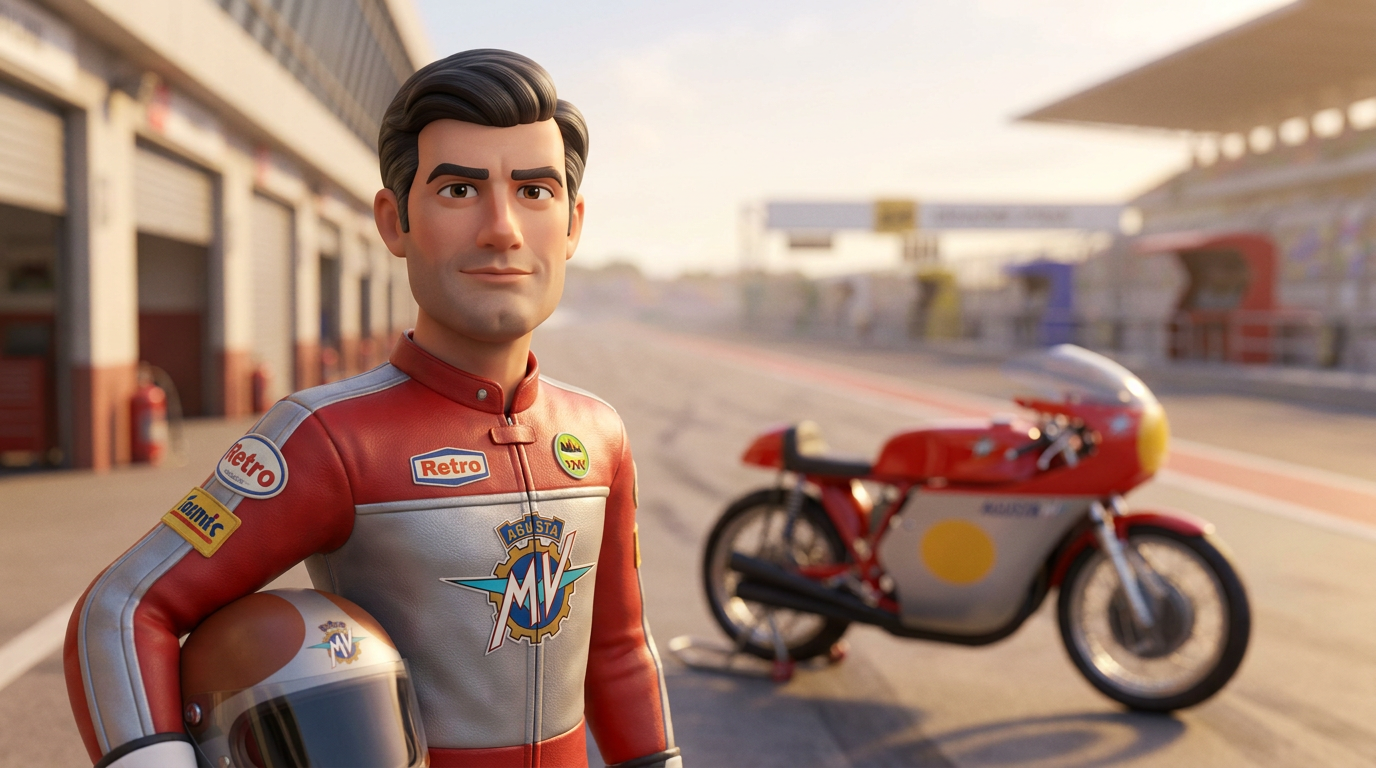
Agostini remains the benchmark if greatness is measured by championship volume and sustained superiority. He collected eight premier-class crowns between 1966 and 1975, including seven in succession. He also won across manufacturers. After defining MV Agusta’s golden period, Agostini delivered Yamaha’s first premier-class riders’ championship in 1975.
That 1975 title is central to his case. It demonstrates adaptability rather than dependence on one dominant partnership. His combined-class record is even stronger, yet his premier-class achievements alone put him at or near the top.
His era still needs context. MV Agusta held an enormous technical advantage for much of Agostini’s reign, fields were smaller, and reliability often created substantial gaps. Superior equipment does not automatically diminish dominance, however. The rider must convert the best machinery into championships while avoiding mistakes and sustaining performance year after year. Agostini did so with unmatched consistency.
Rossi built the modern standard
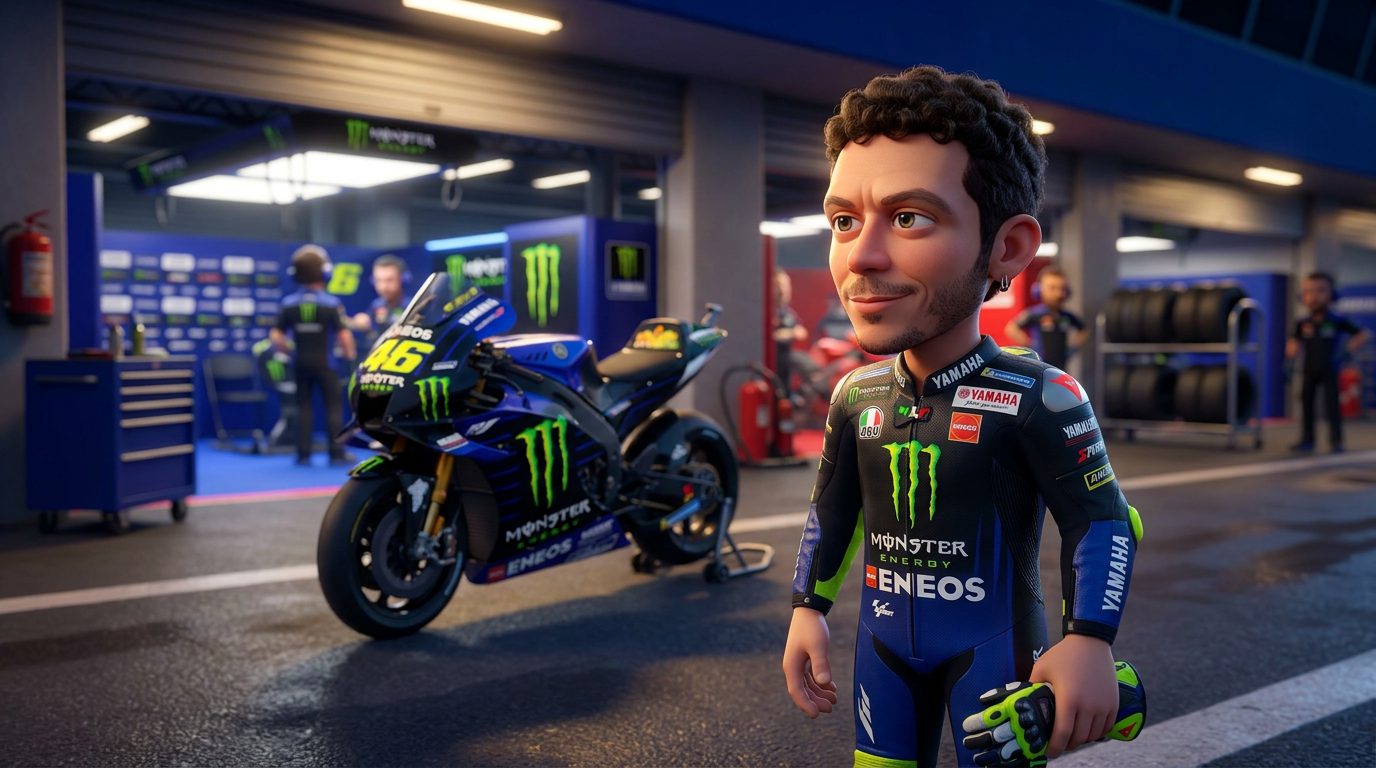
Rossi’s case is built on breadth, longevity and competitive influence. He won nine world championships overall, seven in the premier class, and secured top-category titles with both Honda and Yamaha. His 2004 championship came immediately after his move from Honda to Yamaha and remains one of Grand Prix racing’s most persuasive manufacturer-switch achievements.
Major technical changes did not stop him. Rossi won the final 500cc championship in 2001, then captured the first MotoGP crown in 2002 when four-stroke machinery arrived. His premier-class title span extended from 2001 through 2009, while his race-winning career at the highest level continued far beyond those years.
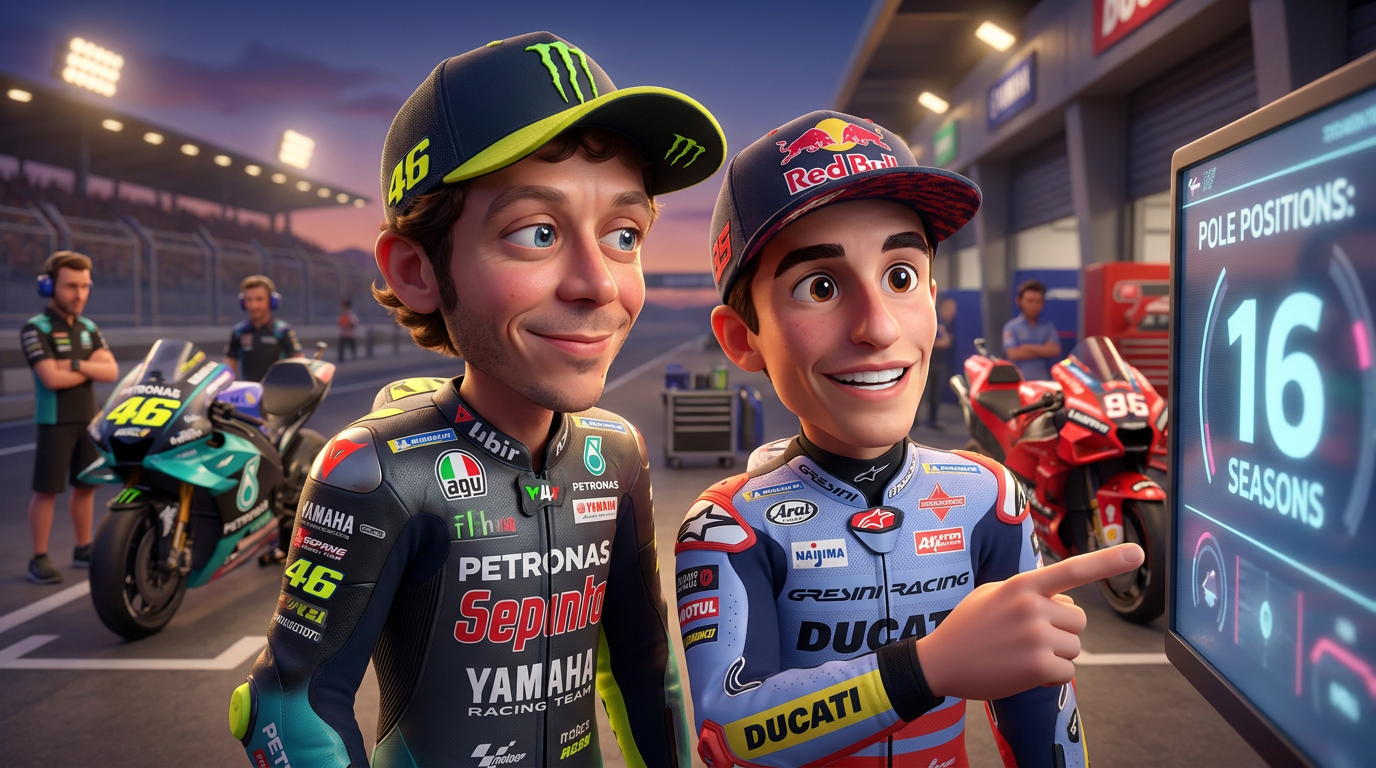
Rossi’s impact cannot be fully captured by statistics. Rivalries with Max Biaggi, Sete Gibernau, Casey Stoner, Jorge Lorenzo and Márquez linked several generations. That longevity strengthens his ranking because it measured him against different motorcycles, tires, teammates and rivals instead of one stable rules package.
Márquez has the defining peak of his generation
Márquez became the youngest premier-class world champion in 2013, taking the title as a Honda rookie. By the end of 2019, he had won six MotoGP championships in seven seasons, with 2015 the only crown he missed during that stretch. His immediate success, recovery riding and relentless front-end risk created a peak distinct from Agostini’s measured control and Rossi’s tactical range.
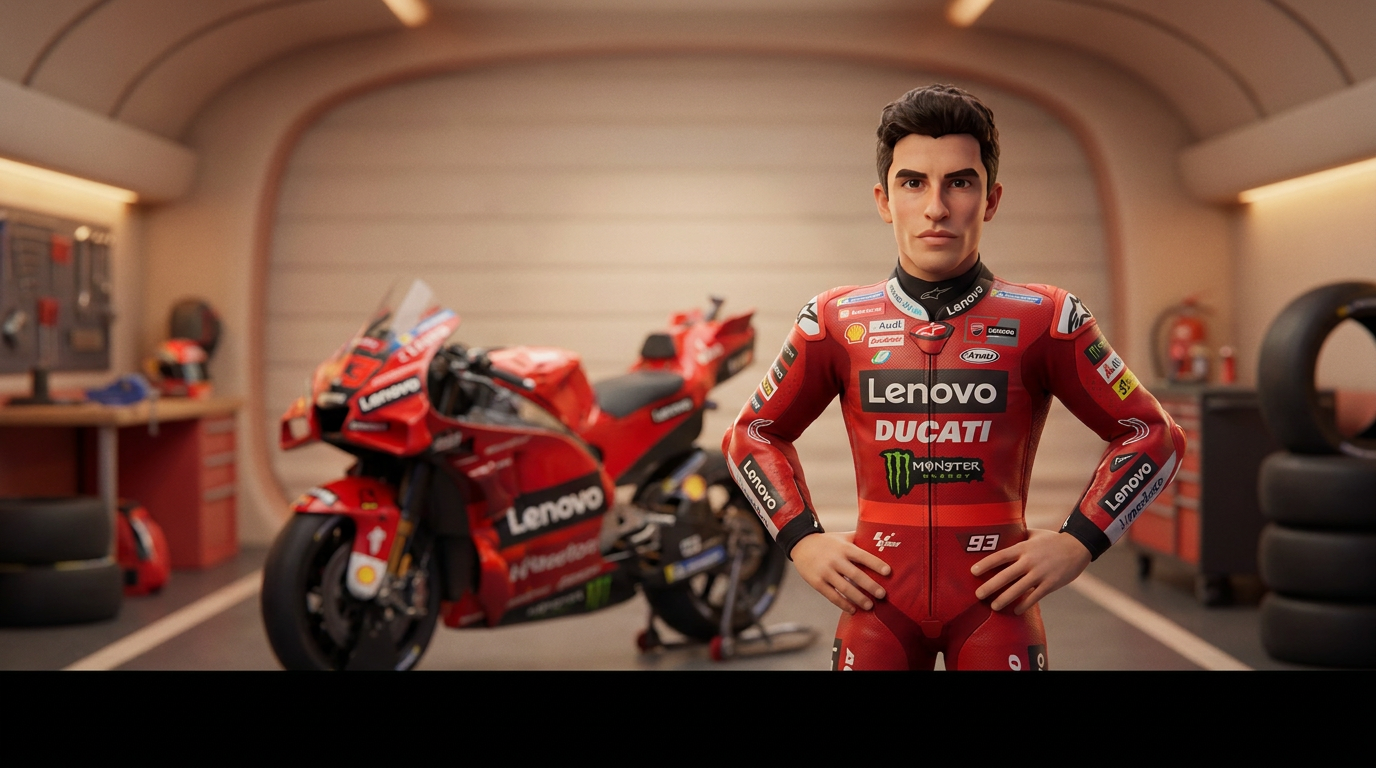
His career also offers the clearest modern measure of resilience. A serious right-arm injury in 2020 required multiple operations and caused a prolonged interruption, while Honda’s declining competitiveness complicated his return. Márquez then left Honda, rebuilt his career on Ducati machinery and won the 2025 championship, matching Rossi’s seven premier-class crowns.
The comeback changes the historical comparison. Márquez is no longer assessed solely on his exceptional peak with Honda because he has also won a title with another manufacturer. His remaining seasons will decide whether he can match Agostini’s premier-class record of eight championships.
Doohan and Hailwood remain essential
Doohan’s five consecutive titles rank among the sport’s most concentrated periods of control. He achieved them after the severe 1992 Assen injury that nearly ended his career, and his superiority defined Honda’s 1990s two-stroke era. His championship résumé is shorter than those of Agostini, Rossi or Márquez, but his peak was not lower.
Hailwood’s case extends beyond MotoGP’s direct ancestry. He won four 500cc crowns alongside championships in smaller classes, while success outside Grand Prix racing further strengthened his reputation. Cross-discipline achievement is hard to quantify. It still shows the broader skill set required of earlier generations.
Other champions occupy the next tier of any serious ranking. Stoner earned premier-class titles with Ducati and Honda, while Lorenzo secured three MotoGP crowns during the Rossi and Márquez era. Kenny Roberts changed riding technique while winning three consecutive 500cc titles, and Eddie Lawson claimed four championships for Yamaha and Honda.
Honda leads the team and manufacturer argument
Motorcycle racing complicates the term team. Riders score for entrants, manufacturers compete for a separate constructors’ championship, and factory operations can change names or sponsors. Long-term rankings therefore work best when they focus on manufacturers.
Honda has the strongest overall premier-class case based on title volume, race victories and success through different technical eras. Its champions include Freddie Spencer, Lawson, Doohan, Álex Crivillé, Rossi, Nicky Hayden and Márquez. Yamaha follows with similarly broad historical reach through Agostini, Roberts, Lawson, Wayne Rainey, Rossi, Lorenzo and Fabio Quartararo.
MV Agusta created the most concentrated dynasty, controlling the early decades with Hailwood, John Surtees, Gary Hocking, Phil Read and Agostini. Ducati’s record is newer but increasingly significant. Stoner delivered its breakthrough 2007 title, Francesco Bagnaia returned it to championship leadership in 2022 and 2023, and Márquez extended that modern run in 2025.
The current verdict has several answers. Agostini leads the historic totals, Rossi owns the strongest all-around modern legacy, and Márquez carries an active peak-and-comeback case. Honda ranks first among manufacturers, with Yamaha’s longevity, MV Agusta’s dynasty and Ducati’s modern rise keeping the order open. Márquez entered the 2026 season one premier-class championship behind Agostini’s record of eight.