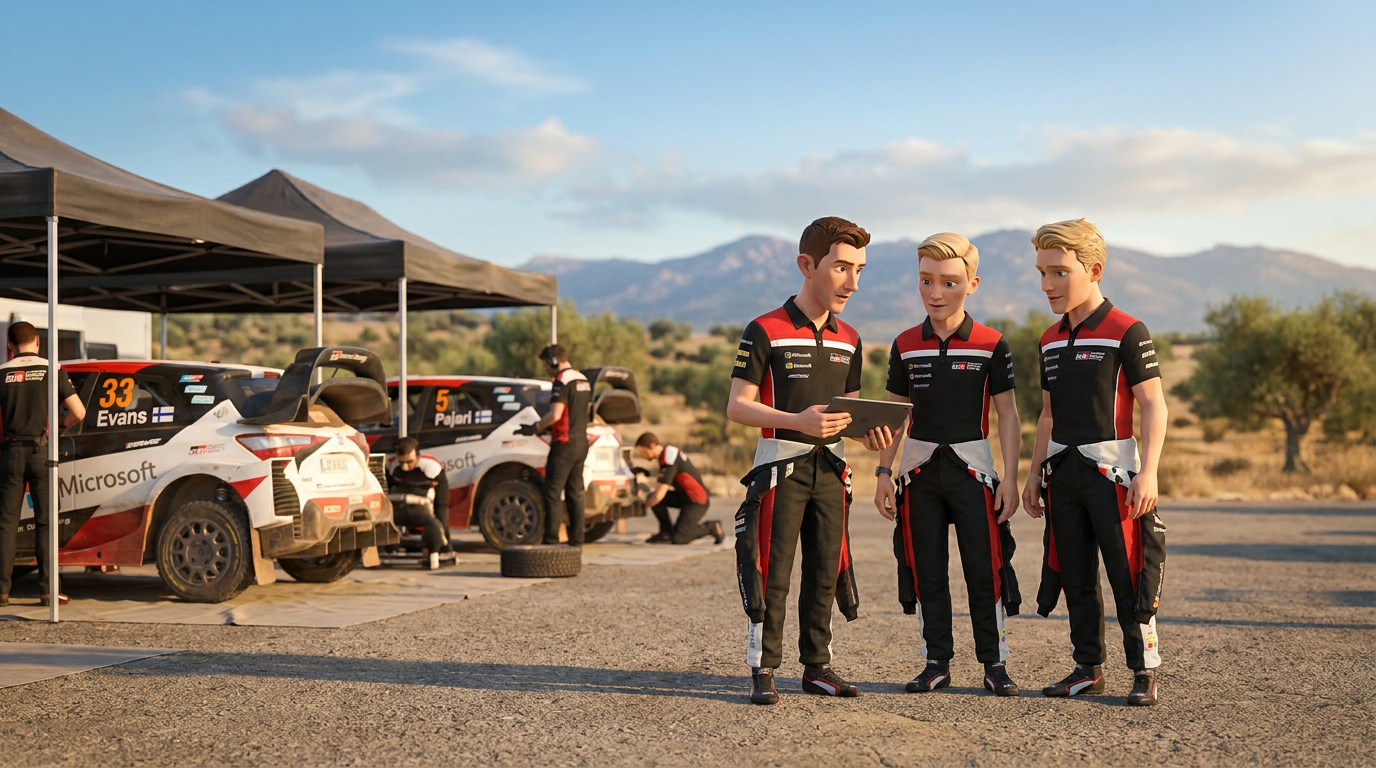
Oliver Solberg’s move into the Rally Italia Sardegna lead has changed the strategic question in the World Rally Championship finale.
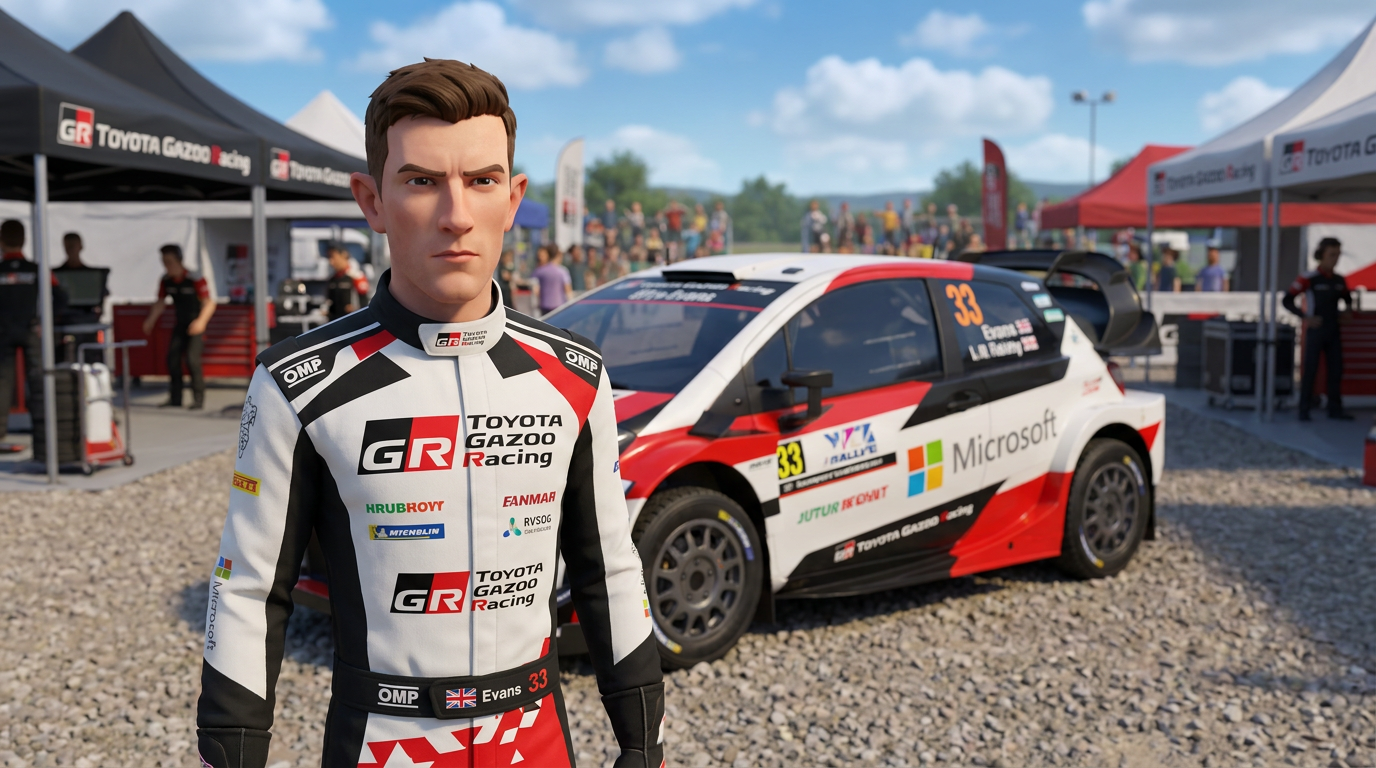
Elfyn Evans can no longer manage a comfortable points cushion, while Solberg must decide how much risk a 2.7-second rally advantage can support.
Evans should resist trying to answer every Solberg stage time. But with his championship lead reduced to four points during Saturday morning, passive damage limitation is no longer enough. He needs speed without turning the title fight into a reckless chase.
Solberg has forced the strategic reset
Solberg began Saturday’s three-stage morning loop 12.3 seconds behind Thierry Neuville, according to Motorsport.com. He won two stages and emerged 2.7 seconds ahead of the Hyundai driver.
That was more than a change at the top of the rally classification. Motorsport.com’s running championship assessment put Evans only four points ahead. Because that figure was calculated during the event, it is not a final championship margin, but it shows how rapidly the title picture can move.
The championship had entered Sardinia as a three-way contest among Toyota drivers Evans, Solberg and Sami Pajari. The official WRC preview said they were separated by 21 points before the 13th and final round. Solberg’s Saturday attack has made his route plain: maximize the rally result and make Evans respond.
Evans must reject the wrong fight
Evans’ temptation will be to chase Solberg directly. We think that would be the wrong target. Solberg is leading the rally, but Evans’ championship calculation depends on the points-producing positions around him, not merely his teammate’s stage times.
Evans finished Friday 56.6 seconds behind then-leader Neuville, WRC.com reported. That gap placed outright victory beyond a simple tactical adjustment. Rallying also offers no conventional pit window, undercut or overcut. The equivalent strategic levers are tire selection, road-position consequences, spare-tire choices and the balance between stage commitment and survival.
Evans therefore needs selective aggression. He should attack where confidence, road conditions and tire condition offer a credible gain, rather than manufacture risk on every split. Four points is too little for pure conservation, but a retirement would be far more damaging than conceding a few seconds on one stage.
Solberg cannot protect 2.7 seconds
Solberg’s advantage over Neuville was only 2.7 seconds after Saturday morning. That is not a margin he can defend by easing his pace. It demands another controlled attack, particularly because Neuville is fighting for the rally result without the same drivers’ title calculation described for Toyota’s three contenders.
The risk is obvious. Solberg has created his opportunity by overturning a 12.3-second deficit, but the same level of commitment can expose a crew to a puncture, an error or tire damage. His task is not simply to beat Evans. He must preserve enough rally points to capitalize on Evans’ position.
That distinction matters. A spectacular stage win has limited championship value if it compromises the event result. Solberg’s best strategy is pressure with discipline, not flat-out driving detached from the classification.
Pajari’s position demands opportunism
Pajari ended Friday 27.9 seconds behind Neuville, according to WRC.com. He remained part of the title contest, but his tactical position was different from those of Evans and Solberg.
Evans began the finale with the points advantage. Solberg has seized the rally initiative. Pajari needs movement elsewhere as well as his own gains, which makes excessive caution strategically weak. That does not justify gambling blindly, but it does mean he has less reason to protect the status quo.
His best route is to remain close enough to benefit from trouble ahead while applying pressure through clean stage times. In a finale, proximity is a weapon: it prevents rivals from treating a position as secure.
Toyota should avoid premature team orders
Toyota has already secured the 2026 manufacturers’ championship, so its remaining priority is the drivers’ crown. That inevitably raises the possibility of team orders among Evans, Solberg and Pajari.
We would not intervene while all three retain a credible title route and the rally order remains unsettled. An early instruction could distort the competition before Toyota knows which arrangement actually guarantees the championship.
That position must change if the late-running arithmetic becomes decisive. Once the title can be secured by exchanging positions, Toyota would be justified in protecting the championship. The key is transparency and timing: act only when the calculation is clear, not because one contender appears more established.
The standings now reward precision
Sardinia’s tactical battle is not a circuit-racing contest disguised in rally language. There is no pit stop to trigger an undercut and no safety car to erase a deficit. Every strategic choice is expressed through pace, tires and exposure to risk.
Solberg must keep attacking because 2.7 seconds offers no shelter. Evans must recover points without chasing an unrealistic rally turnaround. Pajari must stay close enough to exploit volatility. Toyota, meanwhile, should let the contest develop until the championship arithmetic demands intervention. The next classification update, not reputation or hierarchy, should determine its call.