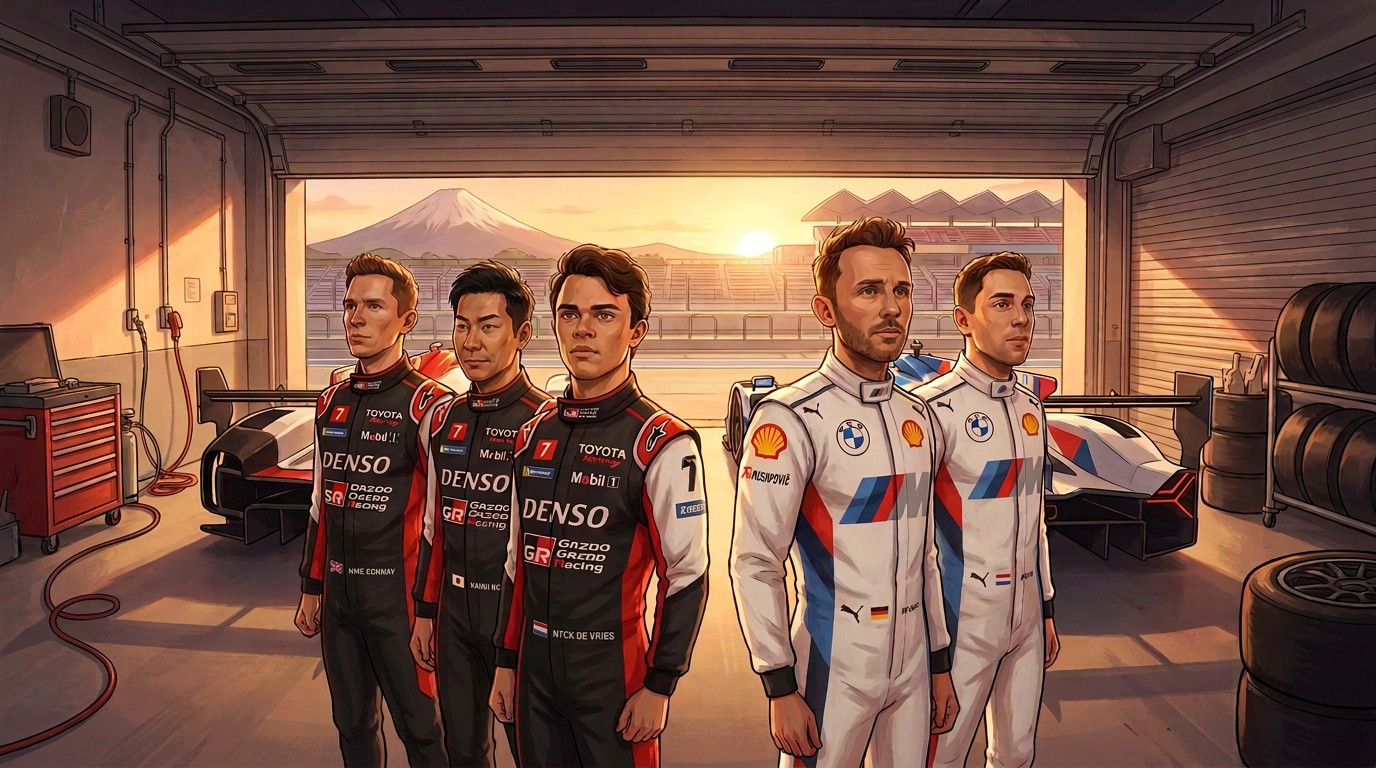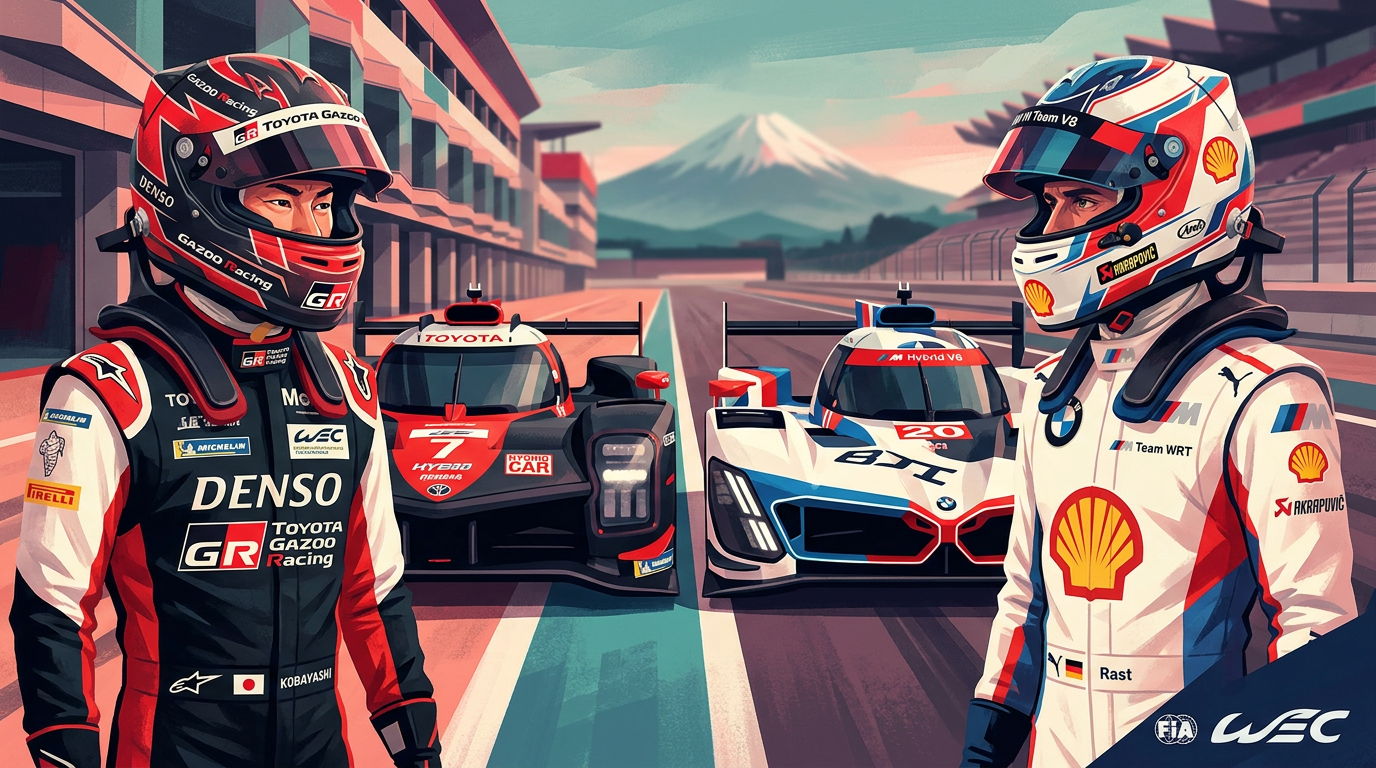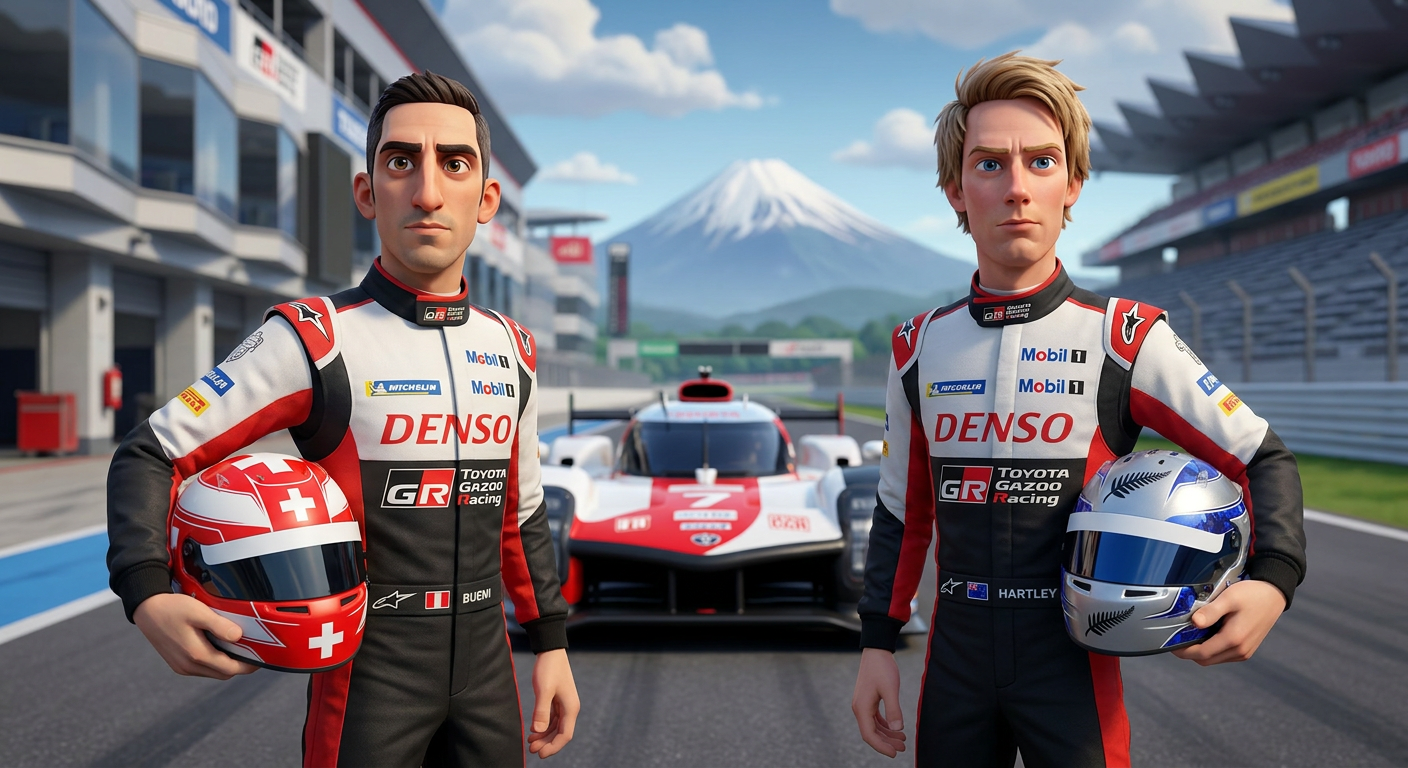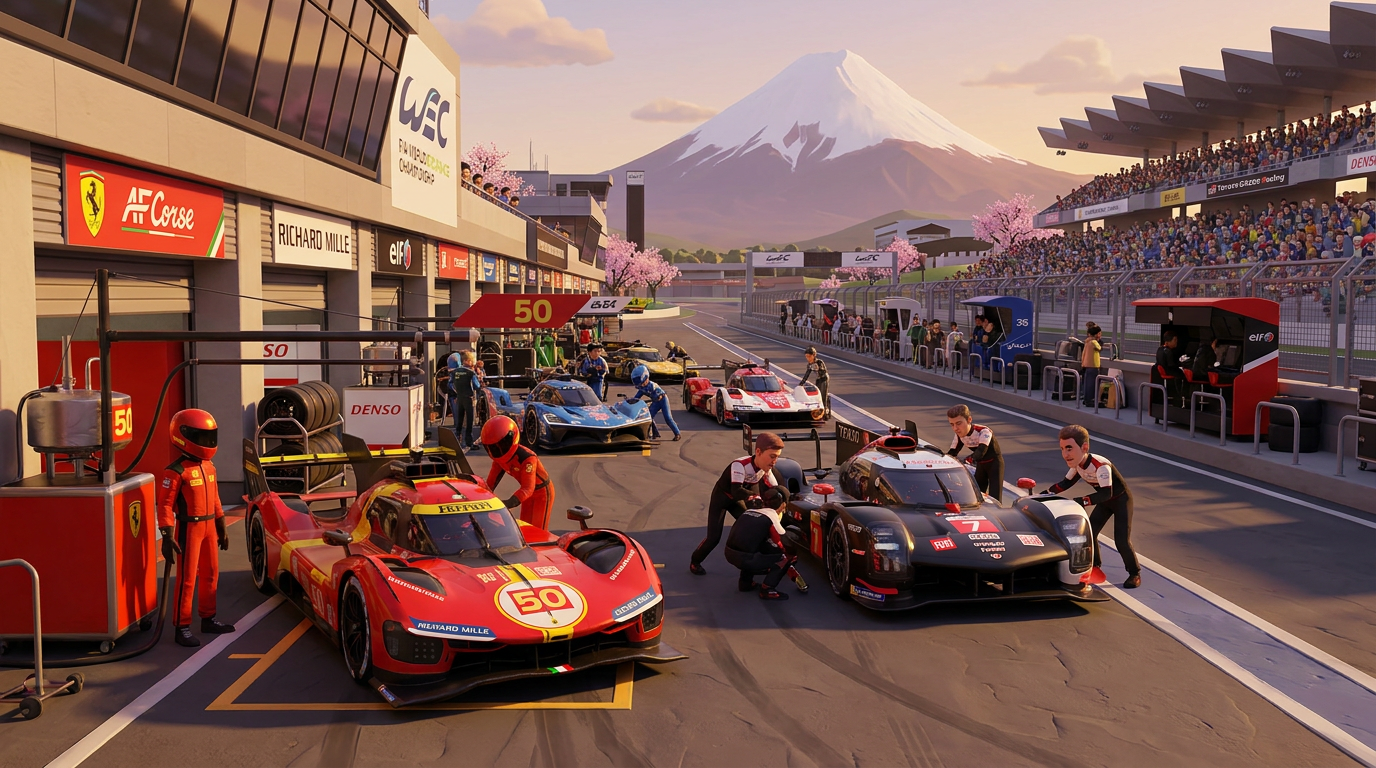
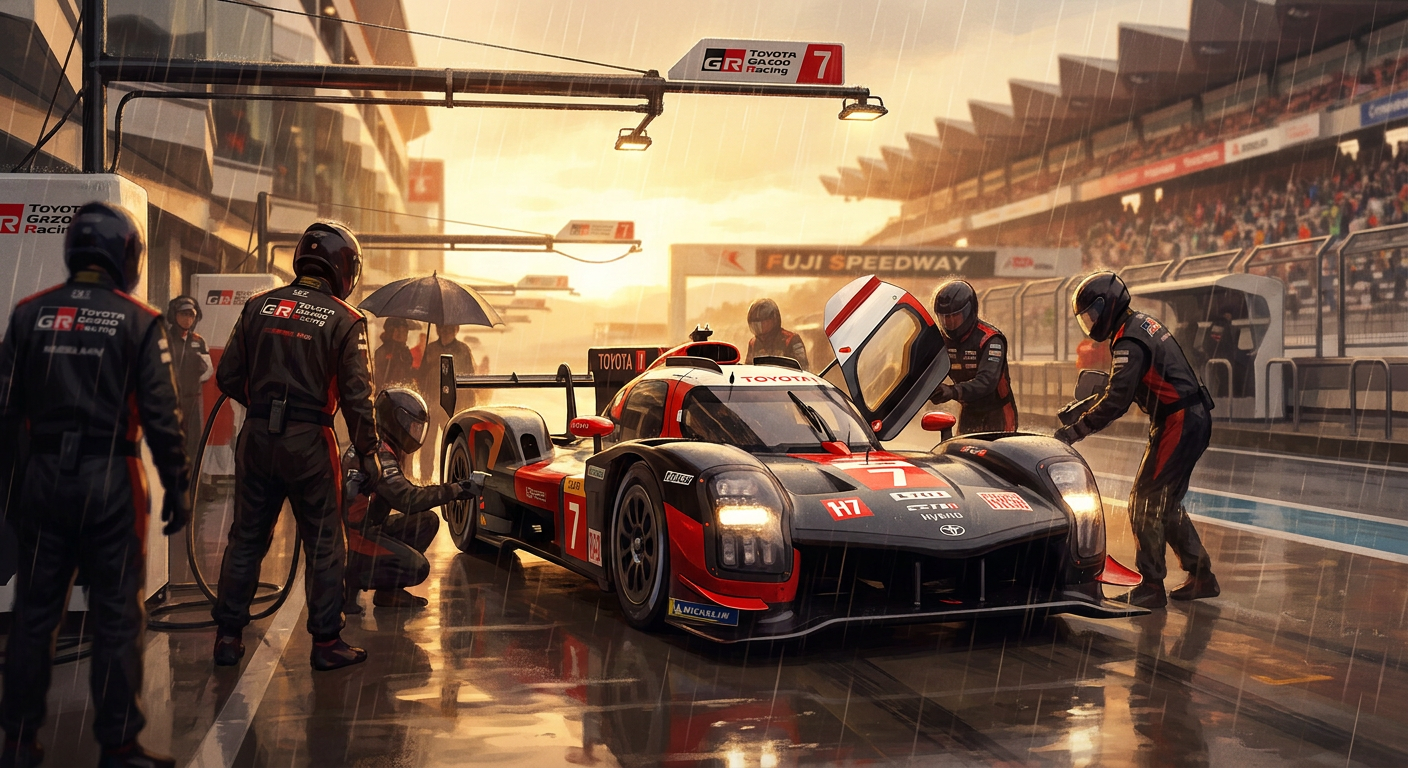
Toyota reached Fuji Speedway with reliability updates for its Hypercar after the No. 7 car lost the lead at Austin with 15 minutes to go. Reported on September 25, the changes address the issue that turned a likely victory into a late retirement from contention and gave the win to the No. 50 Ferrari.
Sunday’s 6 Hours of Fuji now provides a direct test of Toyota’s response. The race is scheduled for September 27, while severe weather on Saturday stopped the field from completing qualifying and moved the engineering focus away from low-fuel speed and onto reliability across six hours.
Austin failure prompts Toyota’s response
The No. 7 Toyota led the 2026 Austin round before slowing with 15 minutes remaining. Ferrari’s No. 50 moved into first place, while Cadillac advanced to second after Alpine was penalized.
Toyota then introduced reliability updates ahead of Fuji. The available technical details do not name the affected component or explain the hardware changes, so a more specific diagnosis would be speculation. The timing and purpose are confirmed: the revision followed the Austin failure and targeted reliability.
The failure also changed the points awarded at Austin. Antonio Fuoco, Miguel Molina and Nicklas Nielsen earned 25 points for the victory, while Earl Bamber, Sébastien Bourdais and Jack Aitken scored 18 for second. António Félix da Costa, Charles Milesi and Ferdinand Habsburg collected 15 in third.
Rain eliminates the usual setup checkpoint
Heavy rain led organizers to cancel qualifying at Fuji on September 26 because the conditions were judged unsafe. Toyota and its Hypercar rivals therefore lost a conventional low-fuel run after practice, and the session produced no qualifying sector or speed-trap comparison.
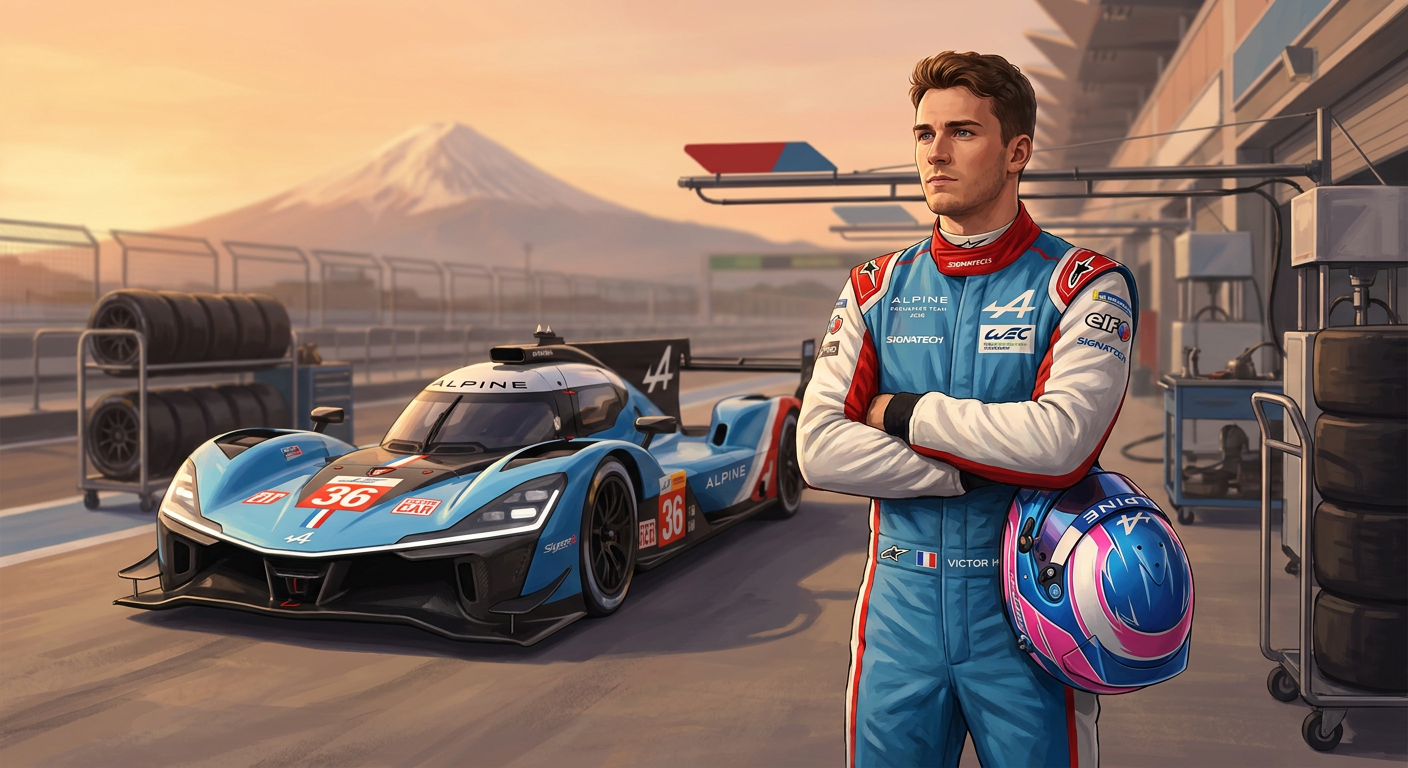
The grid was set using the fastest laps recorded across practice. Alpine locked out the front row, with the No. 36 taking the top spot after setting the quickest practice time. That result has already been covered, but the process has a significant technical effect for Toyota: the team enters the race without the final qualifying data usually used to check setup changes under peak tire load.
The supplied data contains no verified evidence that Toyota changed its aerodynamic configuration because qualifying was canceled.
Practice data takes on added importance
Without qualifying, all meaningful dry-running comparisons came from the three practice periods. Those sessions provide the full competitive baseline for tire behavior, straight-line performance and sector balance before the race.
No Toyota lap times, sector splits or speed-trap figures were included in the verified material, which rules out a numerical comparison with Alpine, Ferrari or BMW. One point about preparation is clear: Toyota’s race engineers have practice data, but no representative qualifying run from Saturday.
That difference matters. A Hypercar setup for six hours must trade outright speed against tire life and braking stability. A low-fuel qualifying lap can reveal balance issues hidden during longer practice runs, but Fuji’s cancellation took that test away from the entire field.
Fuel and brakes become part of the test
Sunday’s event is a standard six-hour WEC race worth 25 points for a victory. Teams must therefore assess fuel use and brake management over complete stints instead of relying on the shorter reference runs they would have made in qualifying.
Toyota’s reliability update introduces another factor. After the Austin car failed near the finish with 15 minutes left, the team now has to validate the revised package over sustained race mileage. No verified information shows that the update affects fuel consumption, brake cooling or aerodynamic efficiency, and no confirmed figures point to a performance gain.
The weather disruption may also produce a track surface unlike the one encountered earlier in the weekend. However, without verified tire degradation figures, no team has a confirmed advantage in stint length or warm-up.
Fuji provides a six-hour validation run
Toyota enters its home race behind an Alpine front row, with its technical attention centered on completing the job that came apart in Texas. The reliability work is confirmed. Its effect on pace is unknown, and the canceled session leaves no qualifying evidence that can separate durability from performance.
The answer will come under race load.
The 6 Hours of Fuji starts on September 27, when Toyota’s updated Hypercar begins the six-hour test it was denied at Austin.