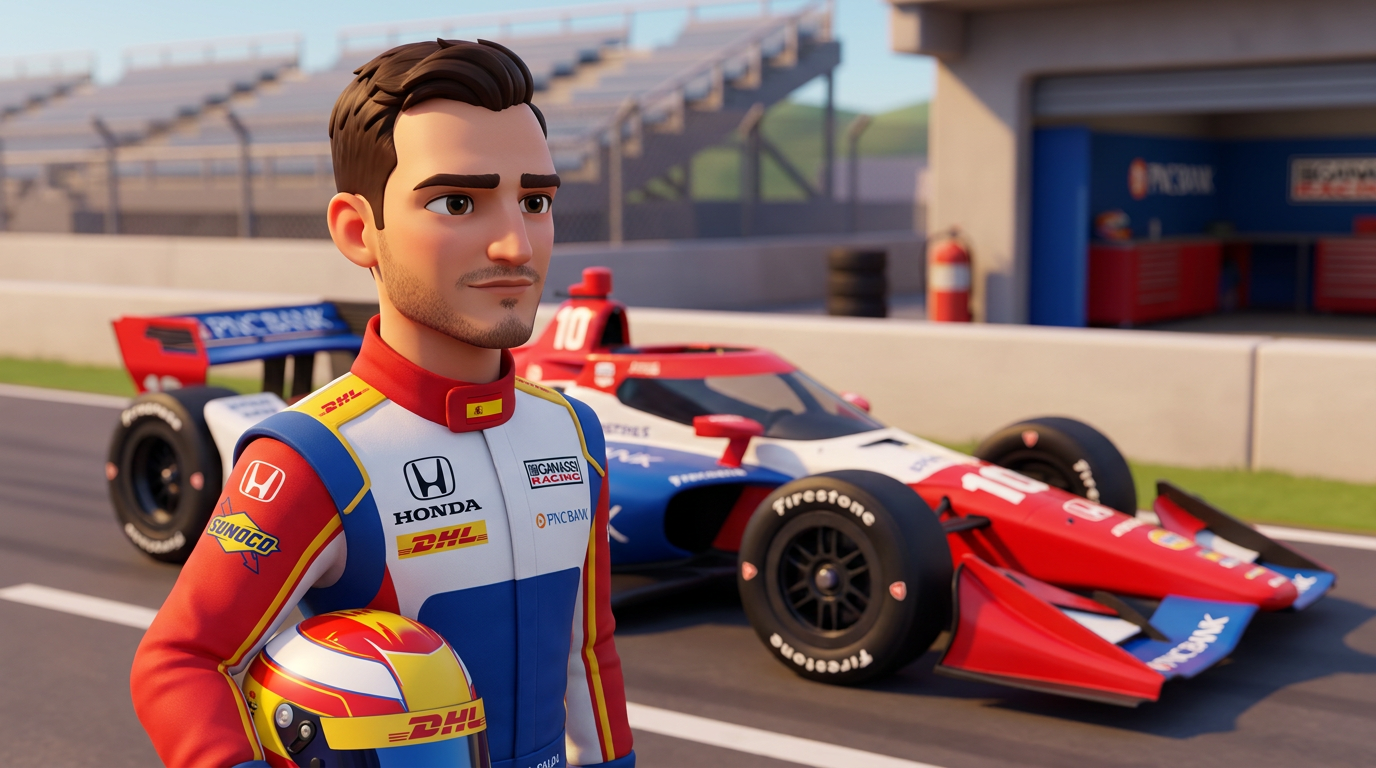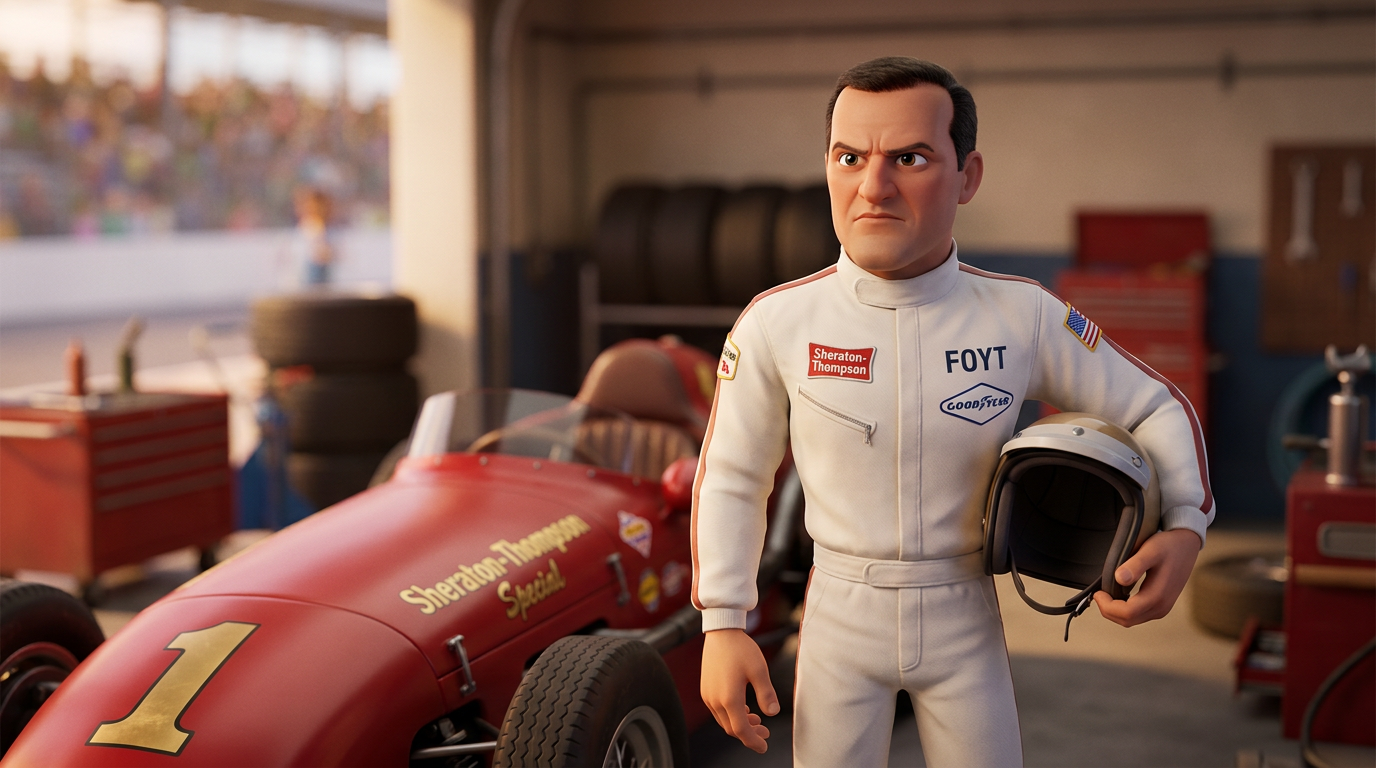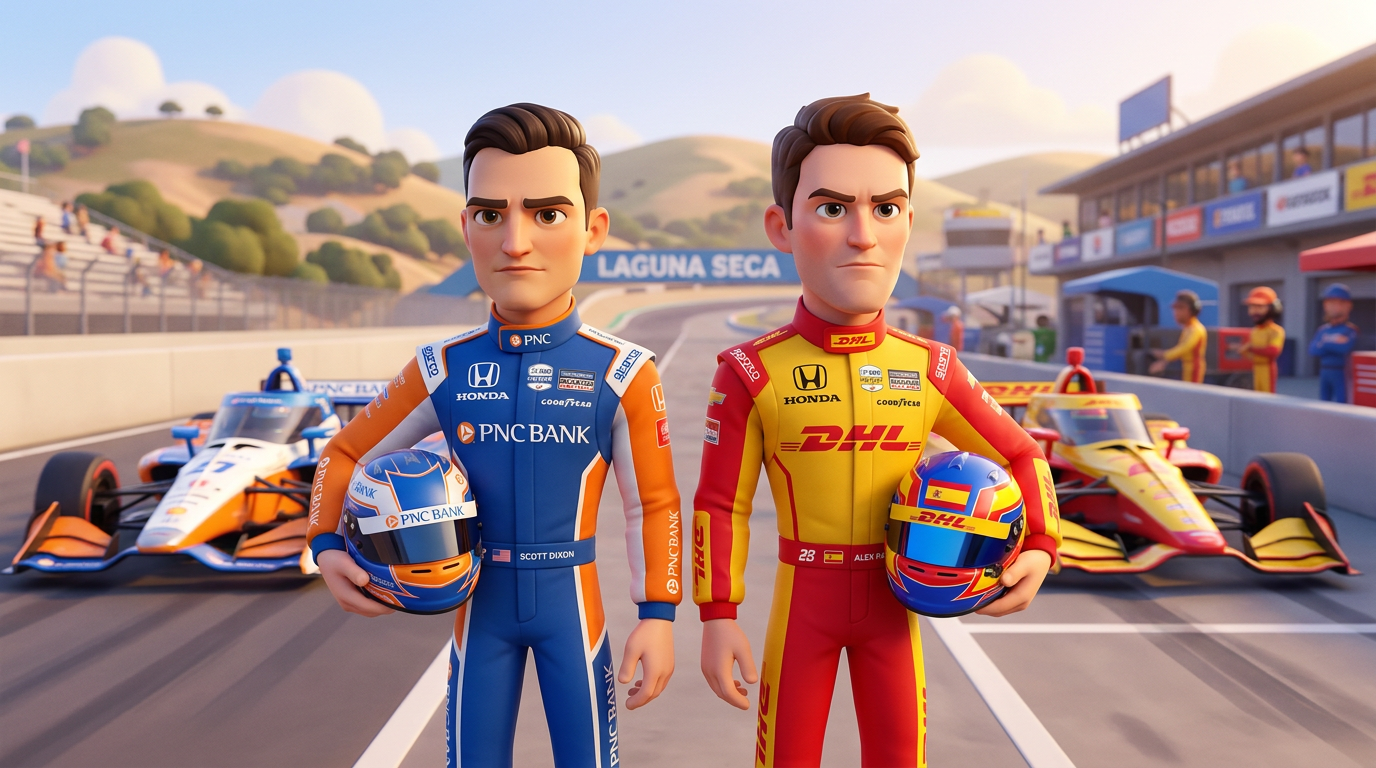
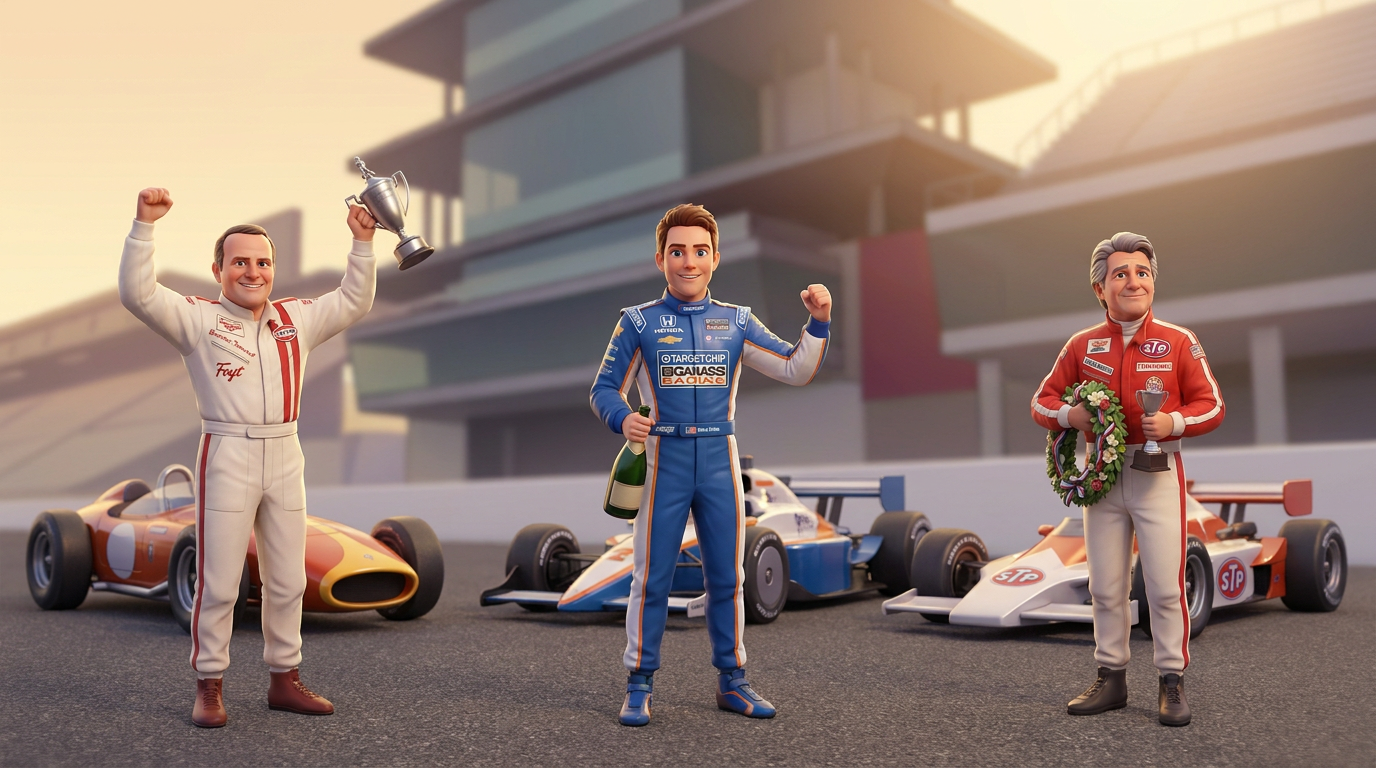
Foyt, Dixon, Andretti, Unser and Mears all have credible claims to IndyCar’s G. O. A. T. label, while Team Penske sets the standard among teams.
A. J. Foyt owns IndyCar’s championship benchmark and shares the Indianapolis 500 victory record. Mario Andretti paired sustained American success with extraordinary versatility, while Scott Dixon has assembled the defining résumé of the modern era. With Al Unser, Rick Mears and Team Penske’s decades of dominance also in the discussion, choosing the greatest depends on which accomplishments carry the most weight.
No live research from the past 48 hours was supplied, so there is no responsible breaking-news development to report. This current G. O. A. T. assessment instead draws on established historical benchmarks and explains why IndyCar’s fragmented eras demand more context than a basic wins table provides.
The championship standard begins with Foyt
Foyt’s seven top-level American open-wheel championships set the standard: USAC titles in 1960, 1961, 1963, 1964, 1967, 1975 and 1979. Nobody else has equaled that total. Dixon ranks next with six, while Andretti and Sébastien Bourdais each won four in the major championship lineages generally included in the modern IndyCar discussion.
Indianapolis strengthens Foyt’s case. He became the first four-time Indianapolis 500 winner with victories in 1961, 1964, 1967 and 1977. Unser later matched him with four, followed by Mears and, in 2024, Helio Castroneves. Josef Newgarden’s consecutive victories in 2023 and 2024 showed the difficulty of winning back-to-back races, much less four during one career.
Foyt also captured the 24 Hours of Le Mans, the Daytona 500 and the Rolex 24 at Daytona. Those victories don’t count in an IndyCar championship ranking, though they strengthen the wider argument that his skill crossed car types and disciplines.
Dixon defines the modern benchmark
Dixon offers the strongest statistical challenge to Foyt. He won his six championships in 2003, 2008, 2013, 2015, 2018 and 2020, across several technical packages and competitive cycles. His longevity carries weight. Dixon stayed in title contention as teams, engines, chassis rules and race formats changed around him.
He also climbed to second on the accepted all-time IndyCar wins list, trailing only Foyt.
Raw victory totals don’t offer a perfect comparison because calendars varied significantly by decade, but no contemporary championship driver has matched Dixon’s blend of volume, efficiency and longevity.
Indianapolis is the main gap on his résumé. Dixon won the 500 in 2008 and has repeatedly shown elite speed at the Speedway, but his single victory trails the event’s four-time winners. That difference shapes the argument. Dixon has a powerful claim if season-long excellence receives the most weight. If championships must be paired with Indianapolis success, Foyt holds the advantage.
Andretti and Unser expand the debate
Andretti secured four major American open-wheel titles under different governing eras: the 1965, 1966 and 1969 USAC championships, then the 1984 CART crown. His only Indianapolis 500 victory came in 1969, but his wider record featured the 1978 Formula 1 world championship, the Daytona 500 and major sports-car victories.
That range complicates Andretti’s placement. A list based strictly on IndyCar statistics can rank Foyt and Dixon ahead of him. A ranking of the greatest racing driver associated with IndyCar may put Andretti higher because he succeeded at the top level in open-wheel racing, along with stock-car and endurance competition.
Unser adds another formidable record with three USAC championships and four Indianapolis victories. He became the oldest Indianapolis 500 winner when he earned his fourth victory in 1987 at age 47. Mears combined four Indianapolis wins with three CART championships, producing one of the best balances between Speedway mastery and full-season achievement.
Why direct comparisons between eras fail
The record stretches across AAA, USAC, CART, Champ Car and the Indy Racing League before reaching the unified IndyCar era. Certain seasons centered on dirt ovals and paved speedways, while others incorporated road and street circuits. Today’s drivers usually race with standardized chassis, closely regulated aerodynamics and limited engine choices. Earlier competitors dealt with greater mechanical variety and higher reliability risk.
Several measures deserve consideration instead of relying on one statistic:
- Championships: the clearest gauge of season-long performance, though schedule depth and points systems varied.
- Race wins: a strong measure of sustained excellence, although longer schedules provide additional opportunities.
- Indianapolis 500 victories: a singularly important part of IndyCar history, but still one race each season.
- Longevity: proof of adaptability, though safety, career duration and available machinery also play a role.
- Versatility: valuable for assessing different track mixes and outside accomplishments, even if its importance is subjective.
The result is a credible top tier rather than an undisputed ranking: Foyt for combining championships with Indianapolis success, Dixon for sustained modern excellence, Andretti for breadth, plus Unser and Mears for pairing titles with four Speedway victories.
Team Penske is the organizational standard
The team argument offers greater clarity. Team Penske occupies the leading position in American open-wheel racing, owning a record total of Indianapolis 500 victories alongside championship success in USAC, CART and IndyCar competition. Its record spans decades, with the organization repeatedly adjusting to different regulations, manufacturers and competitive structures.
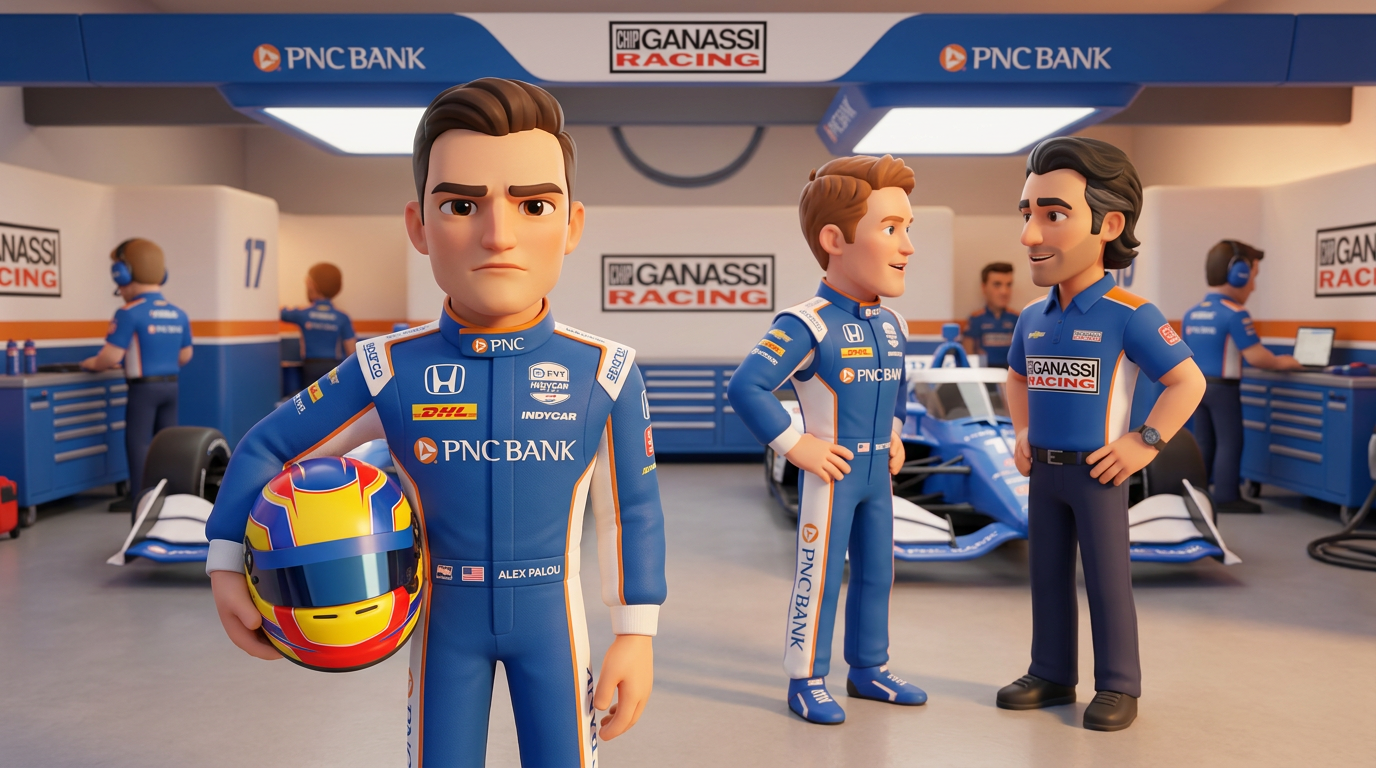
Chip Ganassi Racing stands as the clearest modern challenger. Its championship record, especially through Dixon, and success in multiple racing disciplines make it an all-time powerhouse. Andretti Global and Newman/Haas Racing also warrant a place in the historical debate, though their peaks and championship totals came in different contexts.
Penske’s advantage is its combination of Indianapolis supremacy and consistent championship contention across several decades. Ganassi counters with the regularity of its modern title production. As with the driver debate, the choice depends on whether total historical accumulation matters most or results from a more tightly controlled era receive greater weight.
Future results will change the hierarchy
Active careers can still rewrite the record book and keep IndyCar’s G. O. A. T. argument open. One more championship for a leading modern contender, another Indianapolis victory for an established winner or a fresh run of team dominance would immediately shift the balance. Foyt currently has the strongest traditional case, Dixon presents the most persuasive modern challenge, Andretti offers unmatched breadth, and Team Penske holds the organizational benchmark. The next title or Indianapolis 500 victory will add another result to the debate.