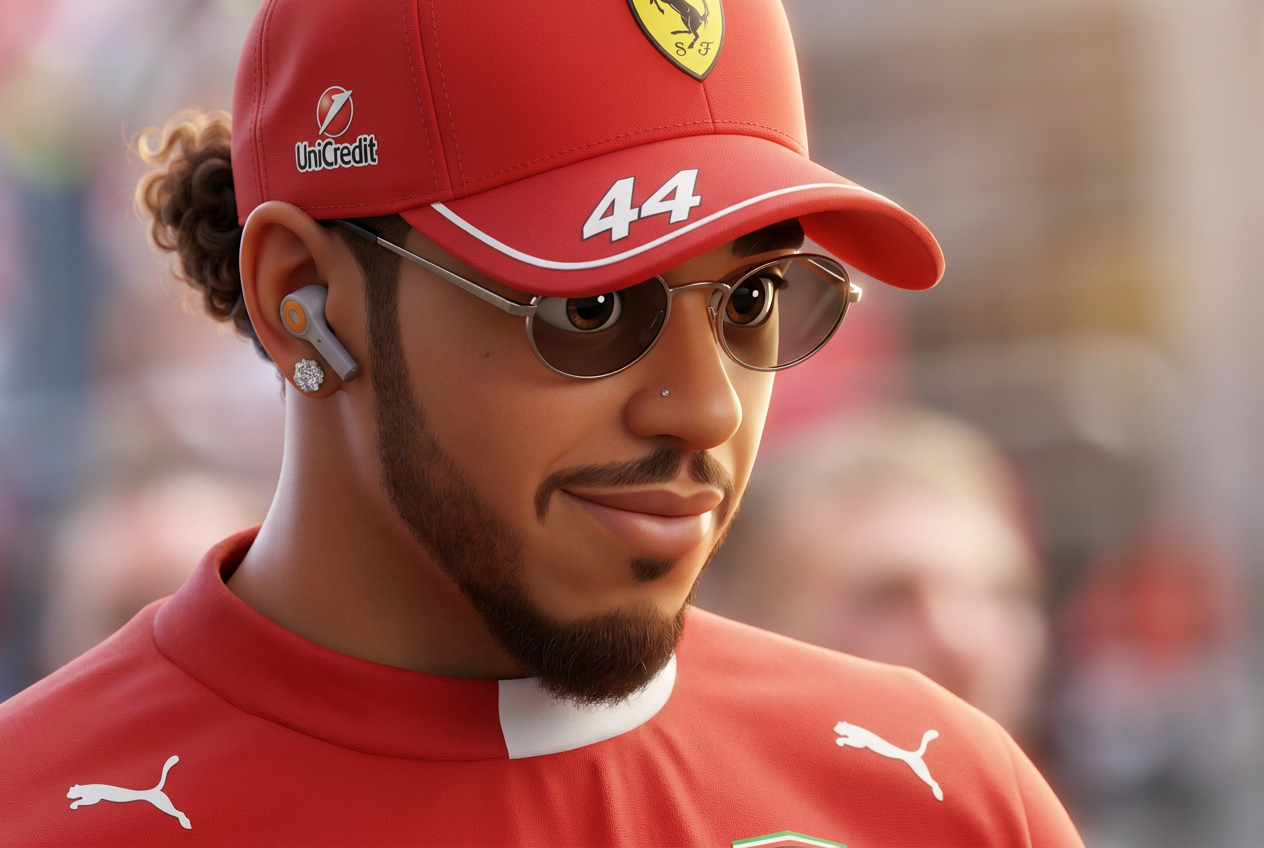

Hamilton leads Formula 1’s career totals, but Fangio’s five titles and 24 wins from 51 starts set a 47.1 percent benchmark that still stands alone.
Juan Manuel Fangio entered 51 Formula 1 Grands Prix, won 24 and claimed five world championships. His 47.1 percent victory rate demands a place in any discussion about the championship’s greatest driver.
The shortest great career
Fangio produced extraordinary results in little time. He won his five titles in 1951 and from 1954 through 1957, across seven full championship seasons and with four constructors: Alfa Romeo, Maserati, Mercedes and Ferrari.
Across those full campaigns, his title rate was 71.4 percent.
Today’s longer careers provide far more chances to build victory totals. On a 24-race calendar, Fangio’s 51 starts would amount to fewer than two and a half seasons. Yet he still sits alongside drivers who competed in hundreds of Grands Prix.
Hamilton controls the volume records
Lewis Hamilton holds the leading collection of career totals. The current figures in the compiled records list 106 wins, 104 poles and 207 podium finishes, along with seven championships, the record he shares with Michael Schumacher.
Hamilton recorded those 106 wins in 391 starts, giving him a 27.1 percent victory rate. His 104 poles account for 26.6 percent of those starts. That longevity carries weight, spanning a career that began in 2007 and continued through major technical changes.
Schumacher set the modern template
Schumacher pairs seven championships with 92 victories and 68 pole positions. He also holds Formula 1’s record for fastest laps, with 77.
His defining stretch remains five consecutive championships from 2000 through 2004. Fangio secured four straight from 1954 through 1957, while Hamilton’s longest title run brought four in a row between 2017 and 2020.
The figures reveal two different types of control. Schumacher and Hamilton sustained dominance across lengthy schedules. Fangio packed his success into a career that was tiny by modern standards.
Verstappen bridges both measures
Max Verstappen has 71 victories from 244 starts, a career win rate of 29.1 percent. That puts him nearer Schumacher’s approximate 30 percent than Hamilton’s 27.1 percent.
His efficiency from pole is stronger still. The available record set gives Verstappen a 77.1 percent pole-to-win conversion rate, along with 48 poles and 131 podiums.
He has already moved beyond Sebastian Vettel’s 53 wins and Alain Prost’s 51. Only Schumacher and Hamilton remain ahead of him on the all-time victory table.
One record resists modern expansion
Hamilton would need another 130 victories to equal Fangio’s career rate across 391 starts. Verstappen would require about 115 wins after 244 starts to reach that same percentage.
That figure doesn’t decide Formula 1’s greatest-driver debate. It does define the measure where the 1950s champion stands alone: Fangio won nearly one of every two Grands Prix he entered. The next race gives today’s drivers another chance, an opportunity Fangio had only 51 times.