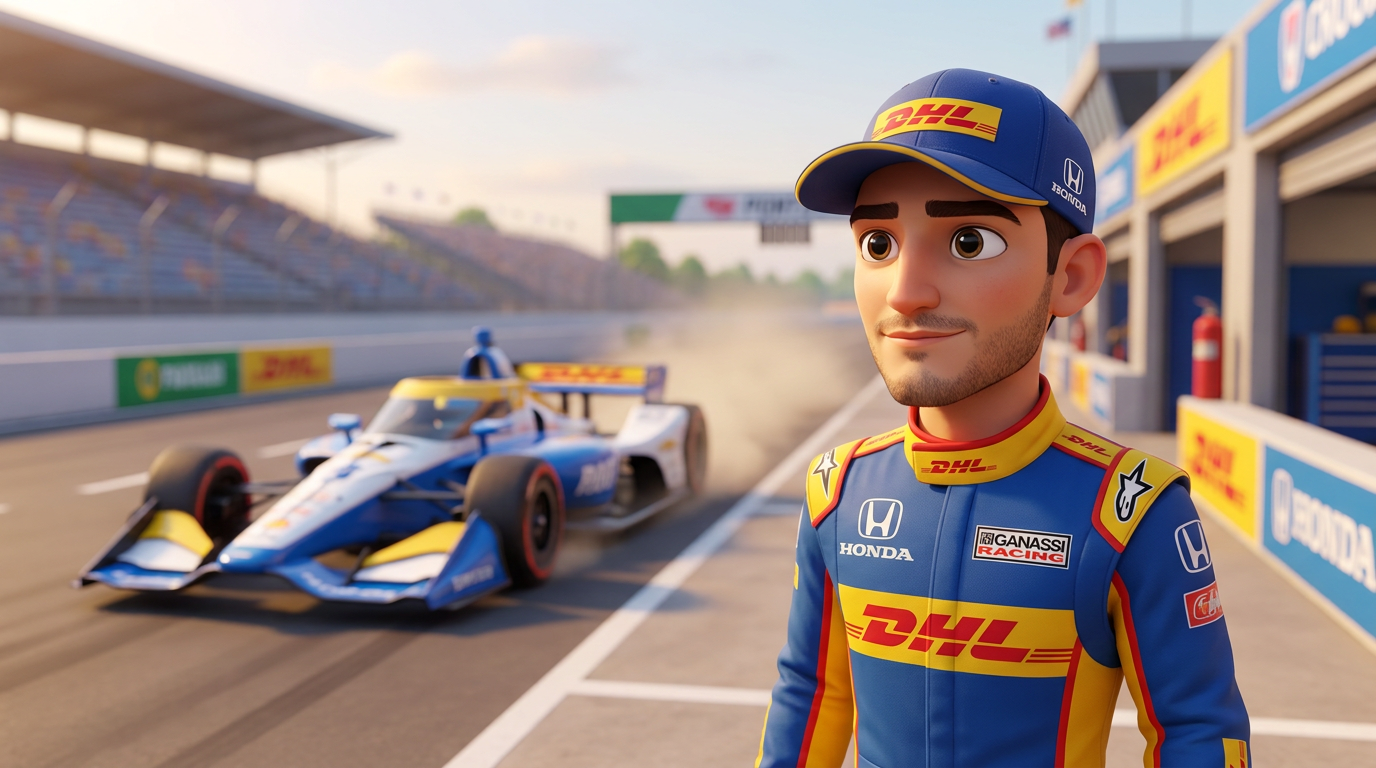

David Malukas’ Portland grid drop shows why IndyCar should stop verified component failures from disproportionately punishing title contenders.
IndyCar’s title race should be settled on track, rather than by a contender receiving a grid penalty because his car needed an engine change. David Malukas’ Portland setback exposes a rule designed to control costs and promote reliability, yet it does not always place sporting responsibility fairly.
Malukas pays at the worst moment
Malukas reached Portland International Raceway second in the championship, 83 points behind Alex Palou with six races left. He has yet to win this season, but six top-five finishes, 10 top-10s and 189 laps led in 12 starts have established him as Palou’s closest challenger.
Engine changes then brought grid penalties for the Team Penske driver and Caio Collet in the Portland race.
The timing is particularly damaging for Malukas. Palou opened the weekend by leading first practice, while his nearest championship rival faced an extra obstacle before qualifying had a chance to establish the natural order.
The rule has a legitimate purpose
IndyCar has good reason to limit engine use. Component restrictions discourage costly, performance-driven changes while requiring manufacturers and teams to manage durability throughout the season. Without penalties, wealthier operations would have another way to spend for a competitive advantage.
Still, a sensible financial rule can create a blunt sporting result.
A driver has limited control over an internal failure or a strategic call to replace a questionable unit. The obvious penalty, however, affects that driver’s starting position and potentially the championship standings.
Reliability already brings a penalty
A failure can take away practice time, qualifying preparation or a race finish before officials impose any formal sanction.
A grid drop can then punish the same issue twice, especially if the replacement is necessary rather than tactical. That distinction matters. IndyCar should keep firm consequences for unapproved or performance-motivated changes while establishing a narrower category for verified failures. A manufacturer-points deduction or an escalating financial assessment would maintain accountability without automatically distorting the driver championship.
Palou does not need regulatory help
This argument does not diminish Palou. The Chip Ganassi Racing driver has earned 457 points with five victories, six poles, nine top-five results and 498 laps led. His lead over Malukas comes from a commanding campaign.
That success is precisely why IndyCar should want the rest of the fight decided as cleanly as possible.
Kyle Kirkwood is 87 points behind, Christian Lundgaard trails by 104 and Pato O’Ward is 121 back. Each avoidable handicap makes a processional stretch run more likely.
IndyCar should refine deterrence, not remove it
We are not advocating unlimited engines or replacements without consequences. IndyCar needs a transparent review process that distinguishes preventable usage violations from documented mechanical failures, then directs penalties toward the responsible competitive entity.
Portland should prompt that change.
Before another title fight encounters the same problem, IndyCar can maintain cost controls while ensuring drivers are judged primarily by their performance on track. The series should introduce that balance before the next championship battle.