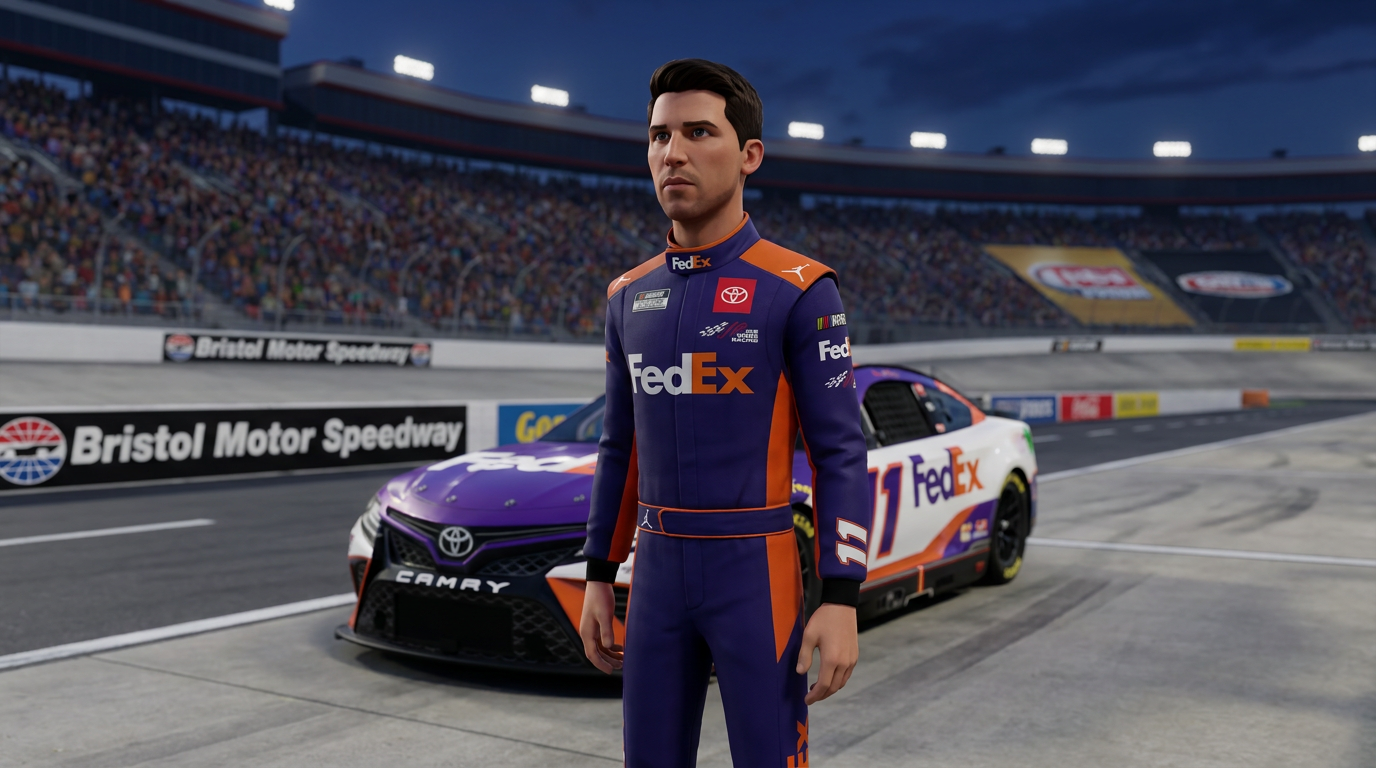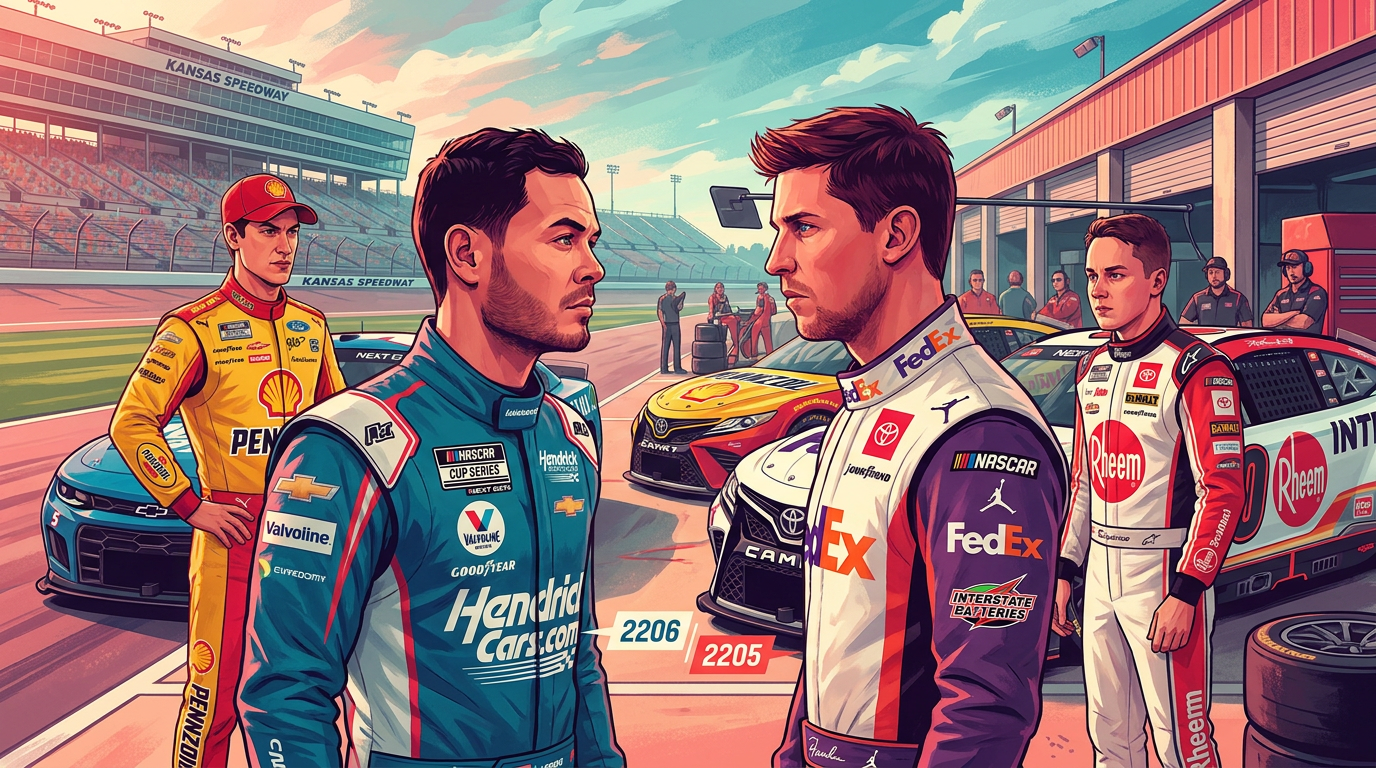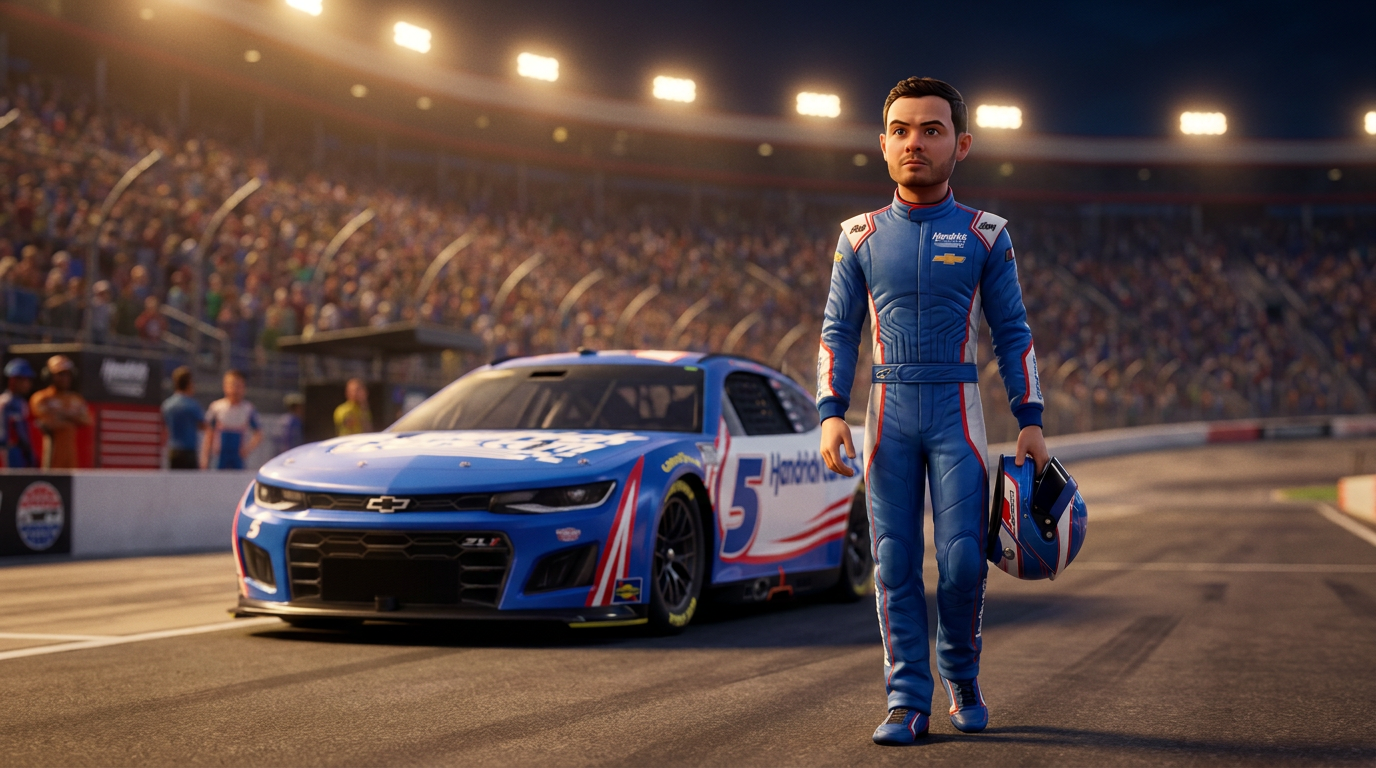
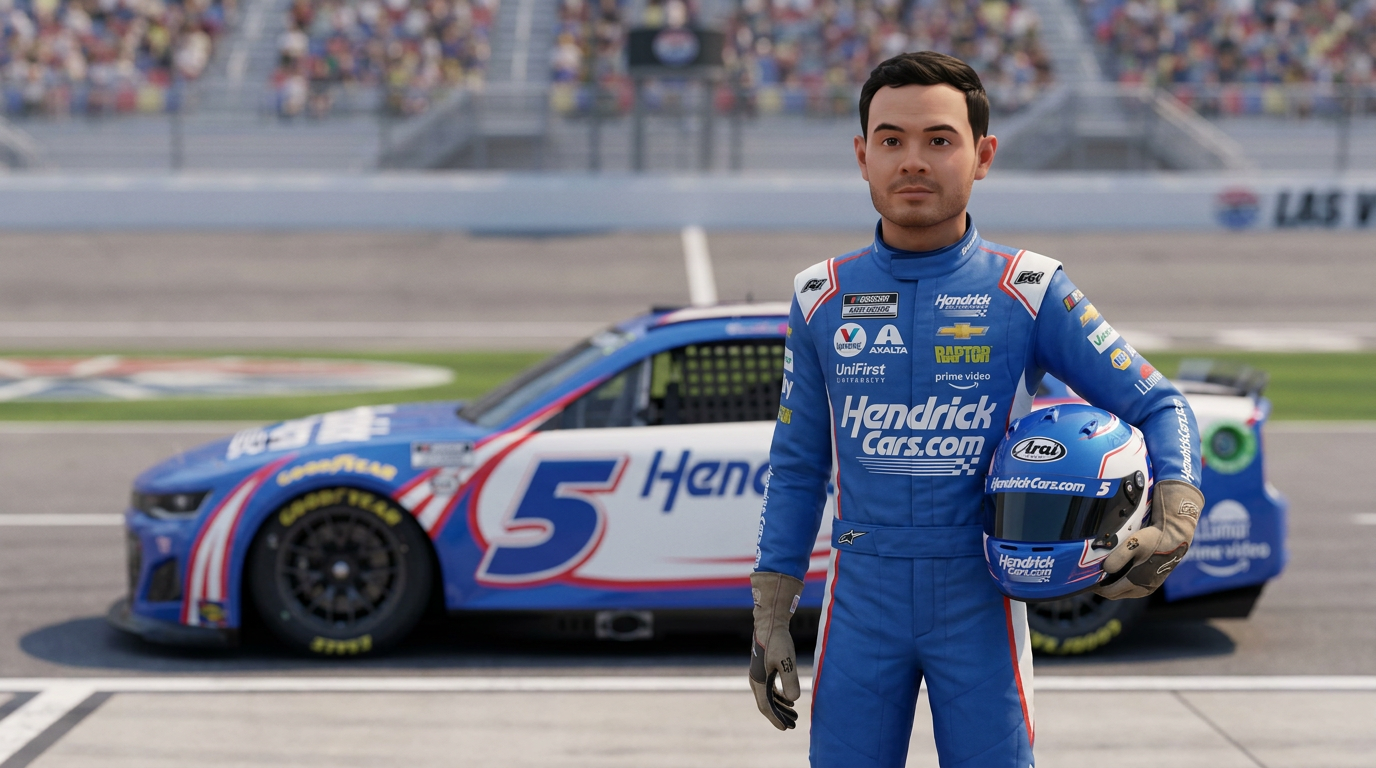
Kyle Larson arrives at Las Vegas Motor Speedway with the NASCAR Cup Series Chase increasingly shaped by one strategic imbalance: the leader can protect points while everyone behind him must create them.
With Larson on 2,282 points, Denny Hamlin on 2,256 and Christopher Bell on 2,232, we believe the standings now demand three different approaches.
This is not another account of the previous race. It is a championship argument about what those confirmed totals mean for pit windows, undercuts, overcuts and organizational priorities at Las Vegas.
Larson has earned the widest margin for error
Larson leads Hamlin by 26 points and Bell by 50. Those gaps do not permit complacency, but they change the price of aggression for Hendrick Motorsports.
The No. 5 team does not need to chase every marginal track-position gain through an early stop. If tire wear creates a powerful undercut, responding remains necessary. But Larson can avoid being the first contender to expose himself to a caution that closes pit road or traps an off-sequence car a lap down.
Our verdict is simple: Hendrick should favor flexibility over invention. A conventional opening strategy, clean stage execution and enough fuel to extend a run would preserve options. Larson’s rivals should be the drivers forced to gamble first.
Hamlin cannot merely mirror the leader
Hamlin’s 26-point deficit is close enough to recover through sustained performance, yet large enough that matching Larson call for call offers limited upside. If both cars execute equally, the gap survives.
That makes the undercut a more useful weapon for Hamlin than Larson. Pitting first on a green-flag cycle could buy track position if fresh tires deliver an immediate lap-time gain. The cost is vulnerability to a caution before Larson stops, so Joe Gibbs Racing must judge traffic and tire falloff rather than attack automatically.
An overcut could be just as important if Hamlin has clear air and Larson encounters traffic after stopping. The essential point is differentiation. Hamlin does not need recklessness, but he does need at least one opportunity to make Larson react.
Bell needs points, not a low-percentage rescue
Bell sits 50 points behind Larson and 24 behind Hamlin. That creates urgency, but it should not be confused with desperation.
Joe Gibbs Racing’s strategic challenge is to give Bell a route forward without sacrificing his day to a speculative call. Extending a stint for a possible caution can work, but staying out solely because the other contenders have stopped can turn a manageable deficit into a larger one.
Bell’s better path is to accumulate points whenever they are available, then use late-race variation if his position still requires it. Early tactical discipline preserves the car, while a shorter final stop or alternate tire timing can provide the calculated risk later.
Team orders should mean information, not interference
With Hamlin and Bell second and third in the standings, Joe Gibbs Racing inevitably faces questions about how two championship campaigns should coexist. We do not think NASCAR needs contrived position swaps this far from a settled outcome.
The useful form of team coordination is operational. The two crews can split strategies when the race presents genuine uncertainty, share tire-degradation information and avoid stacking both cars into the same pit window unnecessarily. One car can attempt the undercut while the other runs longer, giving the organization evidence from both approaches.
What JGR should not do is reduce Bell to supporting Hamlin simply because Hamlin currently leads him. Twenty-four points separate them. Both remain entitled to strategies built around their own championship prospects.
Risk must follow the standings
NASCAR’s Chase awards points for race finish and stages, so strategy cannot be assessed only by the final pit stop. Passing up available stage points to preserve an uncertain later advantage is more defensible for a driver protecting a lead than for one trying to erase 50 points.
That is why identical strategies would be a mistake. Larson should minimize exposure to a disastrous result. Hamlin should apply controlled pressure through pit timing. Bell should prioritize immediate scoring before escalating his risk late.
Las Vegas will not settle the championship by itself, but it can alter who controls the next strategic decision. If Larson leaves with his advantage intact, patience becomes an even stronger asset. If Hamlin or Bell cuts the gap, Hendrick’s freedom to wait will shrink, and the Chase will become a contest of initiative rather than protection.