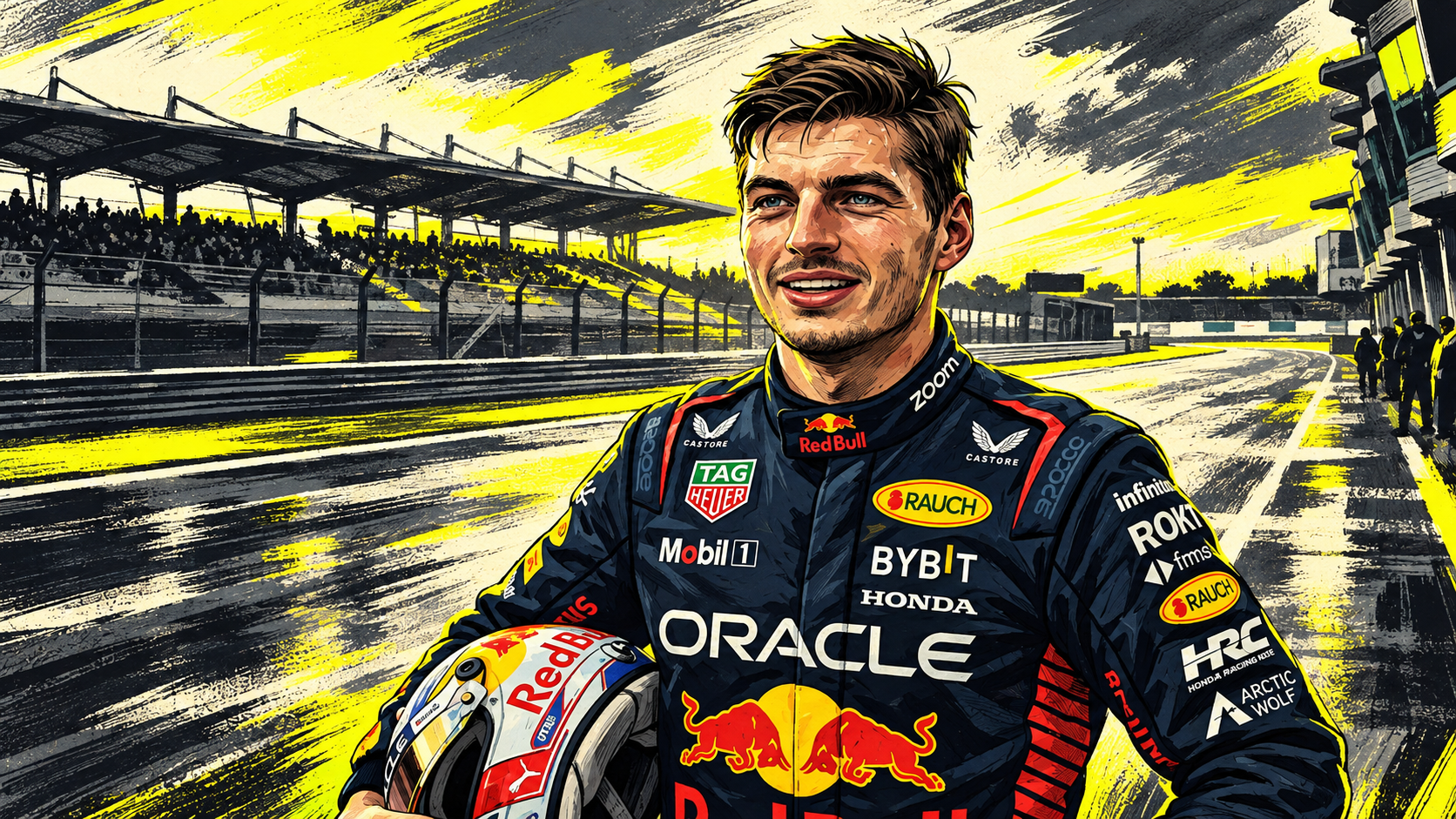
Red Bull Racing’s improved performance at Sepang International Circuit carried Max Verstappen to his first Formula 1 victory of 2026, ending a winless run that had lasted through the opening 15 rounds.
The 55-lap Bahrain Grand Prix in Malaysia provided an unusual technical test because heavy rain, two delayed starts, formation-lap disruption and two Safety Car periods repeatedly altered tire temperatures, brake conditions and the pace profile.
Red Bull sustains its pace over 55 laps
Verstappen completed the race in 1:47:14.808 and finished 2.307 seconds ahead of Mercedes driver Kimi Antonelli. Ferrari’s Lewis Hamilton was 4.919 seconds behind the winner, while Charles Leclerc finished 7.258 seconds back.
Those final gaps placed three rival teams within 4.919 seconds at the front after 55 laps. Verstappen’s advantage over Antonelli equated to less than one tenth of a second per completed lap, although the delayed starts and Safety Car periods mean the overall race time and finishing margins cannot be treated as uninterrupted long-run comparisons.
The interruptions compressed the field and reduced the amount of representative running available for judging sustained performance. Red Bull nevertheless kept Verstappen ahead through the changing conditions and the final run to the checkered flag.
Rain changed the engineering priorities
Heavy rain shifted the technical demands away from a conventional dry Sepang race. Tire temperature, water clearance and visibility became immediate concerns, while the stoppages and Safety Car periods repeatedly lowered speeds and interrupted normal tire preparation.
That cycle also affected brake management. Lower-speed running reduces the energy put through the brakes, while wet conditions require teams to balance cooling against the need to maintain usable temperatures. The available race information does not provide brake-temperature, fuel-use or individual stint figures, preventing a numerical comparison between Red Bull, Mercedes and Ferrari.
The same limitation applies to tire degradation. No verified lap-by-lap wear measurements or compound-specific stint lengths were published with the final classification. Verstappen’s victory therefore establishes Red Bull’s race performance under these conditions, but it does not quantify how much of its advantage came from degradation control rather than setup, tire preparation or track position.
Final gaps define the pace picture
Antonelli remained close enough to finish 2.307 seconds behind Verstappen, with Hamilton another 2.612 seconds behind the Mercedes. Leclerc crossed the line 2.339 seconds after his Ferrari teammate.
The compact margins show that Red Bull did not finish with a large measured advantage over the leading Mercedes and Ferrari. They do not, however, reveal how the cars compared through Sepang’s individual sectors or on the straights. Verified sector times and speed-trap readings were not included in the published classification.
Without those figures, it is not possible to separate cornering performance from straight-line speed or to determine whether the decisive difference lay in downforce level, aerodynamic efficiency or traction. The final classification supports a narrow conclusion: Verstappen and Red Bull maintained enough pace across the interrupted 55 laps to beat Antonelli and both Ferraris.
Setup changes face a different Singapore test
Red Bull’s Sepang performance followed a weekend in which Formula1.com highlighted how the team had addressed weaknesses before Verstappen’s first victory of the season. The exact setup changes and their measured effects were not detailed in the published listing.
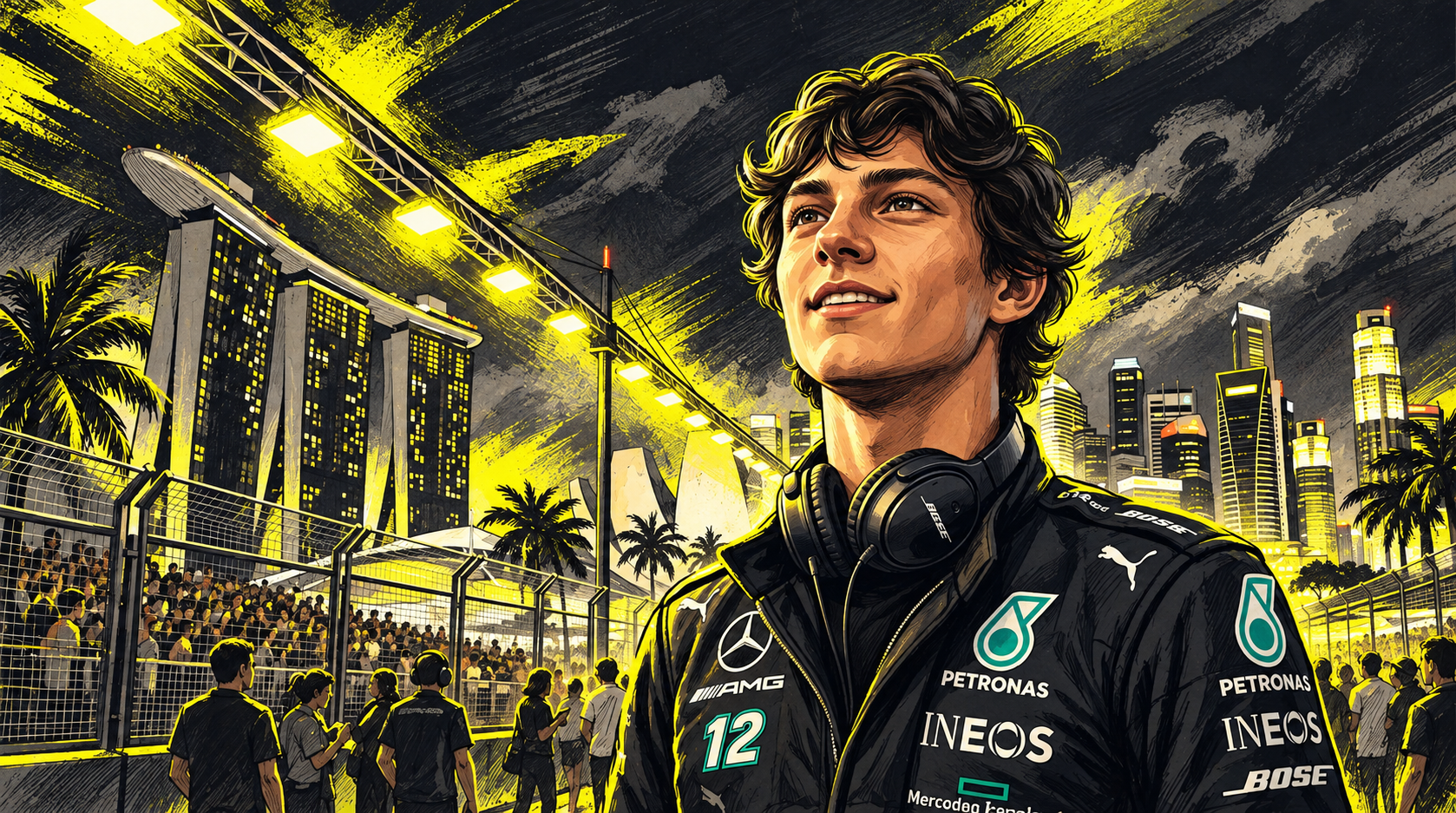
Any gains must now be assessed at Marina Bay, which presents a different combination of corners, speeds and operating demands. The Singapore Grand Prix is scheduled for October 9 to 11 and will give Red Bull another opportunity to test whether its improved performance transfers beyond Sepang’s wet, interrupted race.
Constructors’ gap remains substantial
Despite the victory, Red Bull remains fourth in the constructors’ standings with 298 points. Mercedes leads with 556, followed by Ferrari on 405 and McLaren on 316.
Red Bull trails McLaren by 18 points and Ferrari by 107. The team’s next technical task is to reproduce its Sepang pace at Singapore while establishing clearer dry-running data on tire behavior, degradation, sector performance and straight-line speed.