NASCAR has shortened the rear spoiler for the October 25 Cup Series race at Talladega Superspeedway, introducing a significant aerodynamic variable before the postseason reaches Alabama.
The spoiler will measure 3.5 inches. That confirmed dimension establishes the scale of the change, but the supplied reporting provides no wind-tunnel figures, simulation results or predicted speed increase. Teams must therefore assess how the revised package affects drag, downforce, balance and behavior in traffic before the race.
Less spoiler changes the rear load
The rear spoiler helps generate aerodynamic load at the back of a NASCAR Cup car. Reducing its height generally decreases that contribution, although the exact effect depends on the complete body shape, ride attitude and the airflow reaching the rear of the car.
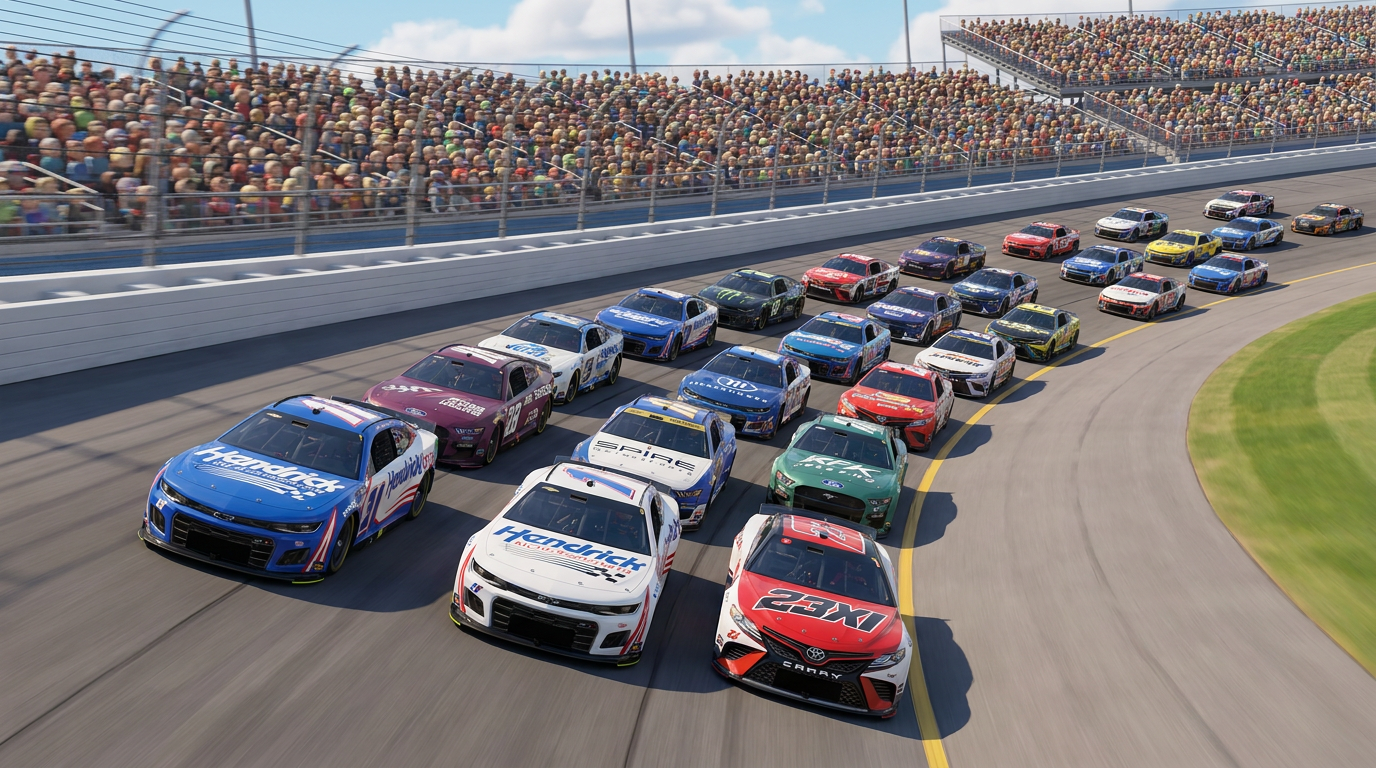
At Talladega, those effects cannot be considered only in clean air. Cars spend much of a superspeedway race in tightly grouped drafts, where the wake from traffic changes the flow over following cars. The relevant engineering question is not simply how fast the package can run alone, but how consistently a car behaves while pushing, being pushed or moving between lanes.
The notes do not include comparative downforce, drag or speed-trap data for the previous and revised spoilers. Any numerical claim about the performance difference would therefore be unsupported.
Setup work shifts toward stability
A shorter spoiler gives crew chiefs another balance problem to solve within NASCAR’s permitted setup range. Teams can use mechanical adjustments to influence how securely the rear tires remain loaded, but those choices can carry costs elsewhere in the lap.
A setup that gives a driver greater rear confidence may respond differently during steering corrections or lane changes. Conversely, reducing resistance may help straight-line performance while leaving the car less settled in disturbed air. The supplied material does not identify any team’s selected setup or quantify those tradeoffs.
Practice will be important because Talladega’s multi-car draft produces conditions that cannot be fully represented by a solo qualifying run. Engineers will need driver feedback and telemetry from traffic to judge whether the aerodynamic change alters steering demand or the car’s response to close following.
Tire behavior remains tied to the aero platform
No tire compound change, pressure specification or degradation figure appears in the research notes. There is therefore no evidence that NASCAR’s spoiler revision directly changes the tire allocation for Talladega.
The aerodynamic platform can still influence tire behavior. If reduced rear load changes how often a driver must correct the car, that can alter the work demanded from the tires. Mechanical setup choices made to recover stability can also change load distribution across a run.
Those effects cannot be converted into a projected wear rate from the available information. Long-run practice data, tire temperatures and post-run inspections will provide the first track-specific evidence of whether degradation becomes a meaningful constraint.
Drafting matters more than sector splits
Conventional sector comparisons have limited value at a superspeedway because lap time depends heavily on draft position and the behavior of surrounding cars. A faster lap may reflect a stronger tow rather than superior underlying setup.
Teams will instead need to compare like-for-like runs: similar pack position, traffic density and time spent leading or following. Speed-trap readings will also require context. A high terminal speed can show an effective draft without proving that the car is stable enough to race successfully in a dense pack.
The supplied sources contain no Talladega practice sectors, trap speeds or lap averages. The package’s competitive effect will remain unmeasured until cars run with it at the event.
Fuel and brakes add another layer
The spoiler change concerns aerodynamics, not a confirmed revision to fuel capacity, engine settings or brake hardware. The notes provide no mileage targets, fuel-window lengths or brake-temperature figures.
Even so, drag changes can affect throttle demand and fuel use, while pack position shapes how often a driver lifts. Teams must establish those relationships from track data rather than assume the new spoiler produces a fixed strategic gain.
Brake management at Talladega is likewise situational. Drivers may use the brakes to manage gaps or avoid contact in the draft, but no evidence supplied here shows that the revised spoiler will increase or reduce brake use.
Talladega will supply the missing data
The 3.5-inch spoiler is the one confirmed technical baseline. Its practical consequences will be determined by traffic runs, aerodynamic balance, tire response and fuel consumption during the Talladega weekend. Until those measurements exist, the engineering direction is clear, but the size of the performance change is not.