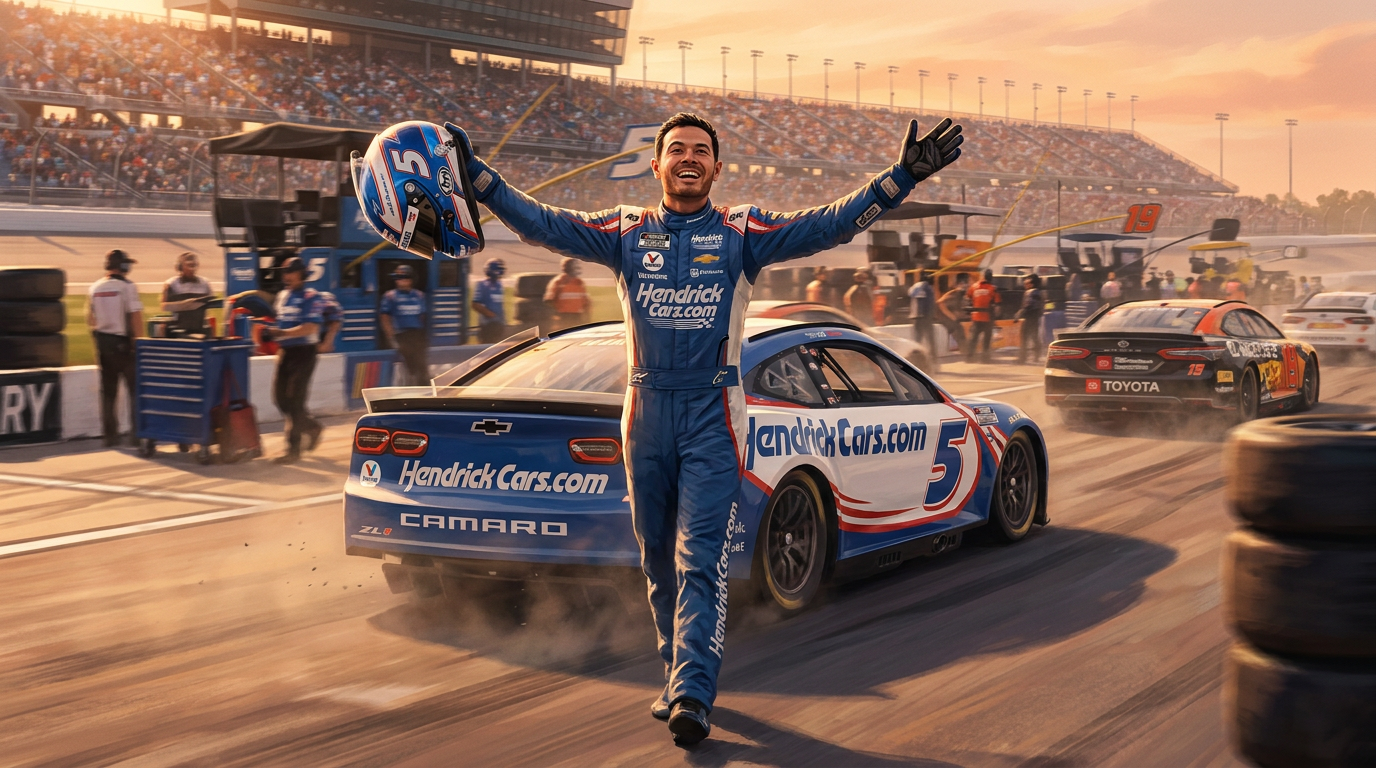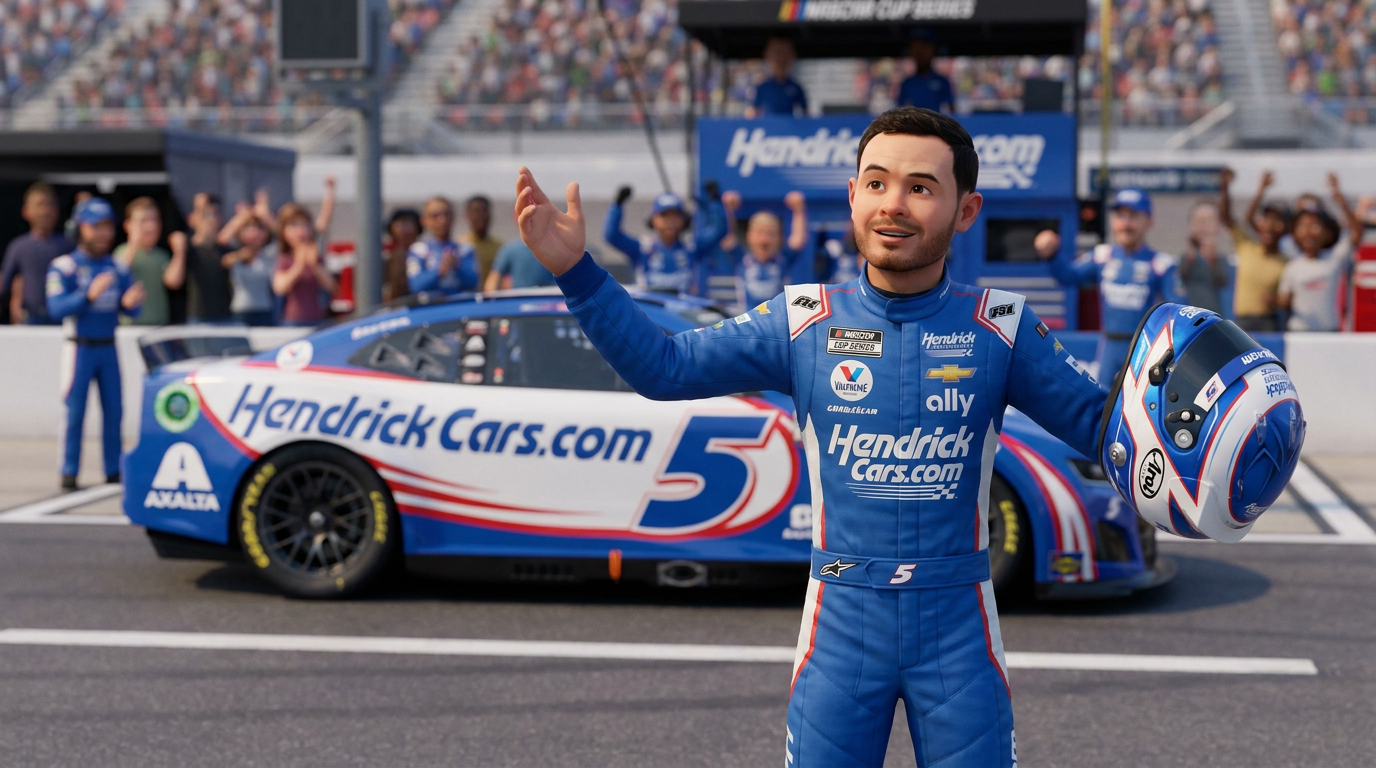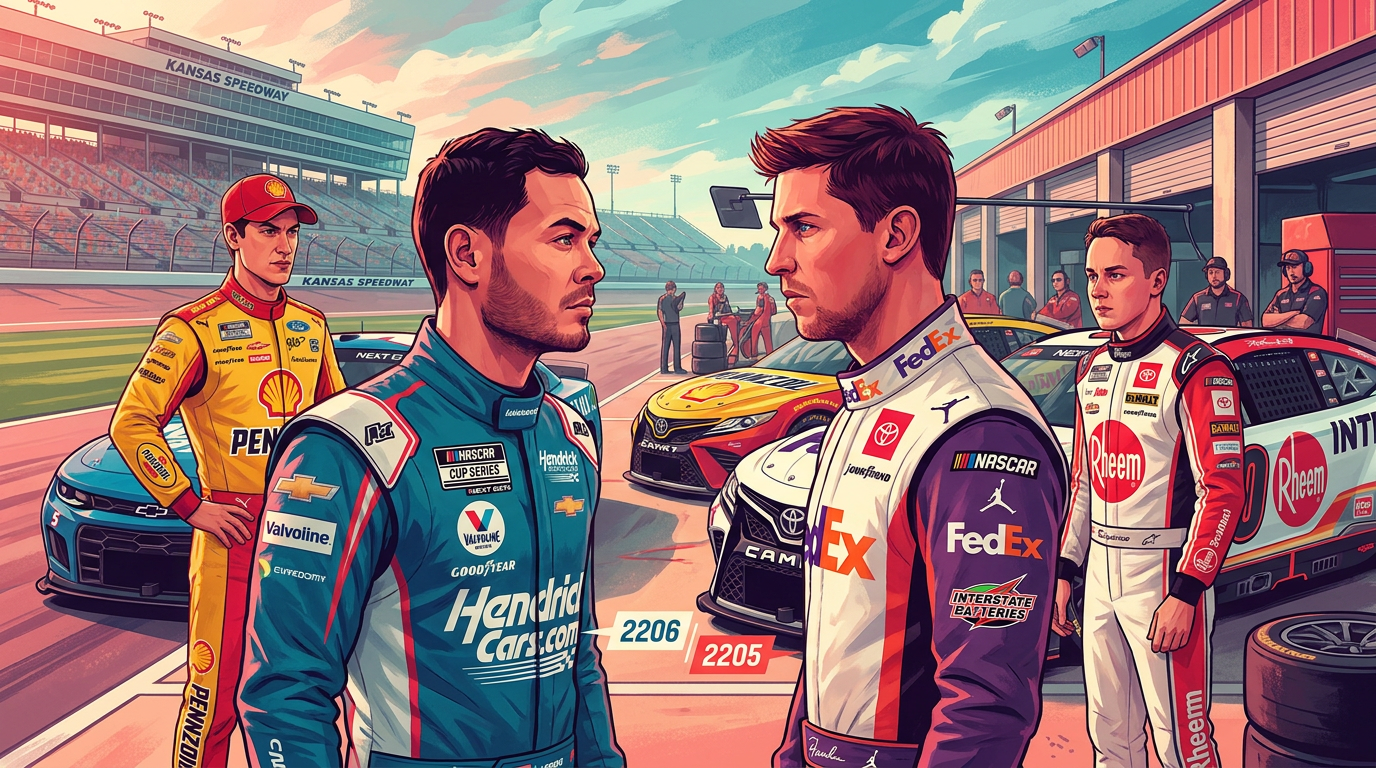
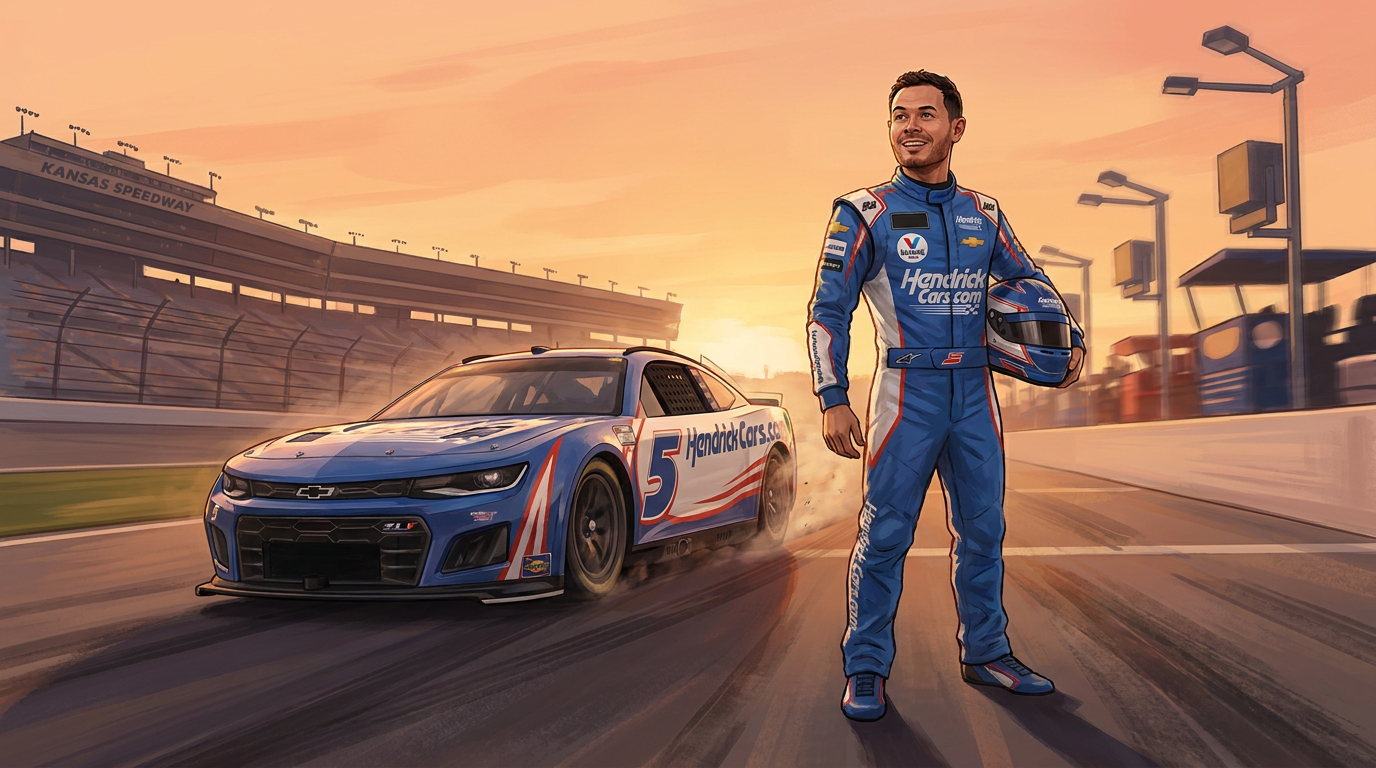
Kyle Larson’s No. 5 Hendrick Motorsports Chevrolet controlled 235 of 267 laps at Kansas Speedway on Sunday, turning front-row track position and repeatable restart pace into the strongest technical performance of the Hollywood Casino 400.
The stopwatch offered the clearest measure. Larson completed the 400-mile race in near 3 hours and finished 0.565 seconds ahead of Austin Cindric, even after Chase Briscoe briefly broke the No. 5 car’s grip on first place late in the fourth race of the 2026 NASCAR Cup Series Chase.
Front-row position shaped the setup window
Rain prevented teams from using a conventional qualifying session to establish the starting order. Larson still began on the front row, giving his team clean air at the start and reducing the need to tune the Chevrolet around prolonged traffic.
That mattered because the No. 5 spent most of the afternoon controlling restarts rather than recovering positions. Larson identified the combination after the race.
“Obviously, starting on the front row helped a lot, as well as just controlling the race, having good restarts and great power by our No. 5 Chevy.”
The 235 laps led show how consistently that package worked across the race. Larson was able to retain the aerodynamic advantage of clean air through repeated runs, while the engine response helped him protect lane position as the field accelerated. The available data does not include corner-sector times or speed-trap readings, so no verified comparison can isolate whether the No. 5 gained most on entry, through the center or at corner exit.
Late traffic exposed the narrow margin
Briscoe passed Larson late, showing that the leading Chevrolet was not immune to pressure once the running order compressed. Briscoe described his pursuit as “desperation mode,” but Larson reclaimed the lead with seven laps remaining.
That final exchange supplied the race’s most useful short-run comparison. Larson’s advantage across the full afternoon was large in terms of laps led, yet his winning margin over Cindric was 0.565 seconds. The gap suggests the decisive quality was repeatability, not an overwhelming final-run separation.
Larson’s ability to retake first place also backed up his assessment of the car’s restart performance and power delivery. No verified tire-wear figures were published, and the available reporting did not provide individual lap-time falloff, tire pressures or stint lengths. That prevents a numerical degradation comparison between Larson and Briscoe.
Cindric’s Ford supplied the closest benchmark
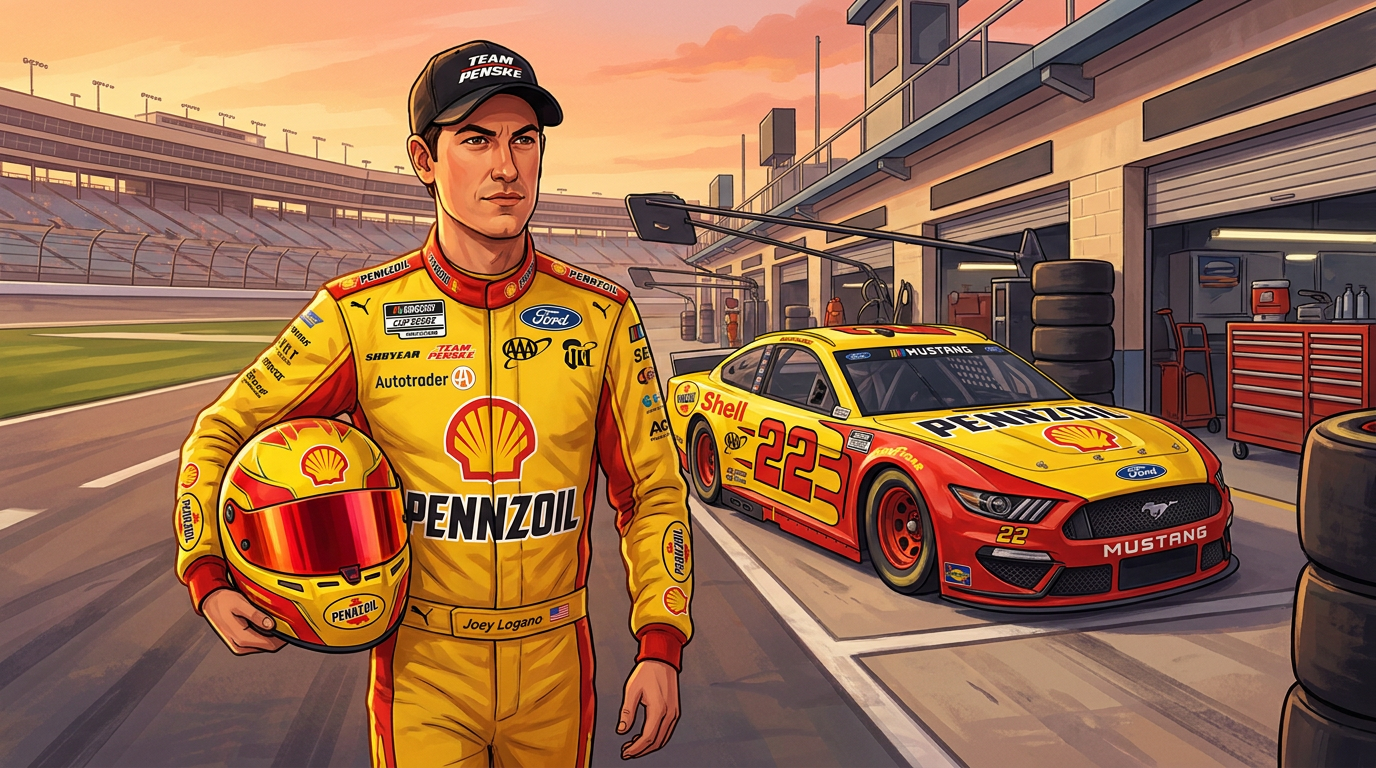
Austin Cindric led one lap and finished second in the No. 2 Team Penske Ford, earning 52 points. His assessment was direct.
“One of the best race cars I've driven”
Cindric’s result established that Ford had a car capable of staying within 0.565 seconds at the finish, although Larson’s 235 laps in front demonstrated a much broader control of the event. Cindric could pressure the result. He could not repeatedly displace the No. 5 from clean air.
Denny Hamlin finished third with 51 points and said he “just didn't quite have it” to compete for the victory. That placed the leading Toyota behind the Chevrolet and Ford at the finish, while Christopher Bell brought another Toyota home sixth.
No verified fuel-use or brake-temperature data accompanied the race report. Kansas did not produce a published numerical fuel-saving contest either, leaving track position, restart acceleration and sustained running pace as the documented performance differentiators.
Tire evidence sits in the lap count
Without published degradation curves, Larson’s lap-leading total is the strongest available indicator of how the setup treated its tires over multiple runs. A car that works only on fresh rubber rarely controls 235 laps, particularly when another driver can take the lead late.
The evidence is behavioral rather than instrumented. Larson maintained enough balance to keep restarting at the front, stay there through the bulk of the event and recover after Briscoe’s pass. Hendrick Motorsports also preserved sufficient short-run response for Larson to complete the decisive move with seven laps left.
Briscoe finished fourth after that late fight, while Hamlin and Cindric occupied the two positions directly behind Larson. The spread of manufacturers near the front shows the race was not determined by one brand holding every leading position.
Maximum points quantify the pace
Larson collected 76 points, the maximum available, through a performance that delivered his second victory in three races and fourth Cup win at Kansas Speedway. The total moved him to 2,282 points, 26 ahead of Hamlin and 50 clear of Bell.
Those numbers came from execution across the entire race rather than the finishing order alone. Cindric earned 52 points in second and Hamlin took 51 in third, leaving Larson with a 24-point event advantage over his nearest finisher.
The next Cup event runs from October 1 through October 4 at Las Vegas, where Hendrick Motorsports will have to adapt the No. 5 package to a new track rather than simply reproduce its Kansas settings.