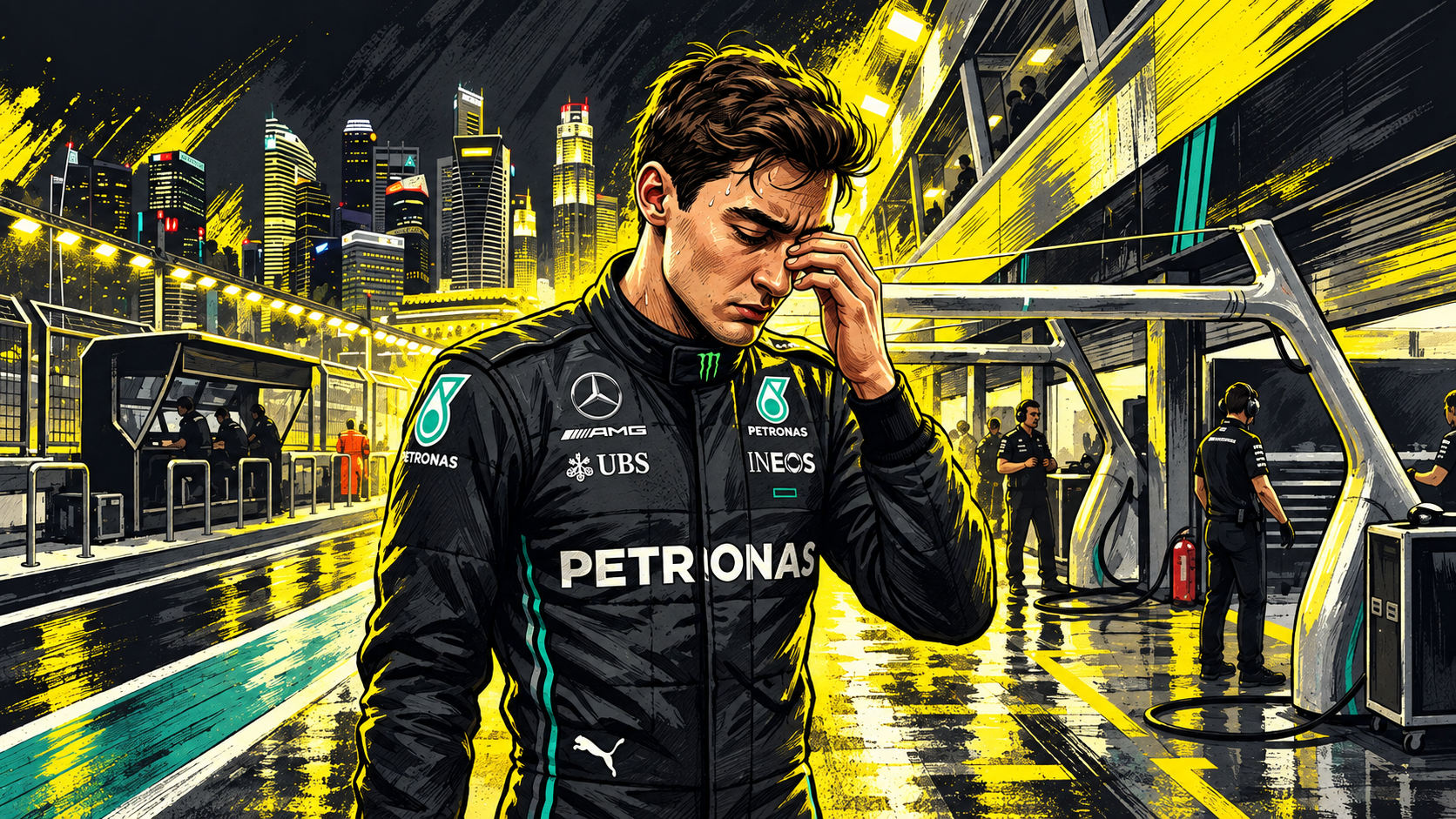
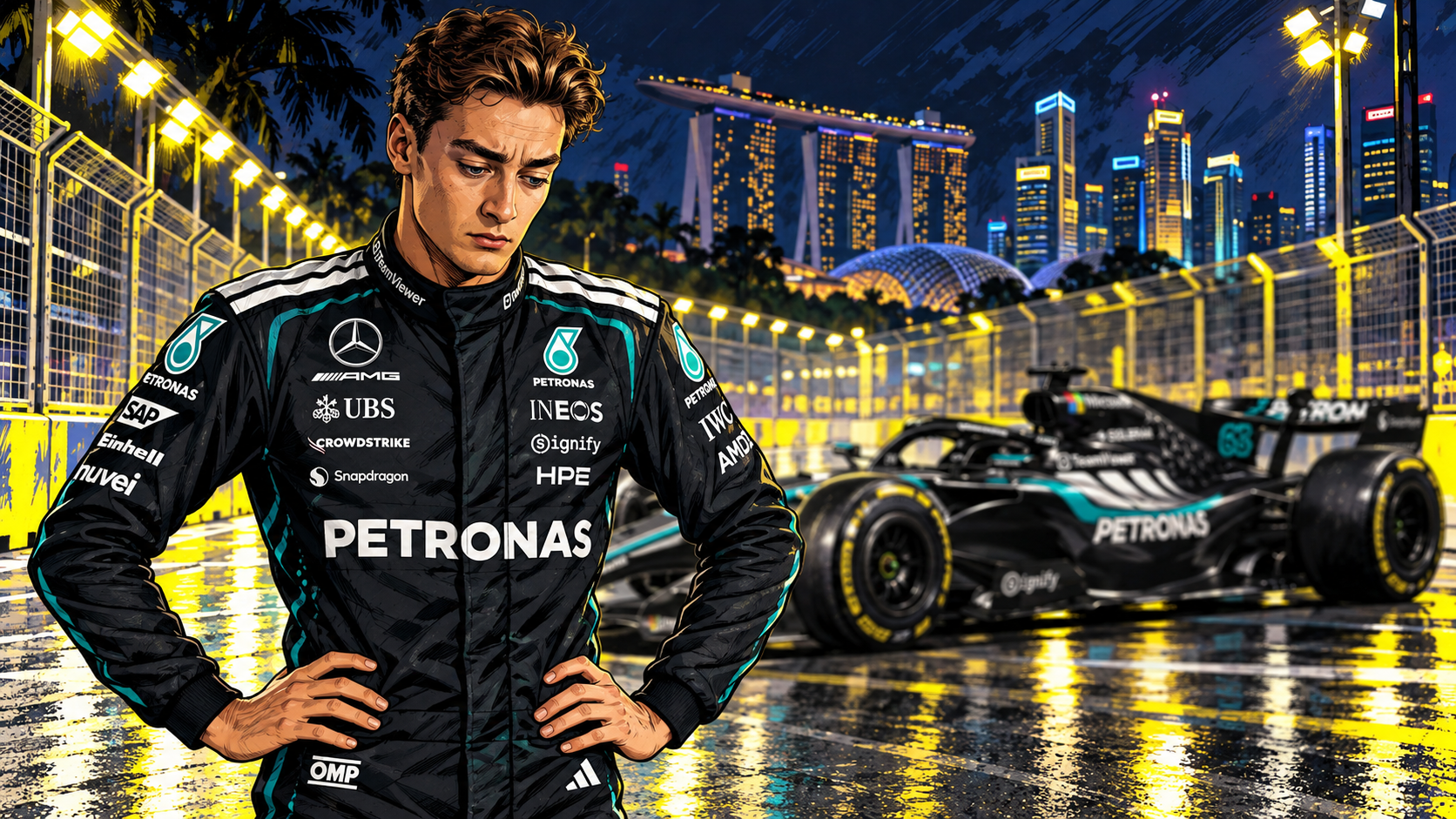
George Russell’s Singapore Sprint crash removed the closest challenger to Kimi Antonelli from the points and reinforced the championship leader’s strongest strategic asset: his margin.
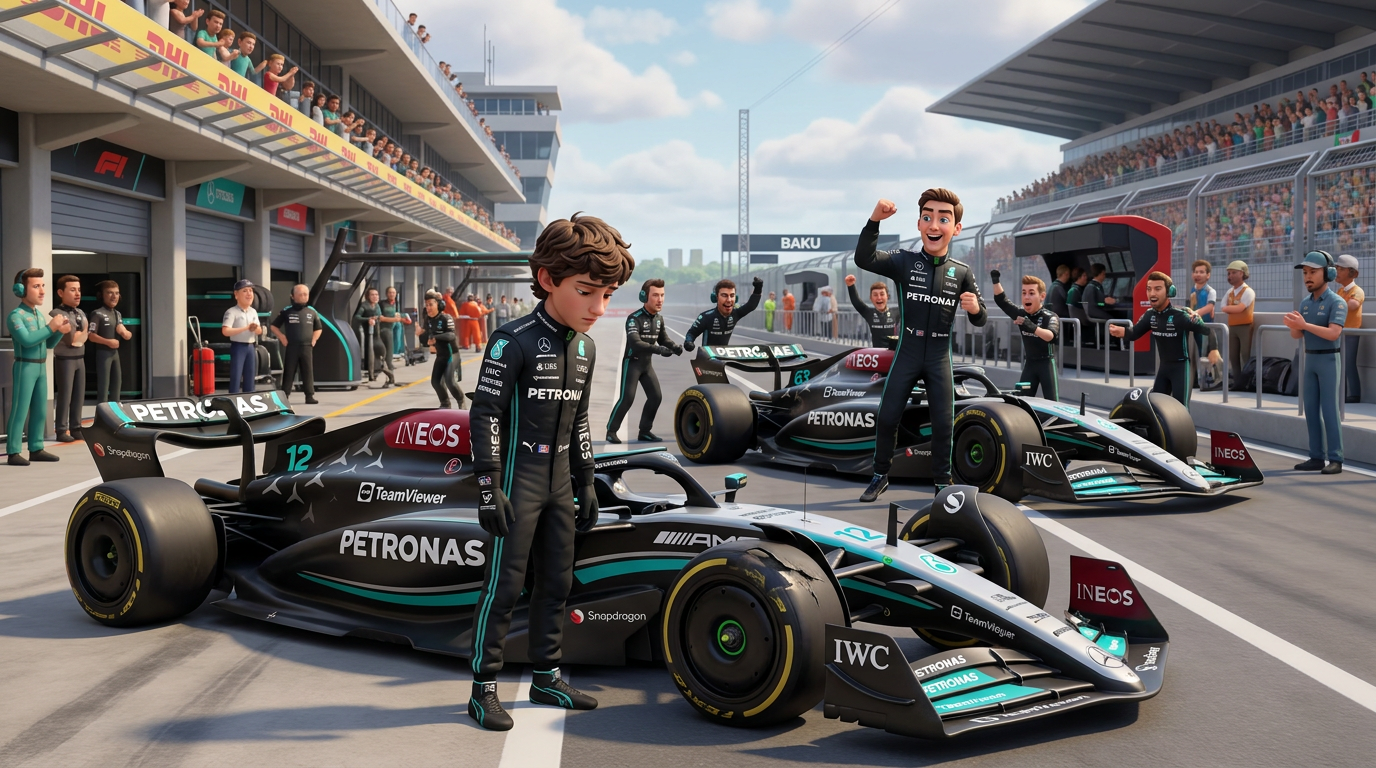
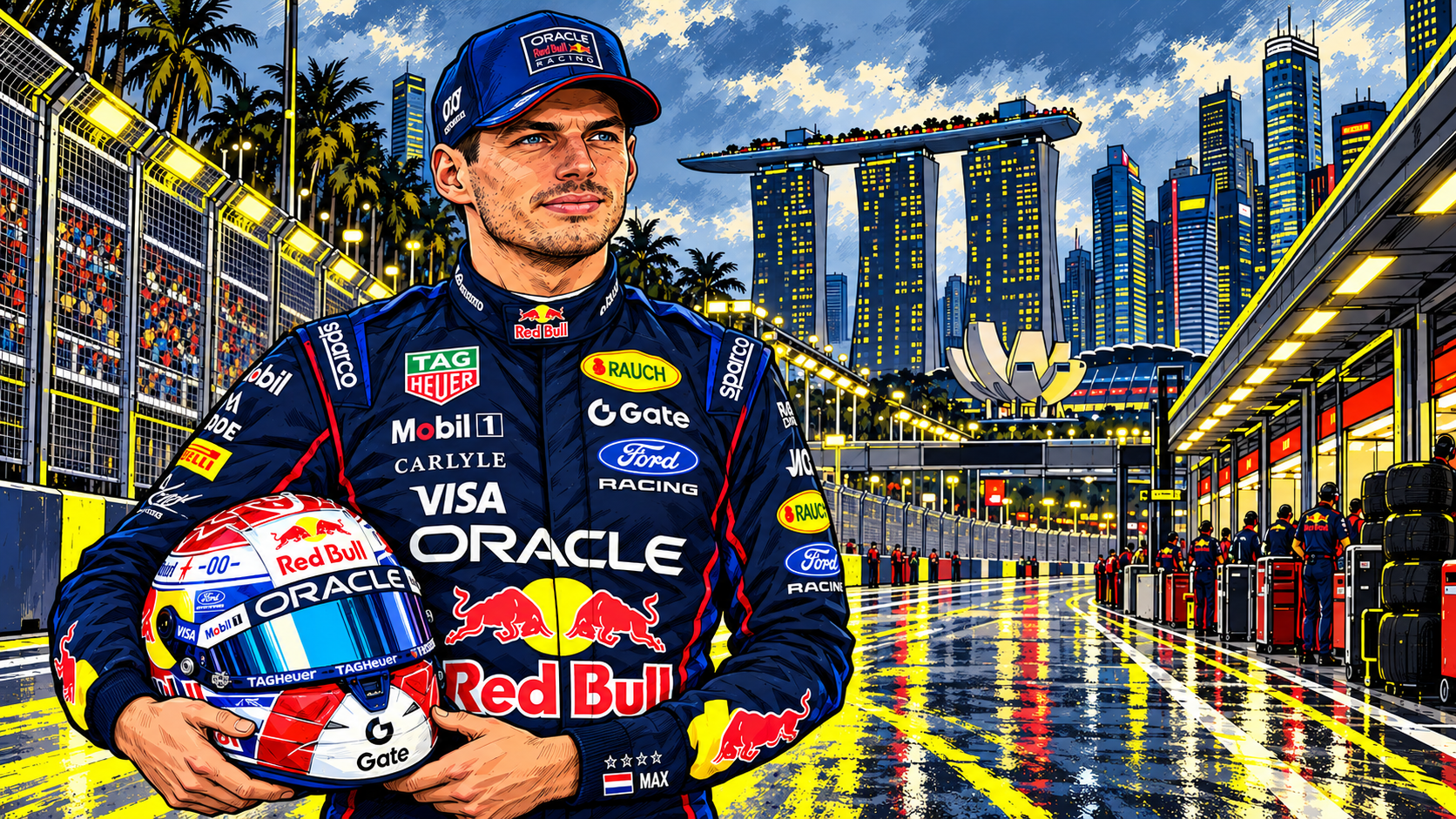
Russell passed Max Verstappen for the lead in the wet Formula 1 Sprint before hitting the pit wall shortly afterward. He called the incident a “miscalculation” and a “Silly mistake,” while Verstappen won and Lewis Hamilton finished second.
Russell’s risk brings no reward
Russell entered the Singapore weekend second in the drivers’ standings with 236 points, 89 behind Mercedes teammate Antonelli’s 325. His retirement denied him the opportunity to reduce that deficit during the Sprint.
The failed move into the lead also demonstrated the central tension in Russell’s position. Antonelli can protect a substantial advantage, but Russell needs to gain points quickly enough to keep his challenge alive. In Singapore, the attempt to convert front-running speed into a maximum return instead ended with no reward.
The consequences extend into the Grand Prix. Russell must now approach qualifying and the race knowing another lost score would further favor Antonelli, who has won eight of the first 16 Grands Prix. Russell has three victories.
Mercedes faces a sharper team-order question
Mercedes holds the top two places in the drivers’ standings, but the size of the gap separates the teammates’ priorities. Antonelli has room to favor finishes over aggressive calls, while Russell’s position increasingly demands points gains rather than parity.
That distinction could influence any direct Mercedes battle in the Grand Prix. If the cars run together, the team may have to choose between allowing Russell to pursue the larger immediate return and protecting Antonelli from unnecessary risk.
The same calculation applies to pit timing. An early stop could give Russell an undercut opportunity but expose him to changing track conditions or a badly timed safety car. Leaving Antonelli out longer could create an overcut chance while preserving flexibility, although no Singapore Grand Prix tire strategy had been confirmed before qualifying.
Hamilton closes on second place
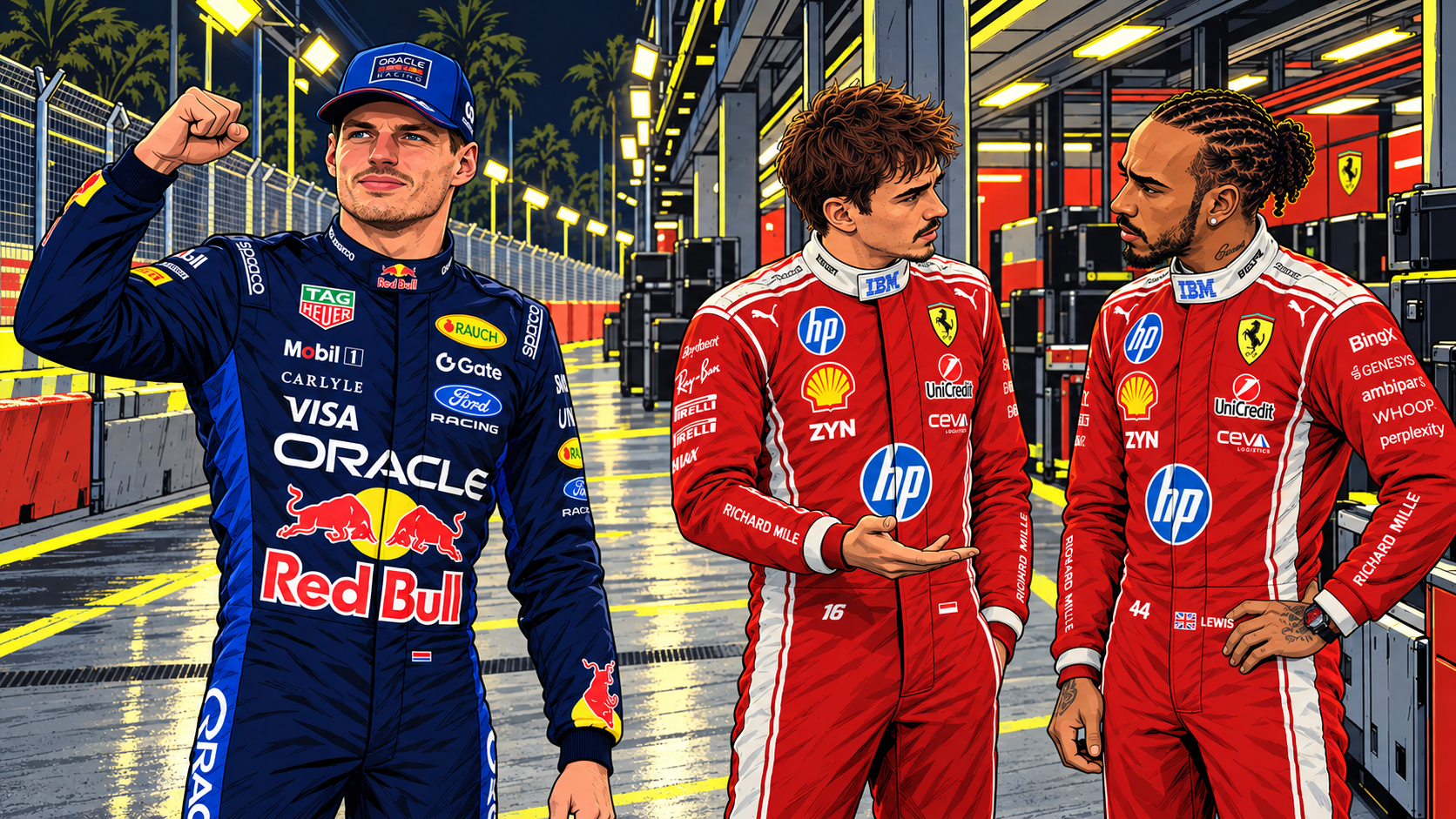
Hamilton’s second place in the Sprint strengthened Ferrari’s opportunity to pressure Russell in the standings. Before the Sprint, Hamilton held 221 points, 15 fewer than Russell.
That proximity gives Ferrari a different strategic target from Mercedes. Hamilton does not need to bridge Antonelli’s full advantage to make progress in Singapore. Beating Russell and maximizing points can directly affect the contest for second in the championship.
Charles Leclerc was fourth in the pre-Sprint standings with 197 points. Verstappen sat one point behind him on 196, creating another close fight that can shape Ferrari’s calls if its drivers occupy different strategic windows.
Verstappen keeps applying pressure
Verstappen’s Sprint victory followed his Bahrain Grand Prix win on October 4. The Red Bull driver had been fifth in the championship before the Singapore Sprint, seven points behind Leclerc and seven ahead of Lando Norris.
Red Bull therefore has reason to pursue high-return opportunities rather than mirror Ferrari or McLaren. An undercut could offer track position on a circuit where passing opportunities may be limited, while an overcut would depend on tire life and clear air. The available reporting did not establish either as Red Bull’s planned Grand Prix approach.
Verstappen’s recent results have nevertheless increased the pressure around that group. Hamilton, Leclerc, Verstappen and Norris occupied third through sixth before the Sprint, with 32 points covering them.
McLaren collision complicates its choices
Lando Norris and Oscar Piastri collided on the final lap of the Sprint, adding another factor to McLaren’s Grand Prix strategy. Formula1.com reported that both drivers subsequently gave their verdicts on the contact, but no team-order decision for the race was confirmed.
Norris entered the weekend sixth with 189 points, while Piastri was seventh on 128. That 61-point separation gives McLaren a clear difference in championship position, but the team has not said it will prioritize Norris.
If the pair converge through pit strategy, McLaren may need to manage the immediate race opportunity alongside the risk of another costly encounter. The final-lap contact ensures that any decision to split pit windows, hold position or permit racing will receive added scrutiny.
Qualifying will define the available options
The Grand Prix grid will determine which contenders can dictate strategy and which must take risks to recover. Antonelli can continue to emphasize points preservation, while Russell needs a response after his Sprint retirement. Hamilton and Verstappen have an opportunity to capitalize if Mercedes loses further ground.