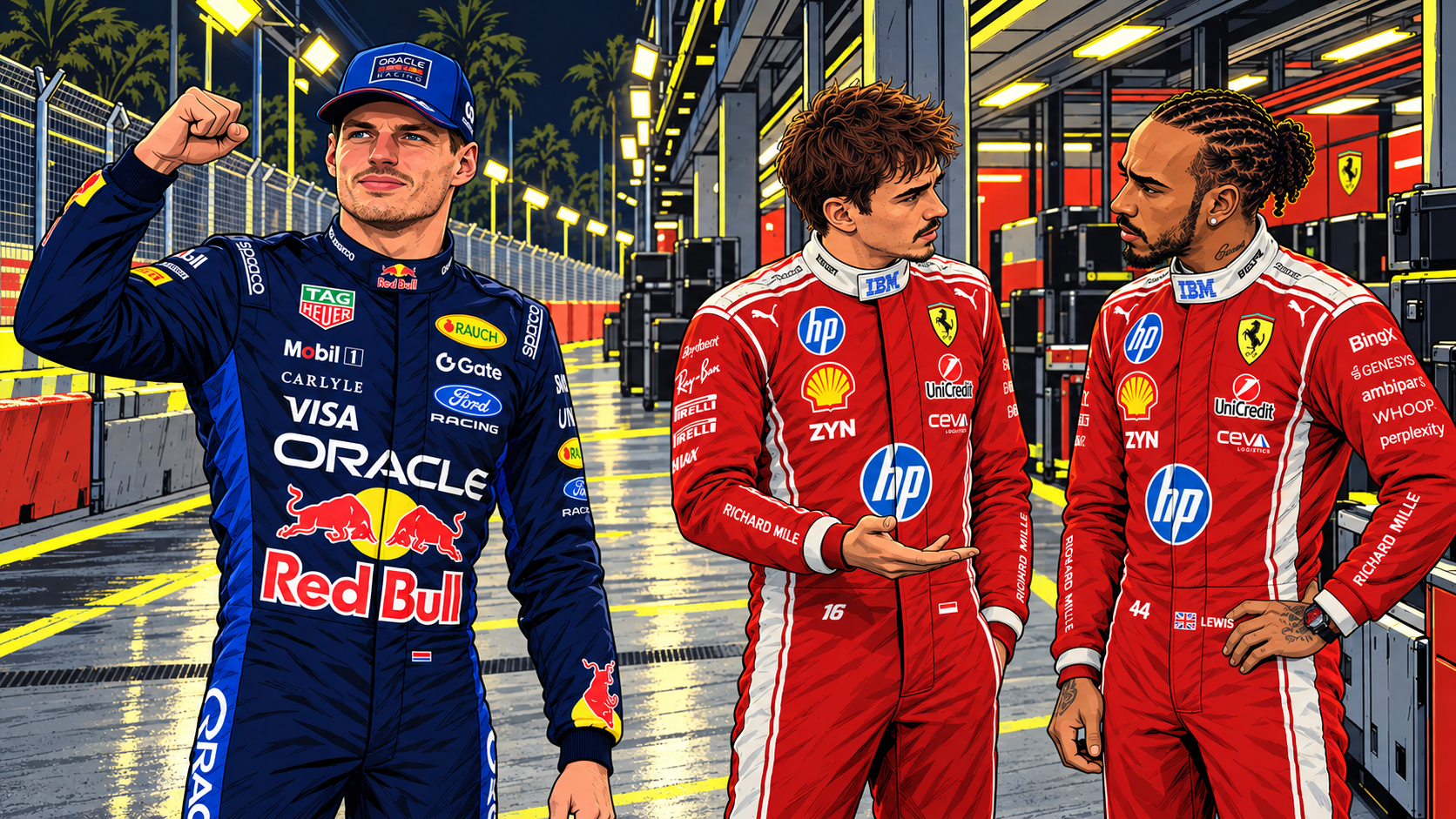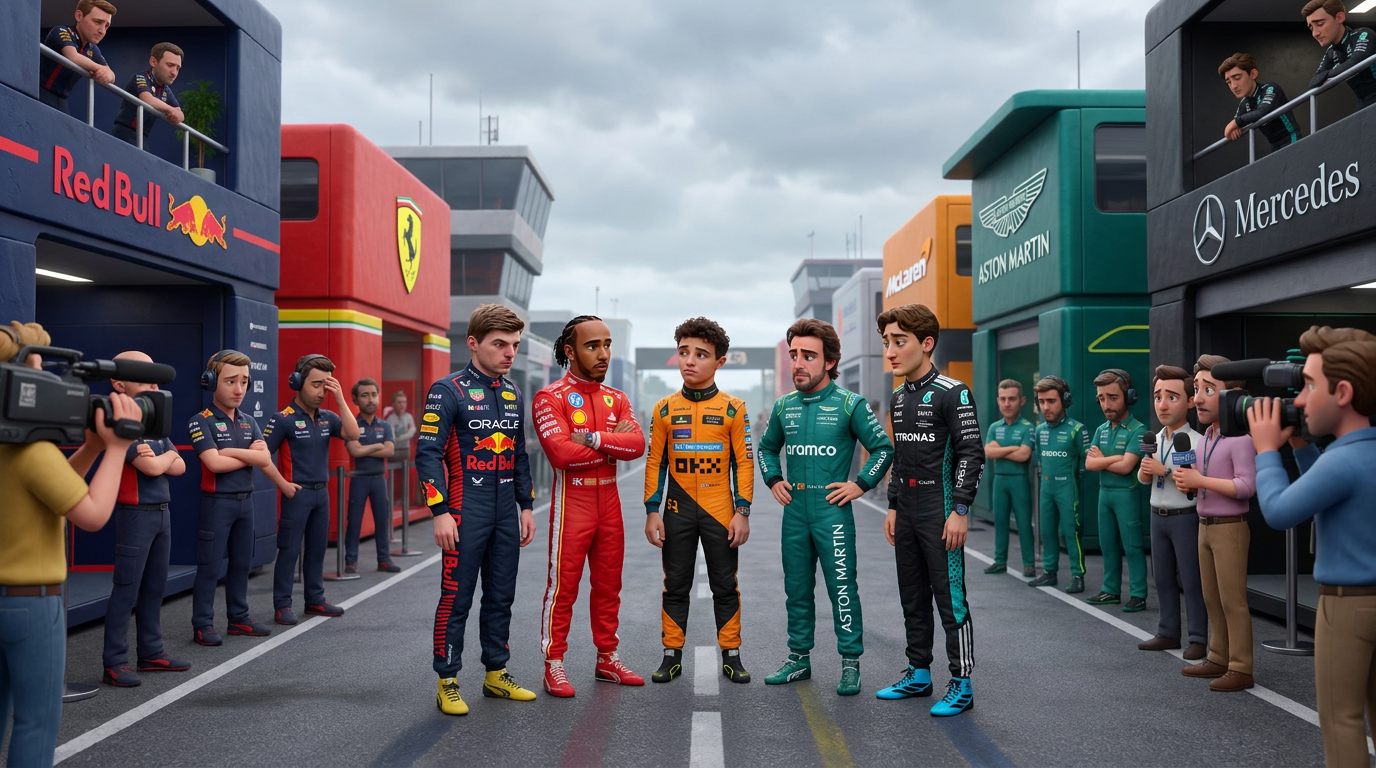
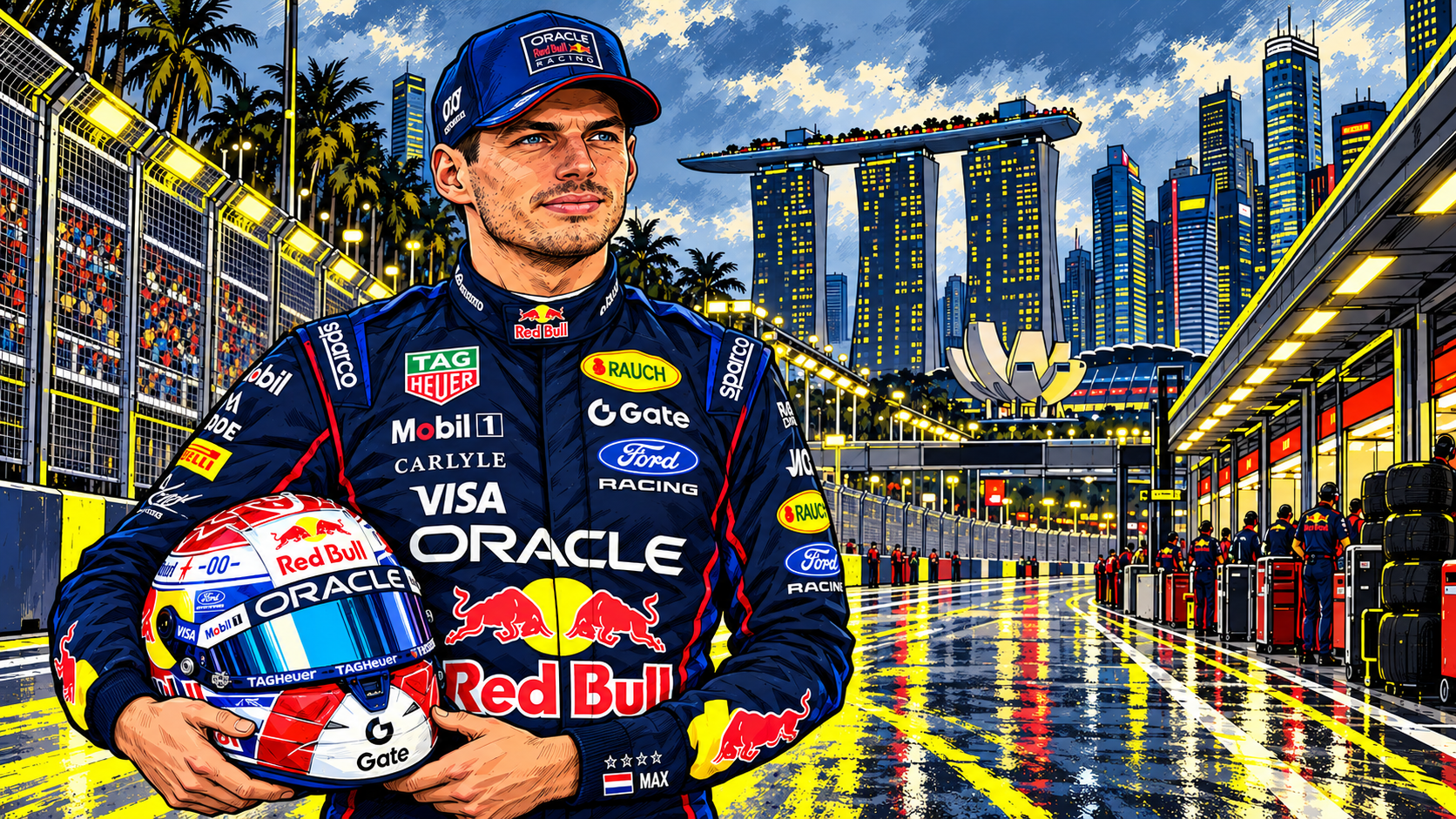
Max Verstappen took victory in Saturday’s Singapore Sprint after George Russell threw away the lead on the opening lap, with Ferrari securing second and third through Lewis Hamilton and Charles Leclerc.
Behind them, McLaren’s pursuit of a podium ended when Lando Norris and Oscar Piastri collided on the final lap.
Russell’s flying start ends in the barriers
A heavy shower shortly before the scheduled start left standing water at Turns 2 and 3, delaying the Sprint by around half an hour. Conditions varied across Marina Bay, and the field started on intermediate tyres following two formation laps.
Russell launched better than polesitter Verstappen and took the lead before Turn 1. Hamilton also gained ground immediately, climbing from sixth to third.
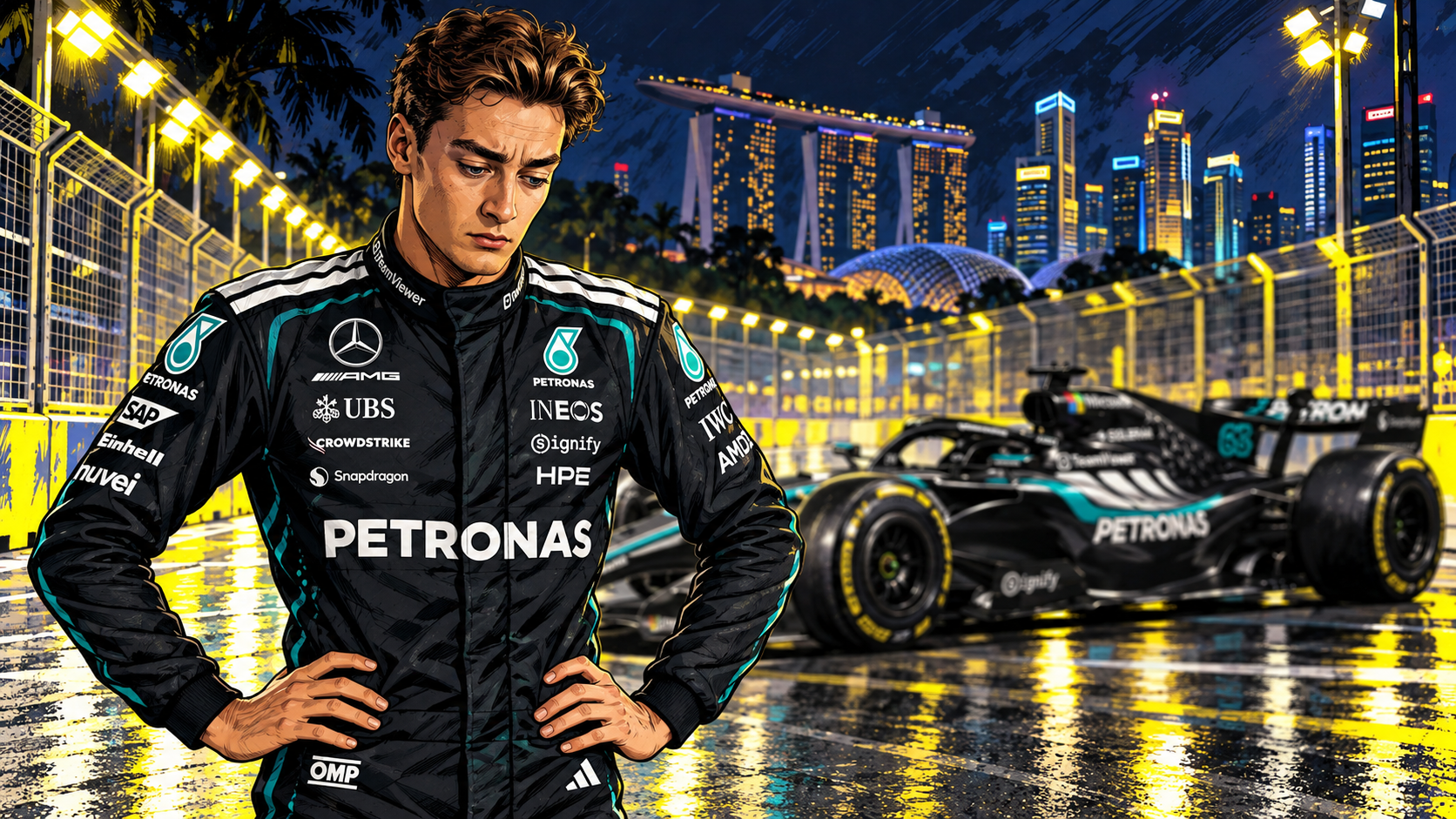
But Russell’s advantage lasted less than a lap. The Mercedes driver lost control over the exit curb at the final corner and spun into the inside wall, handing the lead back to Verstappen.
Safety Car follows a costly opening phase
Lance Stroll and Sergio Pérez collided at Turn 16, while Isack Hadjar retired after reporting an engine-braking problem. Franco Colapinto subsequently stopped with a technical issue during the Safety Car period.
Racing resumed on lap seven. Verstappen retained first place, while Ollie Bearman passed Pierre Gasly for eighth after a prolonged battle through the opening sector.
Verstappen pulls clear as Ferrari holds the podium
Hamilton initially stayed close, but Verstappen progressively extended his advantage, reaching roughly three seconds by the end of lap 13 and five seconds by lap 16.
The Red Bull driver managed his intermediates as the circuit dried. Hamilton secured second, while Leclerc’s increasingly worn tires left him vulnerable to the two McLarens approaching behind.
Norris’s attempted pass ends McLaren’s challenge
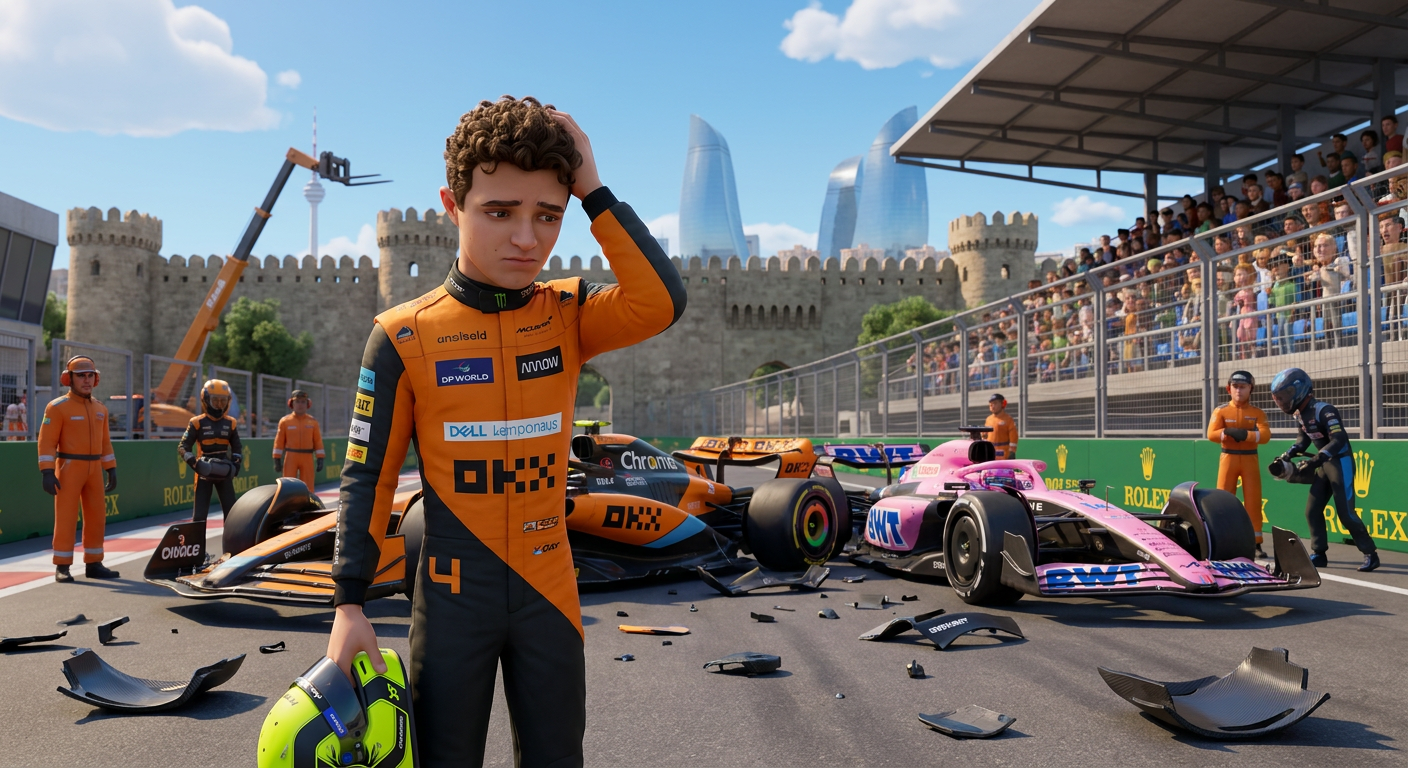
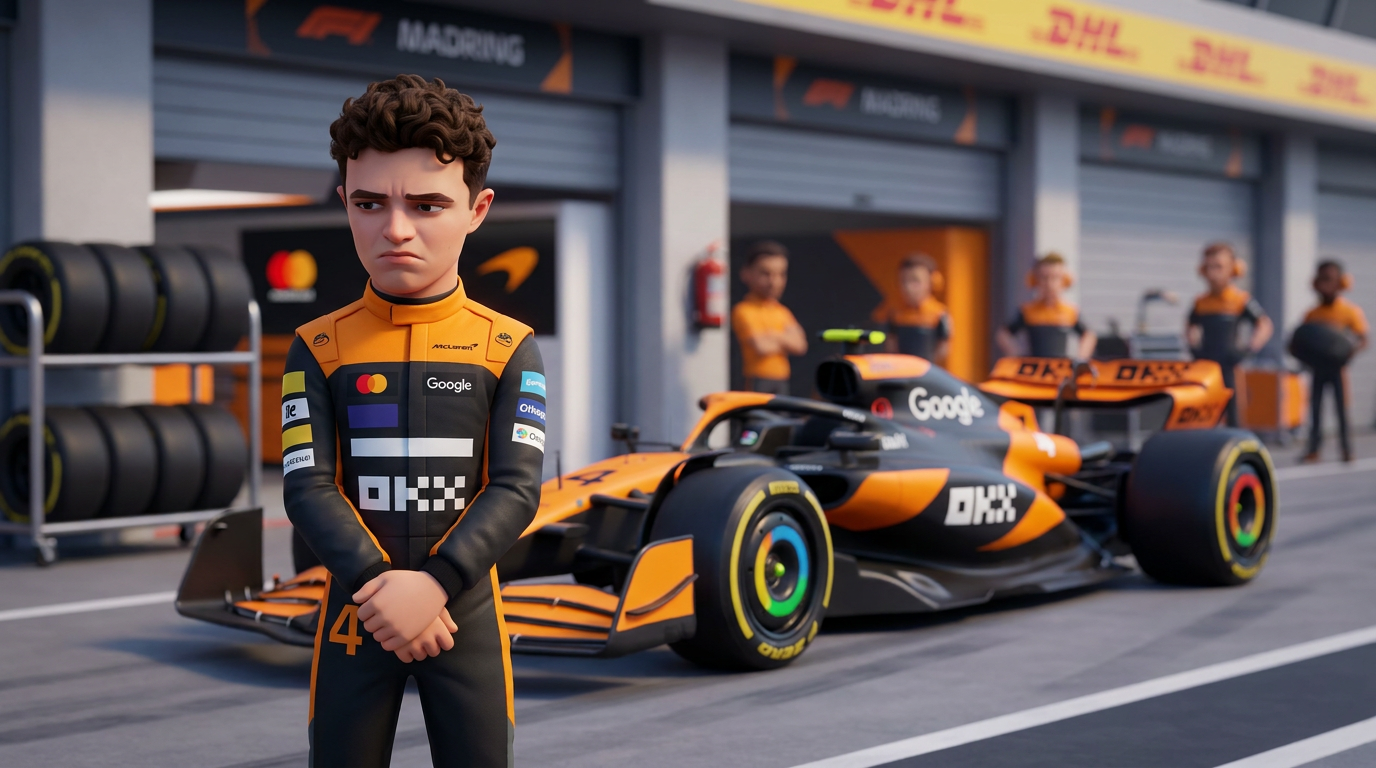
Running fifth behind Piastri, Norris attacked the inside of Turn 5 on the final lap. As the gap narrowed, he tried to withdraw, but struck his team-mate’s right-rear corner.
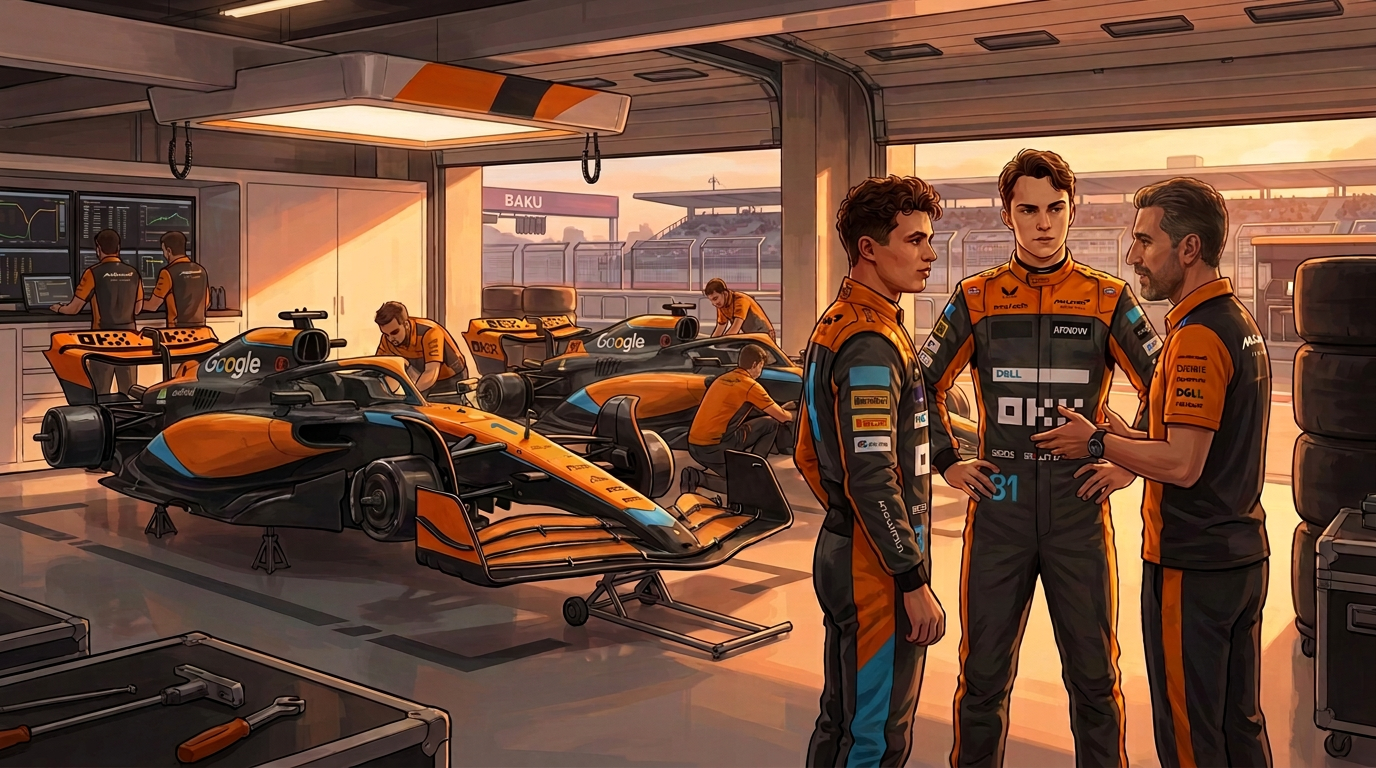
Both cars spun. Piastri retired with substantial rear-end damage, while Norris continued and finished eighth. The collision also left McLaren facing urgent repairs before Grand Prix qualifying.
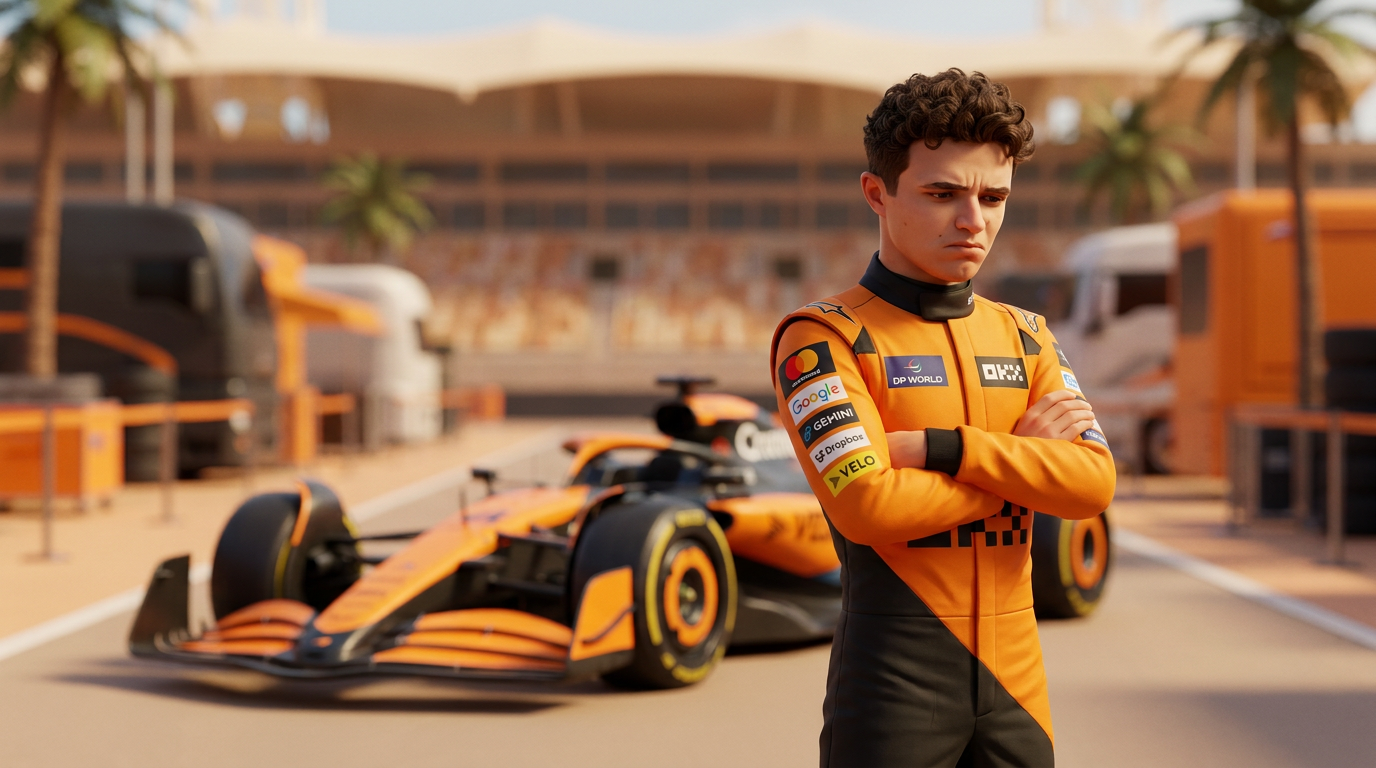
Norris defended his decision to attempt the move: “But it was a big gap, so I went for it. I have the right to do that.” Piastri said he had checked behind before turning and believed Norris was too far back to attempt a pass at that corner.
Antonelli inherited fourth, followed by Liam Lawson, Bearman and Nico Hülkenberg. Norris claimed the final point.
Analysis: Norris’s escape raises questions over the penalty threshold
There is a strong argument that Norris should bear the greater responsibility. He initiated the pass, recognized that the opening was closing and could not withdraw without hitting Piastri. The right to attempt an overtake does not, by itself, establish that the attempt was sufficiently judged or controlled. That is the central weakness in his defense.
The stewards reached a different conclusion. Norris told them his front axle had passed Piastri’s mirror before the apex, giving him an expectation of room. Piastri said he noticed Norris after turning in and attempted to leave space. The panel found that both contributed and neither was wholly or predominantly responsible, taking no further action.
That explanation leaves an important question: what weight did the stewards give Norris’s decision to commit, compared with Piastri’s response to a move he had not expected? Shared involvement does not necessarily mean shared responsibility to the same degree.
The contrast with Canada in 2025 is worth examining: Norris received a five-second penalty after hitting Piastri while trying to pass. But that collision occurred on a straight, and Norris accepted responsibility. It is a relevant comparison, not proof that two equivalent incidents received different treatment.
Singapore therefore supports a forceful challenge to the stewards’ judgement. The case for holding Norris predominantly responsible is persuasive; the published explanation needs more detail to show why his failed overtaking attempt did not meet that threshold.