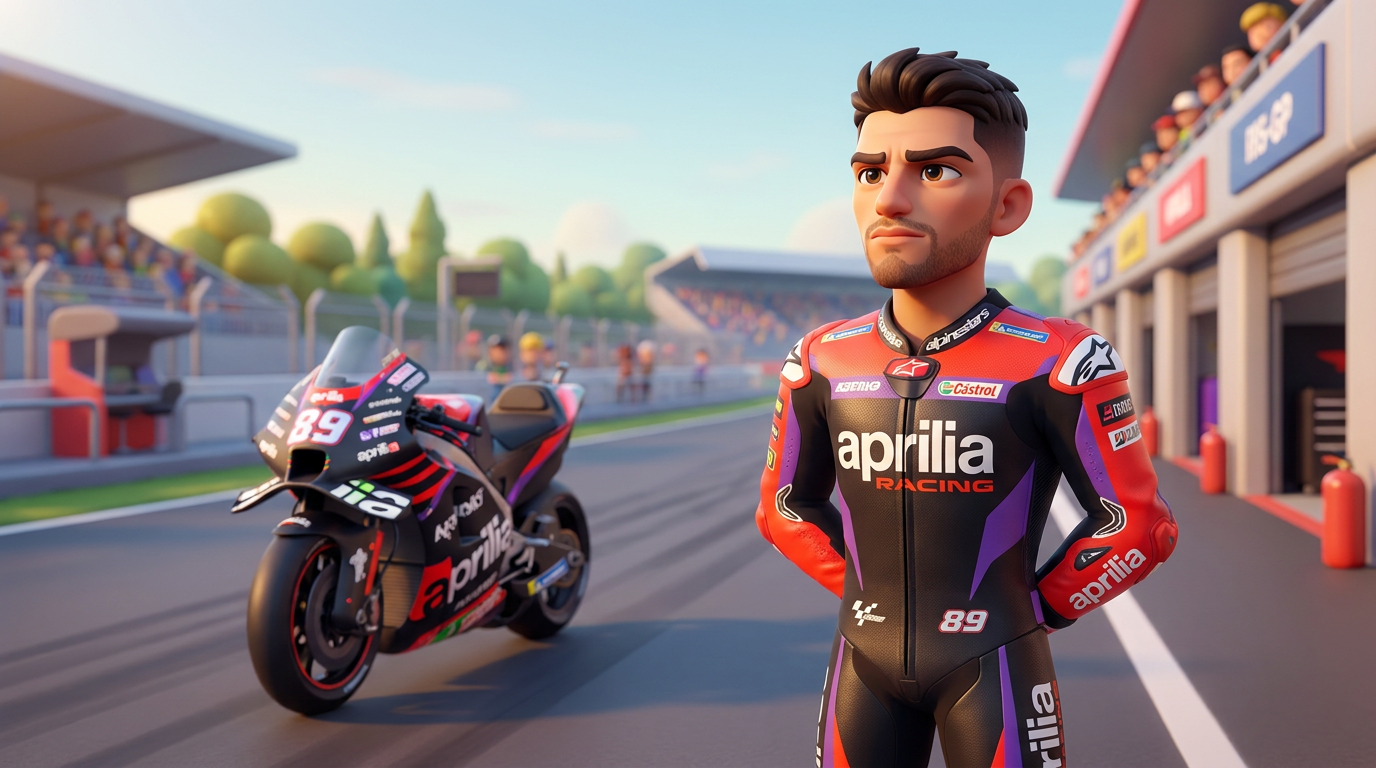

Jorge Martin dominated the Silverstone Sprint as Aprilia swept the podium, but tire degradation sent Marc Marquez backward and distorted the order.
Jorge Martin led an Aprilia 1-2-3 in Saturday’s British Grand Prix Sprint, a result that carried an uncomfortable warning for MotoGP. When the winner feels poor and a reigning champion suddenly falls backward, tire behavior is having too much influence on the racing.
Martin controlled an uncomfortable race
Martin took pole by beating Trackhouse rider Raul Fernandez by only 0.021 seconds, then led the Sprint from start to finish. Ai Ogura placed second for Trackhouse. Marco Bezzecchi sealed Aprilia’s first Sprint podium sweep despite returning from a fractured left collarbone.
It was an outstanding team performance. Aprilia provided the pace, its riders delivered, and Martin extended his championship lead. Still, his discomfort with the soft rear tire cannot be ignored. This was no straightforward case of a rider feeling perfectly comfortable on his motorcycle and pulling away.
Marquez showed the opposite extreme
Marc Marquez finished ninth after a major drop in rear-tire performance. Reports from Silverstone said he was baffled by the extent of the decline, while the reigning champion questioned whether further risks were worth taking.
That is where the concern lies.
Tire management should reward smart riding, but it should not reduce a leading contender to a passenger during a short Sprint. The format is designed to promote urgency. At Silverstone, riders instead had to work out which compromises would cost them the least.
This went beyond Ducati versus Aprilia
Declaring the Aprilia the grid’s best bike would be tempting after all four of the manufacturer’s riders qualified inside the top five and three filled the Sprint podium. Paddock Buzz is not prepared to make that call.
Silverstone plainly favored the RS-GP, and Aprilia deserves full credit for taking advantage. The soft rear also influenced the gaps, though. Fabio Quartararo argued that Jack Miller’s tire decision made his Sprint effectively unwinnable from a points perspective, further evidence that compound selection and degradation overshadowed outright pace.
MotoGP needs a wider range of usable options
Nobody is asking for tires that last forever. Degradation adds strategy and rewards smooth technique. It also stops races from turning into qualifying sessions. The target should be a wider operating window, rather than eliminating wear.
MotoGP and its tire supplier should prioritize:
- Limiting sudden performance drop-offs during Sprints.
- Making sure two compounds are genuinely viable when conditions allow.
- Providing clearer post-race explanations of graining and unexpected degradation.
- Applying rider feedback to separate setup errors from compound limitations.
Sunday will deliver the real verdict
Martin and Aprilia earned every part of their Saturday success. Marquez and Ducati, meanwhile, failed to contain their decline. MotoGP should want races settled by riders attacking with different strategies, rather than surviving within a compound’s narrow window. The British Grand Prix will reveal whether the longer-distance choices restore that balance or deepen Saturday’s concern.