
Barcelona and Monza give WEC a more coherent 2027 schedule, but avoiding championship clashes must remain central to the series’ expansion.
The World Endurance Championship’s growth should be judged by the quality of its calendar, rather than simply the number of manufacturers on the grid. The 2027 schedule largely gets that balance right: Barcelona and Monza replace the Middle Eastern rounds, while Silverstone returns with genuine historic weight.
A stronger European backbone
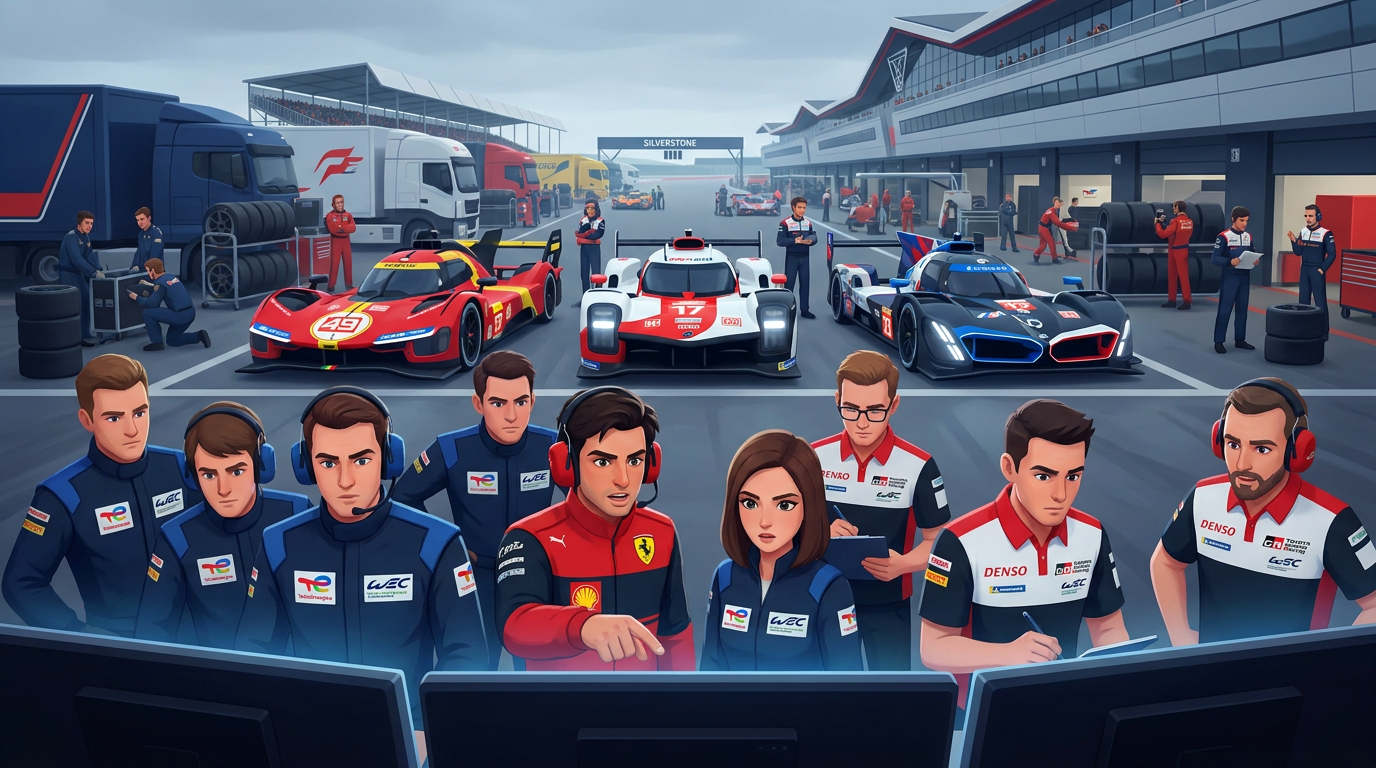
The nine-round 2027 season is due to start in Qatar on March 27, followed by Imola, Silverstone, Spa-Francorchamps, Le Mans, São Paulo, Circuit of the Americas, Fuji and Bahrain. Barcelona and Monza drop off after brief appearances in 2026. Silverstone returns on April 25, adding another circuit suited to multiclass traffic and strategic variation.
The change also brings a familiar endurance landmark back to WEC. The winner of the six-hour Silverstone race will receive the RAC Tourist Trophy, which WEC describes as the world’s oldest automobile racing trophy. Its heritage carries sporting relevance rather than acting as a promotional exercise.
Silverstone deserves permanence
WEC should give Silverstone a permanent place instead of treating it as a rotating calendar guest. Britain has a deep endurance-racing audience, major teams and an established motorsport industry. The circuit’s fast layout can also reveal differences in aerodynamic efficiency, tire use and traffic management between Hypercar manufacturers.
Circuit variety matters in a championship governed by Balance of Performance. Too many similar track profiles can make the competitive picture feel overly managed. Silverstone, Spa, Le Mans, COTA and Fuji each present distinct challenges for cars and crews.
Calendar clashes remain the warning
A schedule loses credibility if leading drivers must choose between major championships. Formula E has already shifted its 2027 Monaco date to remove one of its two clashes with WEC.
That move is welcome. It also shows how much coordination international series still need.
Factory drivers increasingly compete across WEC, Formula E, IMSA and major GT programs. Avoidable conflicts weaken lineups and deny fans direct comparisons between elite competitors. The FIA and championship organizers should agree dates earlier, especially around Le Mans, Spa, Monaco and IMSA’s endurance races.
Stability must follow change
Our verdict is clear: WEC’s 2027 calendar has a convincing sporting shape, with Silverstone as its most important addition. The series should now resist constant venue churn. A stable group of globally relevant circuits helps teams set budgets and lets fans plan travel, while giving each round time to establish its own identity.
WEC is approaching another major phase, with Ford and McLaren preparing Hypercar programs for 2027. Those manufacturers deserve a calendar that matches their investment.
The next step is protecting the strongest venues, minimizing clashes and giving this schedule time to mature.