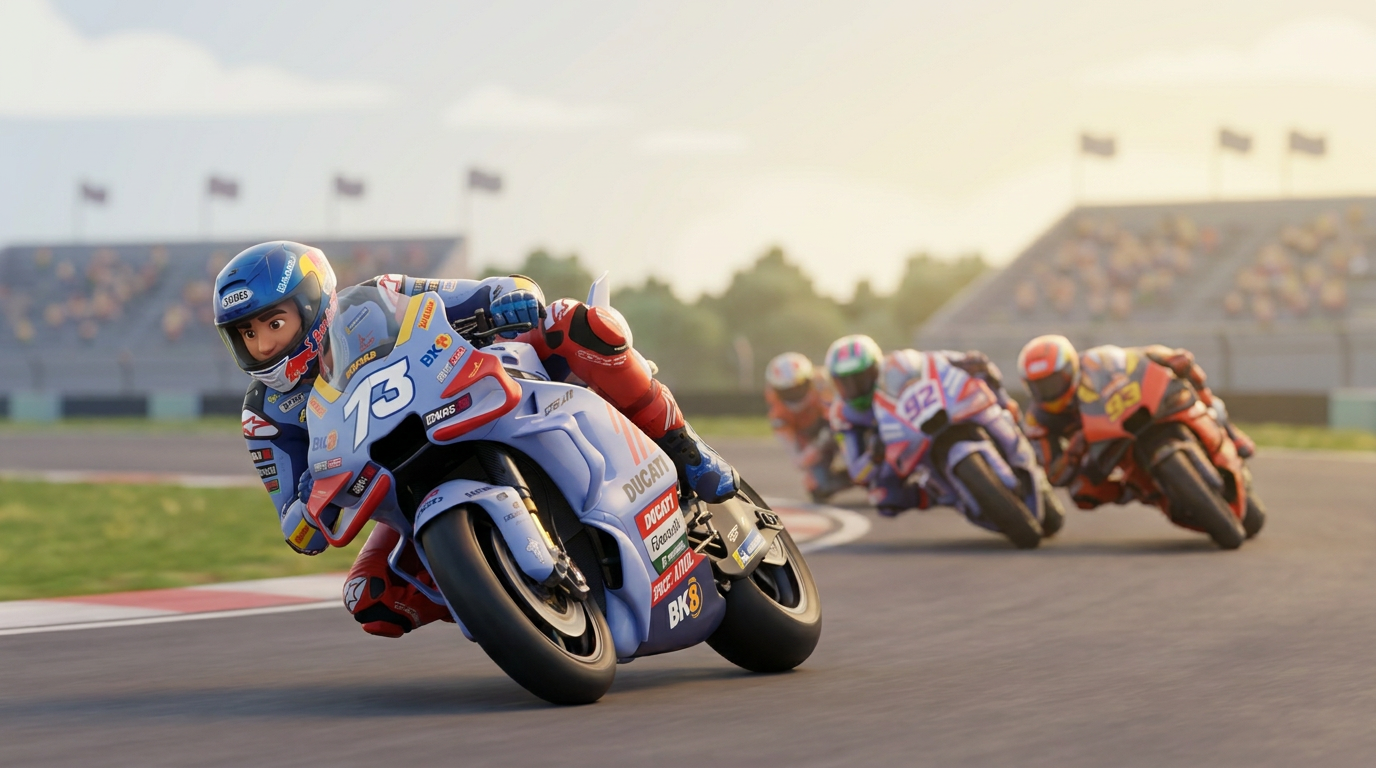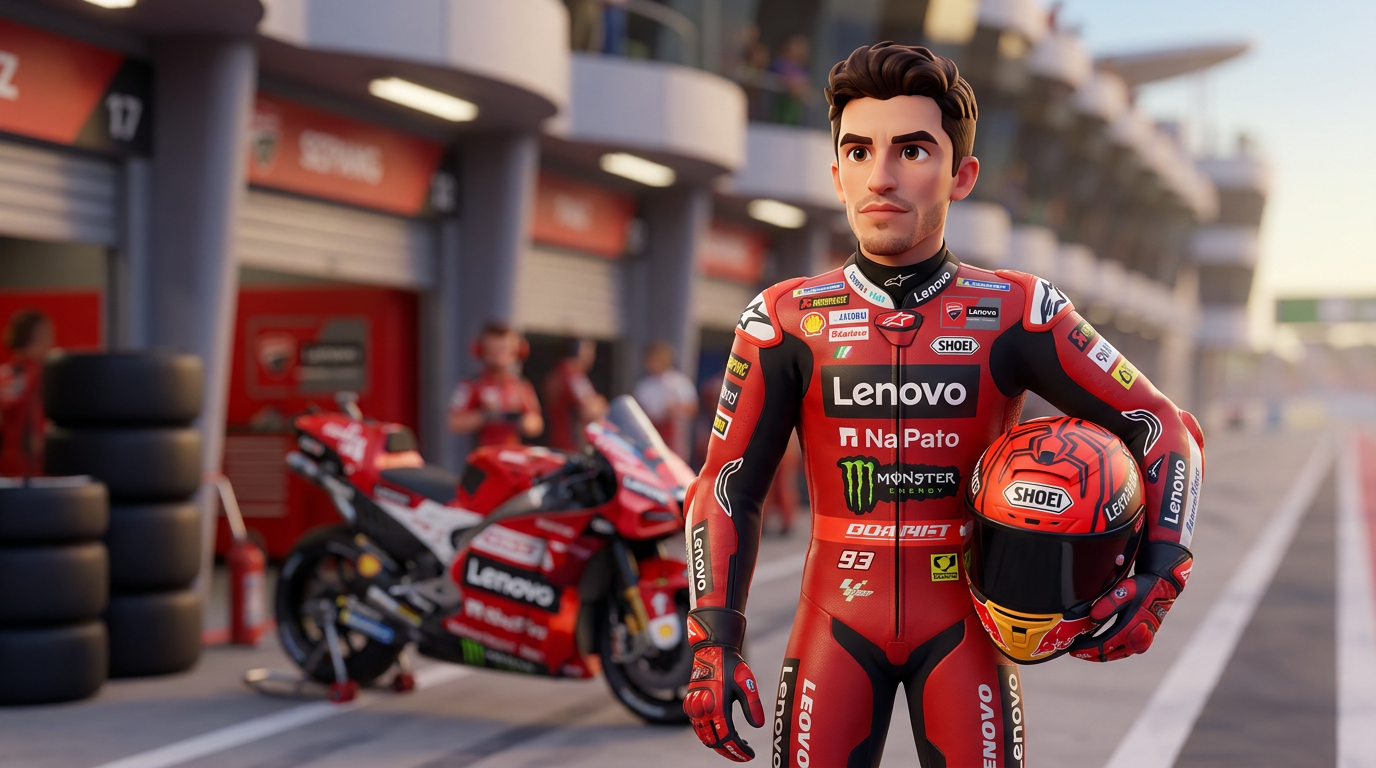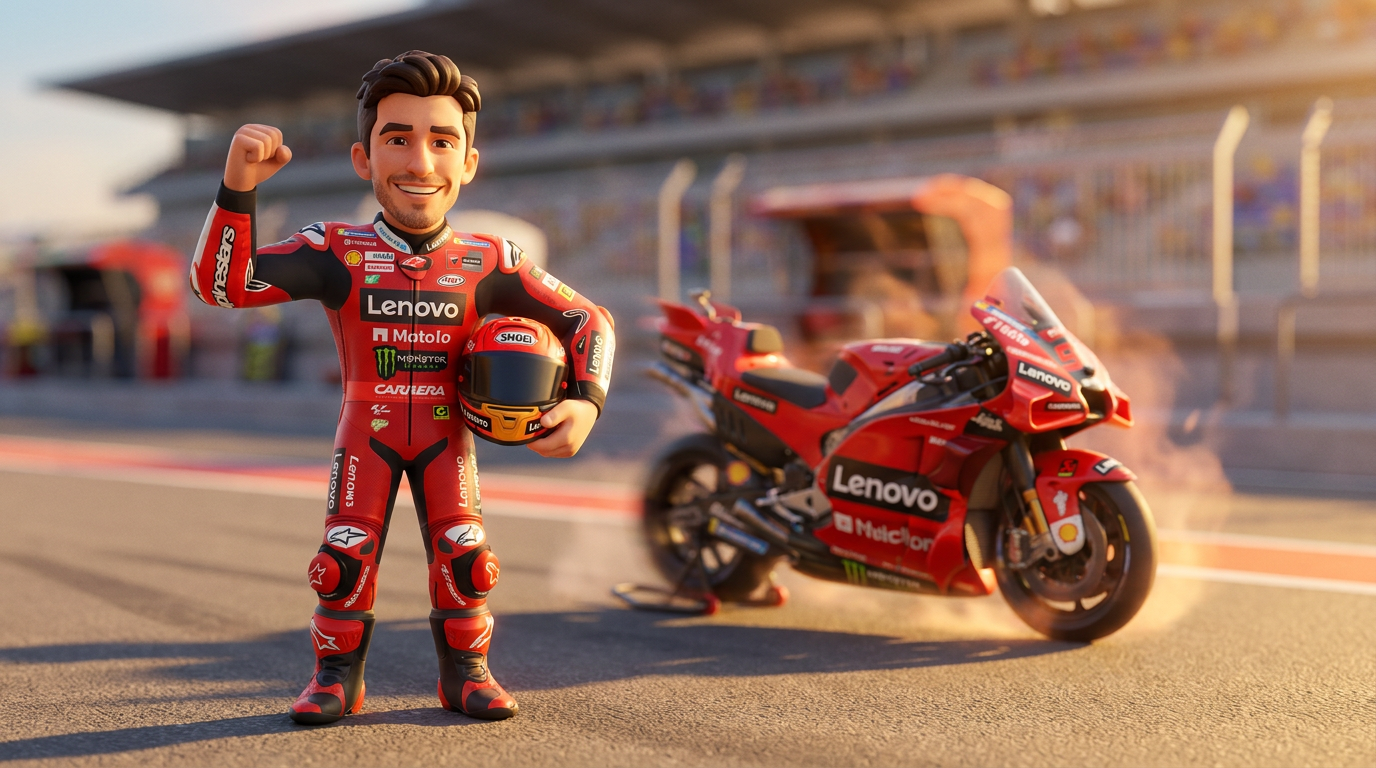
Marc Marquez remains spectacularly fast, but repeated injuries have forced the MotoGP champion to balance instinct, technique and physical risk differently.
Marc Marquez spent much of his MotoGP career making the impossible look manageable. The front tyre would slide, his elbow would touch the asphalt and, more often than not, the Honda would return to its intended line. The injuries sustained during that relentless pursuit of speed have since changed the physical and tactical basis of his riding. His aggression remains visible. It now sits alongside adaptation, pain management and a more precise calculation of risk.
The injury that changed everything
Marquez’s most consequential setback began at Jerez, during the opening round of the delayed 2020 season. A crash fractured his right humerus and began a long, complicated recovery that involved multiple operations and ruled him out for the rest of the campaign.
The impact extended beyond the races he missed. A MotoGP rider relies heavily on the arms and shoulders to brake from high speed, resist deceleration forces, steer through changes of direction and control slides. For Marquez, damage to his right arm directly affected the side responsible for throttle control and much of the demanding physical work required to ride a prototype motorcycle.
Victories after his comeback proved that his underlying speed had survived. They also showed that recovery was never a simple return to his former self. Further surgery in 2022 was intended to address the arm’s alignment and function, prompting another extended rehabilitation. Each comeback required restored strength, revised movement patterns and renewed confidence in what the limb could withstand.
A style built around the front tyre
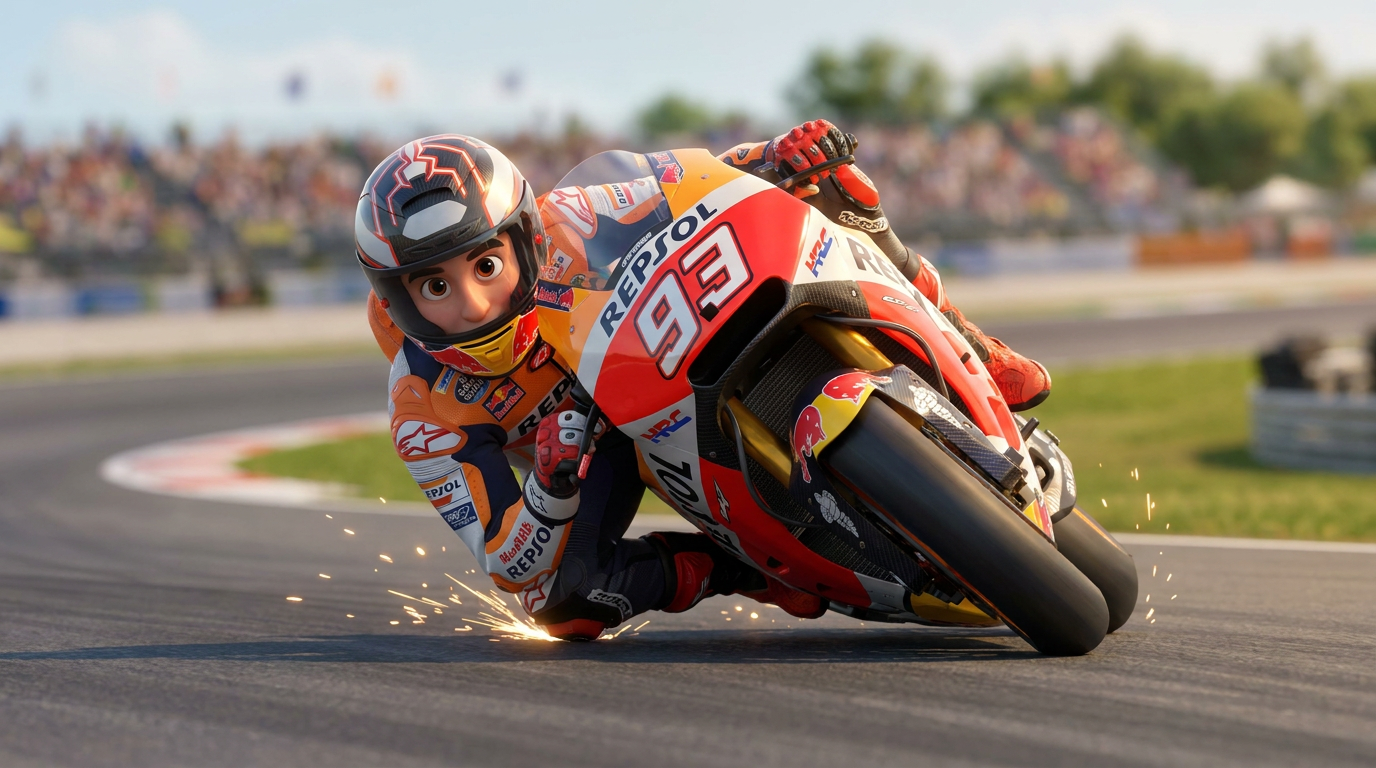
Marquez’s defining technique has long centered on loading the front tyre heavily during corner entry. He brakes deep, turns with commitment and uses his body position to catch slides at extreme lean angles. That approach made him particularly effective at saving front-end moments that would send most riders into the gravel.
It comes at a considerable physical cost. Heavy braking sends force through the hands, wrists, arms and shoulders. Quick changes of direction require repeated upper-body effort, while a front-end save can create a sudden, violent load as the rider uses a knee, elbow and handlebar input to push the motorcycle upright.
An injury affects far more than outright strength. Reduced mobility can change his position on the motorcycle, while fatigue can compromise the precision required late in a race. If one arm cannot contribute normally, other muscle groups have to compensate. Small changes in mechanical advantage can affect braking stability, steering input and his ability to react as the front tyre begins to fold.
Adaptation without abandoning aggression
Marquez hasn’t become a conservative rider. His competitive identity still depends on finding lap time where the motorcycle is unstable or near its limit. The significant change is how selectively he can apply that aggression.
A rider dealing with physical limitations may try to finish more of the braking phase while the bike remains upright, make smoother steering inputs or favor a cleaner exit instead of forcing every corner entry. Setup changes can also aid that adjustment through braking stability, engine braking, geometry and handlebar position. No single change provides a complete answer, since an improvement in one phase of a corner can create a compromise elsewhere.
Marquez faces a particularly complex challenge because his natural speed comes from trusting the front. Removing that strength entirely would risk making him less competitive. The goal is to retain his decisive corner-entry performance while lowering the physical cost and reducing how often he needs an extraordinary save.
Crashes carry a different calculation
Marquez’s readiness to crash while searching for the limit has often been viewed as part of his method. Practice falls could provide information about grip, setup and the final margin available before qualifying or a race. Following major injuries, though, the consequences of that process are harder to separate from performance.
Repeated impacts can interrupt rehabilitation, cause new injuries and take away valuable track time. Marquez has also experienced episodes of diplopia, or double vision, during his career, adding another serious concern after heavy accidents. The calculation is no longer simply whether a crash hurts. The question is whether another impact could jeopardize weeks, months or an entire season.
Caution doesn’t automatically deliver better results. MotoGP’s margins are too tight for a rider to stay well below the limit, and hesitation brings dangers of its own. The aim is smarter risk selection, identifying when a save, an overtake or another setup experiment warrants the exposure, and when collecting data or points carries greater long-term value.
Changing machinery changes the demands
Marquez’s departure from Honda machinery after the 2023 season added another element to his technical evolution. Learning a different motorcycle meant identifying which habits still worked and which had developed around the specific strengths and weaknesses of his previous bike.
A more supportive platform can help a rider avoid forcing the front tyre at every opportunity, potentially spreading lap time more evenly across corner entry, mid-corner speed and acceleration. Adapting to different machinery still requires repetition, however, and that repetition adds another physical load to a body with an extensive injury history.
Modern MotoGP adds further complications. Aerodynamics and ride-height devices have changed braking, acceleration and overtaking, while sprint races have increased the number of competitive starts each weekend. Riders now have to maintain their intensity across more high-pressure laps, which makes physical efficiency increasingly important.
The next phase of Marquez’s evolution
The clearest result of Marquez’s injuries is a refinement of his signature style rather than its disappearance. He still attacks braking zones, accepts movement from the motorcycle and shows rare reactions when grip suddenly disappears. The context has changed. Every dramatic save now belongs to a career shaped by surgery, rehabilitation and an understanding that the body has finite reserves.
His future competitiveness will depend on preserving the strengths that made him a multiple MotoGP world champion while avoiding a cycle in which limited machinery, excessive risk and further injury feed one another. As bikes and tyres develop, Marquez’s most important skill may no longer be finding the limit first. It may be choosing how often he needs to cross it.