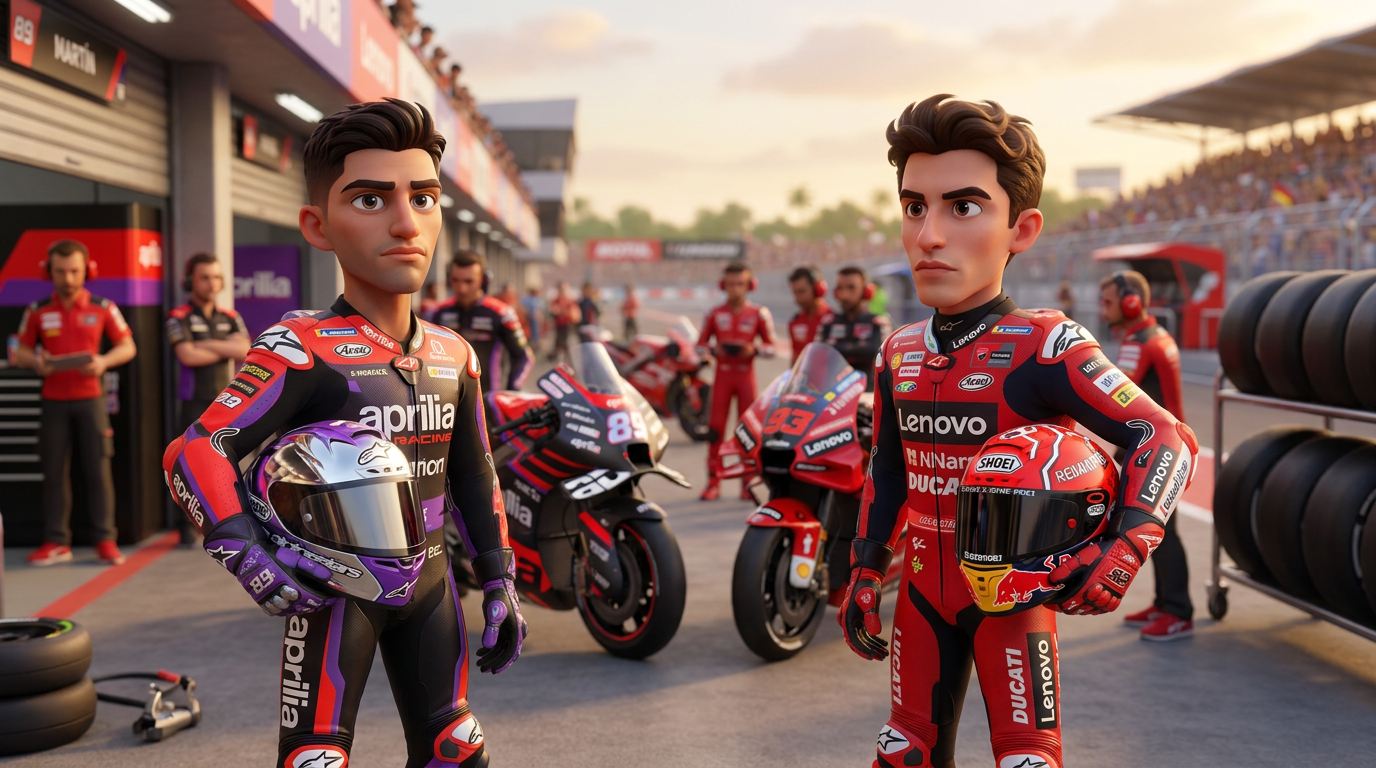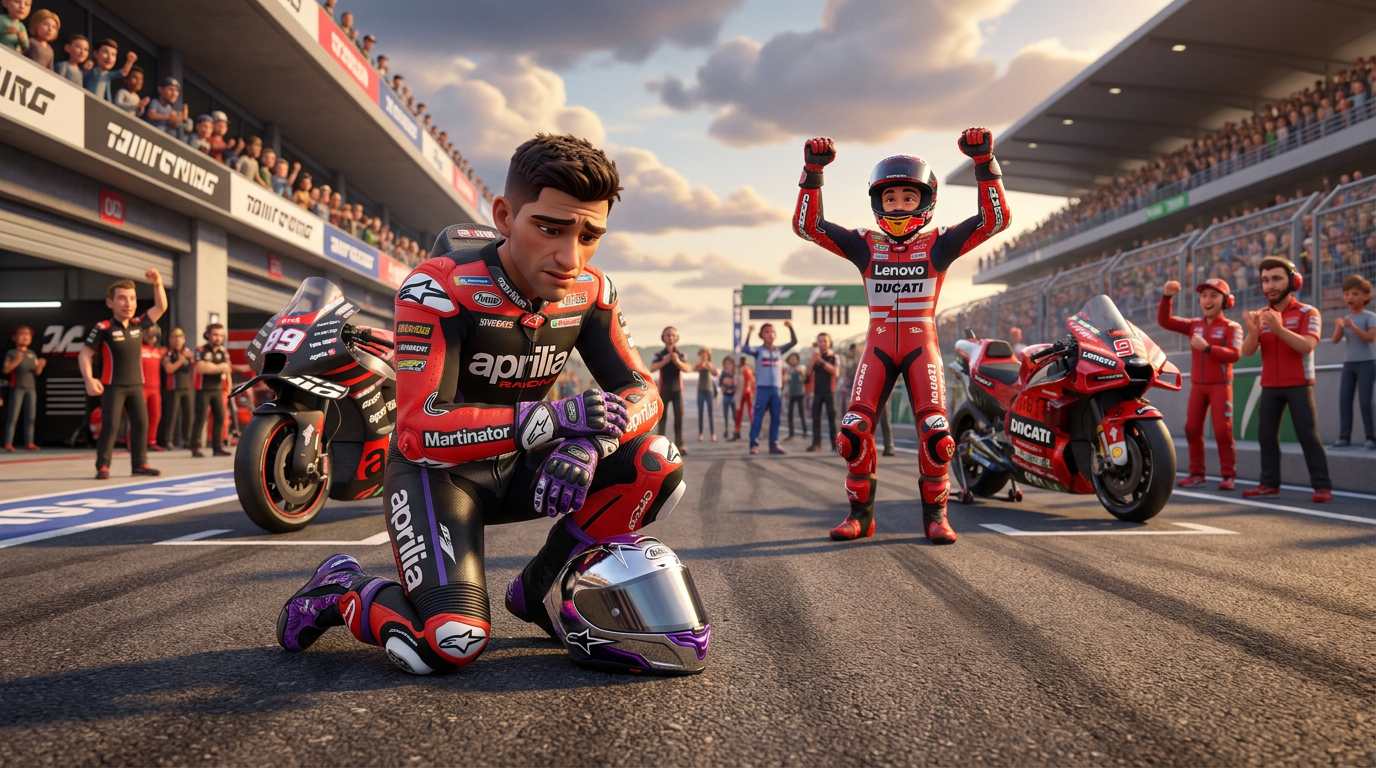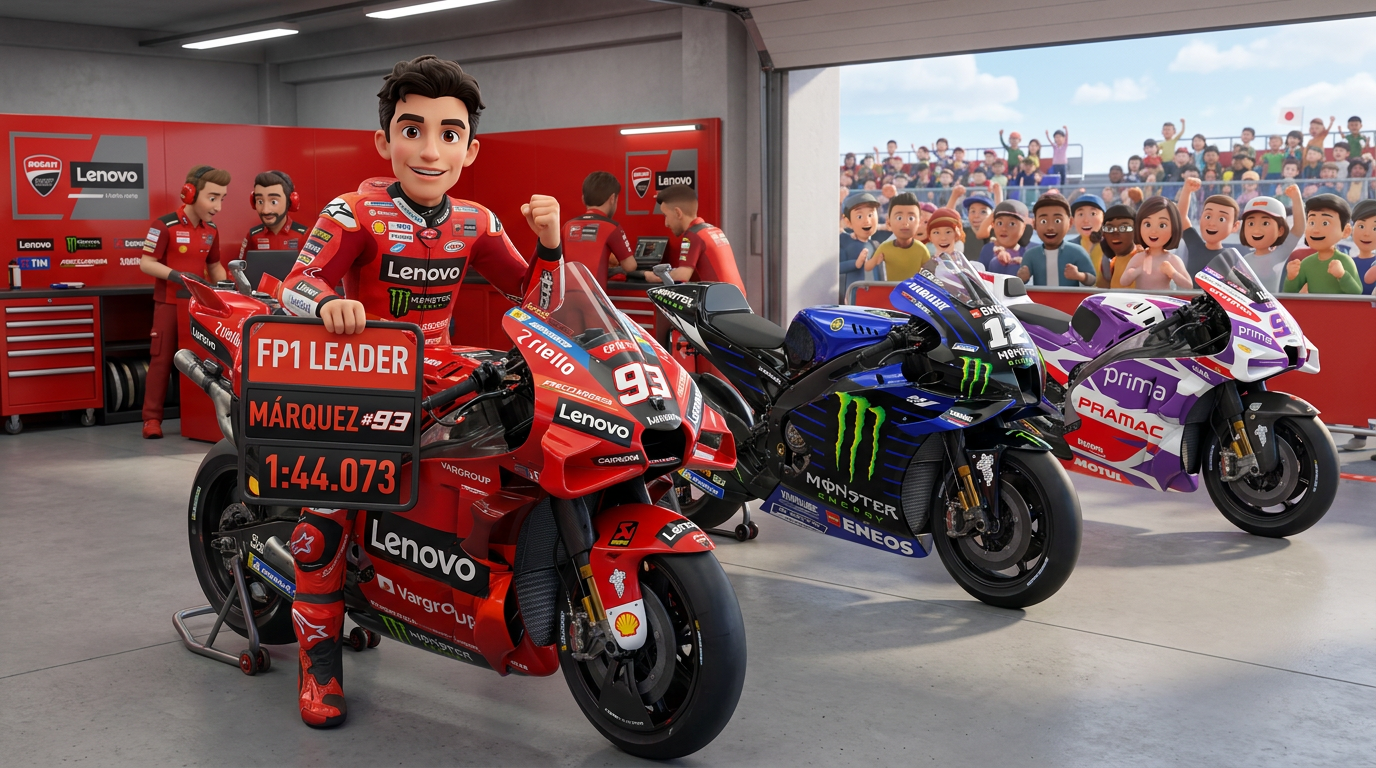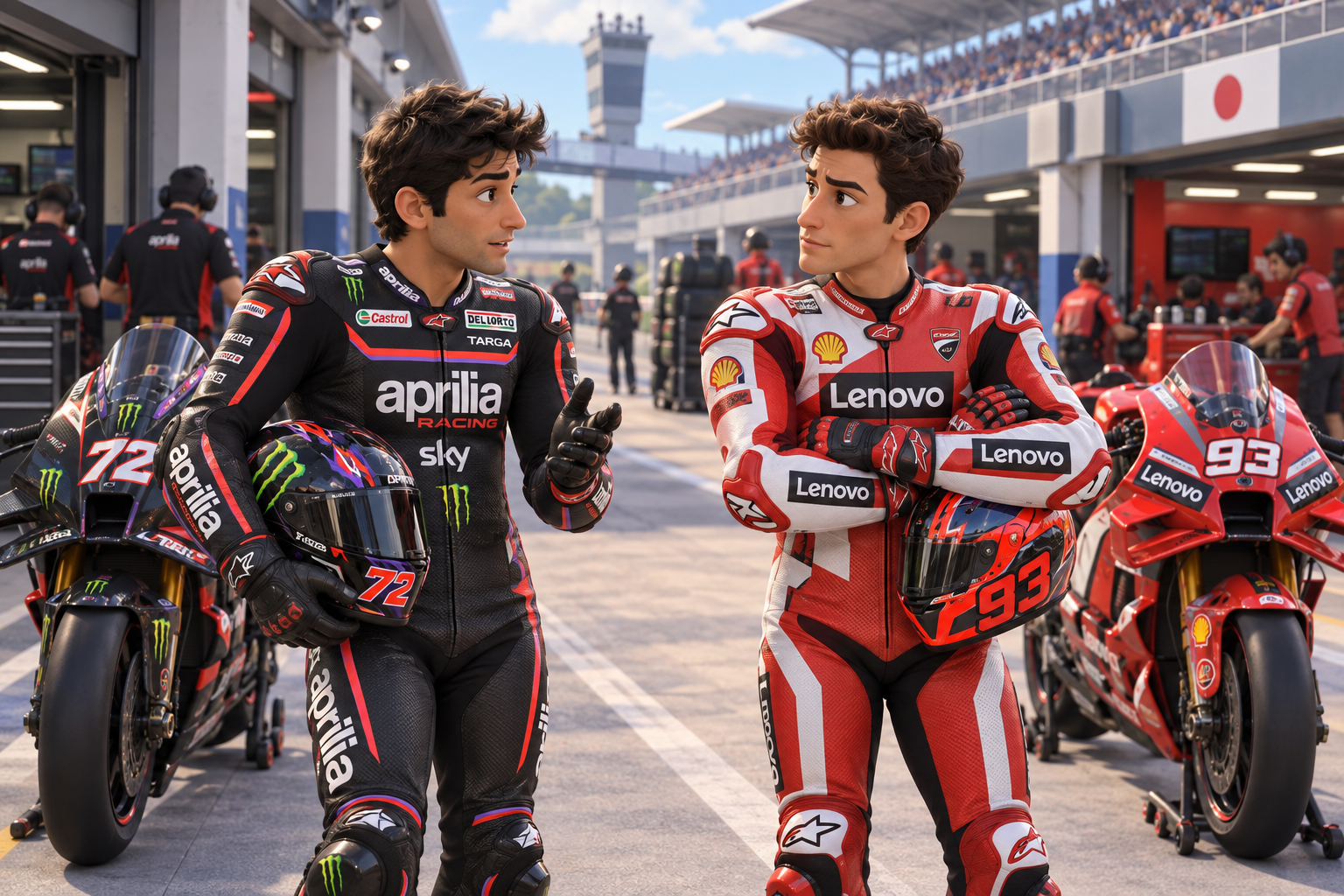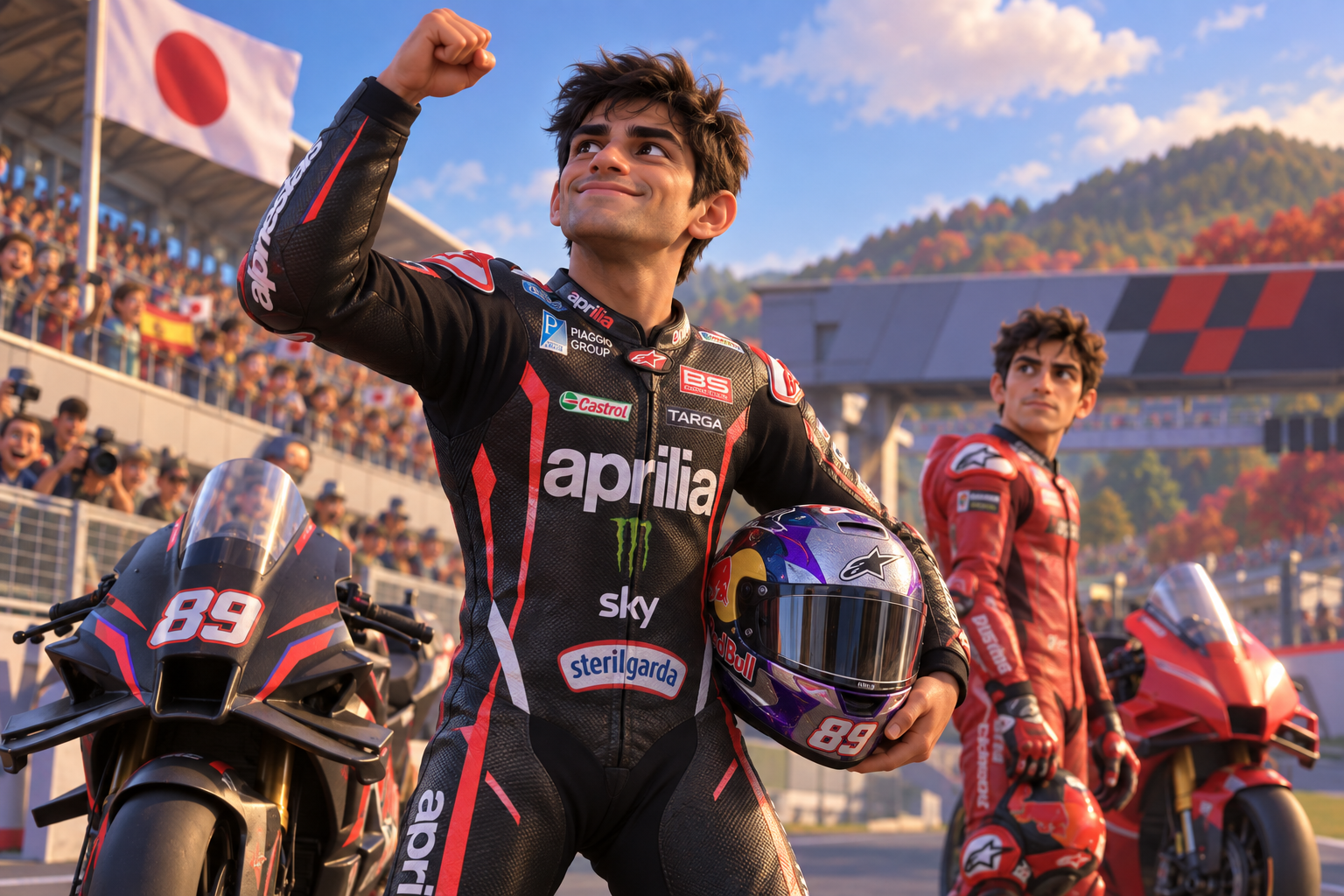
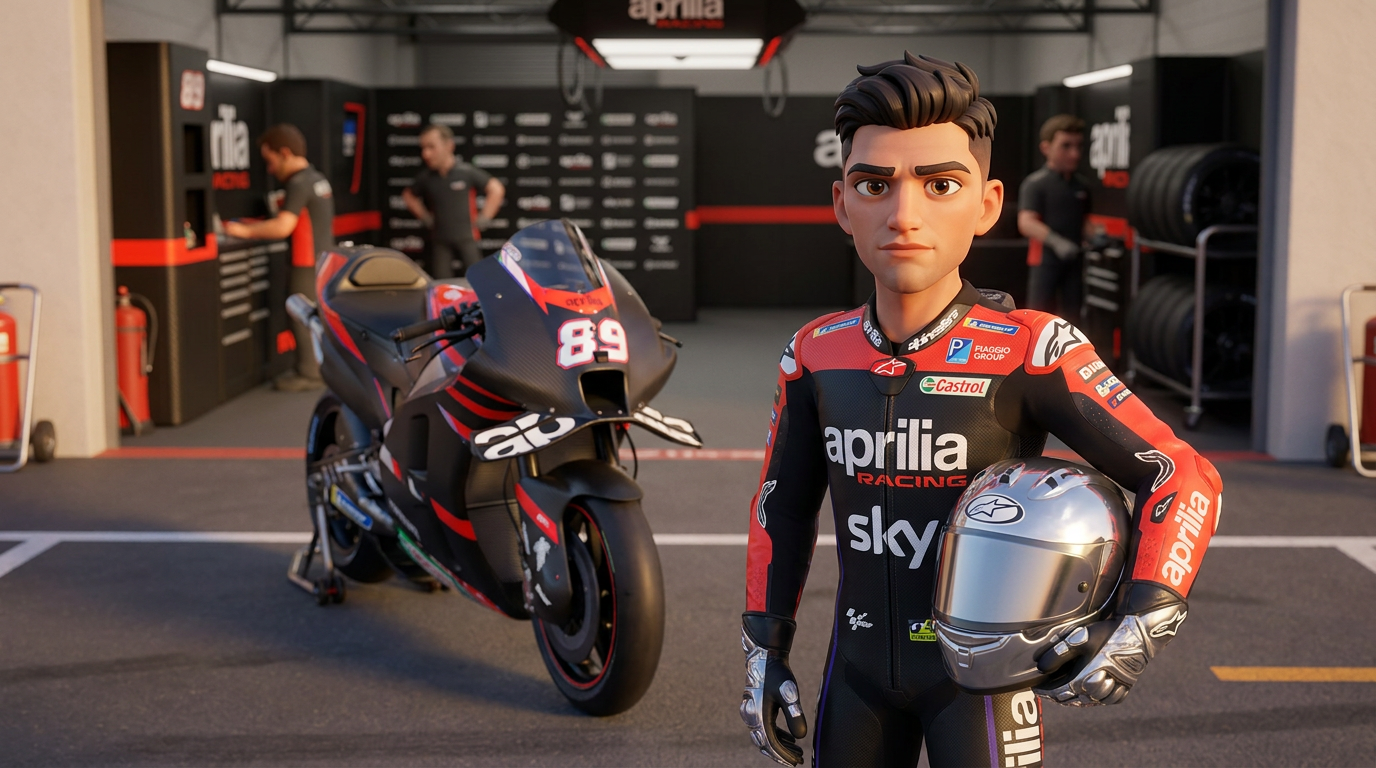
Jorge Martin heads to Indonesia leading the MotoGP championship, but he does not control the title fight.
The Aprilia rider has 333 points to Marc Márquez’s 331, so he can no longer treat every direct battle as a test of outright speed. We believe his best response is strategic: protect track position, collect points and make Márquez accept the greater risk.
That does not mean caution at any cost. It is what the standings require. Martin leads, Márquez is applying pressure, and Marco Bezzecchi is 49 points behind Martin on 284. The primary burden of forcing the championship open falls on the pursuer, not the leader.
The two-point lead changes the calculation
Martin has 333 points, Márquez is on 331 and Bezzecchi on 284. There is no room for complacency, but those totals give each rider a different strategic task.
Márquez must convert his momentum into the championship lead. Martin must not let a two-point advantage tempt him into chasing a result that his available pace cannot support. Martin was blunt: “Even on one of my good days, it was impossible to beat Marc Marquez”.
That statement should guide Aprilia’s planning rather than discourage the team. If a rider believes victory is beyond reach on pure pace, trying to create it through excessive braking risk or tire wear is poor championship management.
Martin’s first objective in Indonesia should be to keep Márquez within reach in qualifying and during the opening phase of each points-paying contest. If Márquez has a clear pace advantage, Martin should maximize his own score rather than use up the available grip by responding to every move. A two-point lead provides no buffer, but Márquez still must finish ahead to erase it.
Aprilia must manage windows, not chase miracles
Traditional undercut and overcut terminology applies imperfectly to motorcycle racing because MotoGP does not usually involve planned dry-weather pit stops. The underlying principles remain useful, however. Changeable conditions create literal pit windows, while a dry race offers tactical windows through tire temperature, conservation and attack timing.
Aprilia’s version of an undercut is to generate usable grip earlier, gain track position and deny Márquez a clear path through the field. Its overcut is to conserve the rear tire, accept an early pace deficit and attack when the rider ahead begins losing performance. Neither strategy should be chosen on instinct alone.
Motegi provided the warning. Teams did not test the hard rear used in the Grand Prix until Sunday warm-up, after which it performed strongly in the race. The teams had also avoided the tire until they were forced to use it, then discovered it should have been considered from the beginning.
That revealed a collective preference for familiar information over potentially decisive information. With only two points separating the championship leaders, Aprilia cannot repeat that conservatism. It must use practice to evaluate every realistic race option, even if that compromises the appearance of a single-session time sheet.
Ducati should let Márquez carry the risk
Márquez’s position is more straightforward. He trails, has momentum, and showed at Motegi that he can use his pace to inflict maximum damage on Martin’s lead.
Ducati should not weaken that advantage with unnecessarily complex tactics. If Márquez has the pace to lead, the team should prioritize a setup that allows him to create a gap without using the rear tire too soon. If he starts behind Martin, patience may be more valuable than an immediate pass.
A failed early attack can cost much more than the points gained by passing one lap earlier. Márquez does not need to win the championship in the first sector in Indonesia. He needs to keep putting Martin in positions where the Aprilia rider must decide whether to match his level of risk.
The crucial distinction is between pressure and desperation. Márquez can pressure Martin by staying close, preserving tire performance and selecting a pass with a high probability of success. It becomes desperation only if he treats every half-opening as decisive. Finishing behind Martin is costly when the gap is two points. A non-finish is far more damaging.
Team orders are premature, but support is not
On the available evidence, we would not impose rigid team orders at this stage. Bezzecchi remains mathematically relevant with 284 points, and the Japanese round tightened both the points difference and the number of contenders. Márquez rejected the suggestion that the championship had become a two-rider contest, although Pedro Acosta took the opposite view.
Aprilia should not automatically sacrifice Bezzecchi’s race whenever he is close to Martin, especially if Bezzecchi has the stronger pace. But the team cannot act as though its riders hold identical championship positions. If a late-race situation arises in which swapping positions would materially protect Martin without exposing either rider to another competitor, Aprilia should be ready to intervene.
Support starts before an order is given. According to Motorsport.com, Aprilia Racing Team leads the teams’ standings with 617 points, ahead of Ducati Team on 495 and Trackhouse Racing Team on 453. That strength should give Aprilia confidence in its operational processes. The team should give Martin a race plan with clear thresholds for when to defend, when to concede a corner and when tire preservation matters more than temporarily retaining a position.
Ducati faces a different calculation. Its priority should be to give Márquez the clearest possible opportunity to score rather than ask other riders to shape the result. Manufactured interference would introduce controversy and unpredictability when Márquez has demonstrated that he can deliver directly.
Bezzecchi cannot ride like a supporting actor
Bezzecchi is the outsider among the top three with 284 points, but that does not make him irrelevant. His strategic obligation now is to pursue high-value results. A conservative accumulation of podiums benefits Martin and Márquez more than it helps him.
When the evidence supports it, Bezzecchi should make a calculated attempt to exploit a different tire-management curve or setup direction. That does not mean gambling blindly. Motegi showed the danger of reaching Sunday without properly assessing the relevant hard rear. The lesson is to develop alternatives through preparation, not improvise after the race has started.
If Bezzecchi is genuinely faster than Martin in Indonesia, Aprilia should allow him to use that pace until the closing stages make the championship consequences clear. Restraining him too early could cost Aprilia its best chance to take points from Márquez. Team strategy must serve the championship, not simply the rider who begins the weekend in front.
Our verdict for Indonesia
The standings require controlled aggression from all three contenders, but in different measures. Martin should prioritize qualifying position, comprehensive tire evaluation and finishes that keep him close to Márquez in the standings. Márquez should attack without mistaking urgency for recklessness. Bezzecchi must pursue the strategic variation that could close a 49-point deficit.
The most consequential choice may come before the lights go out. Motegi demonstrated the potential cost of delaying work with an unfamiliar tire until Sunday. In Indonesia, each contender must test the options that could determine the race, not just the compounds that feel safest on Friday.
Our view is clear: Martin should stop accepting Márquez’s preferred contest, a direct test of peak pace and nerve. He leads the championship. Aprilia must make Márquez use his grip, take the risk of passing and prove he can overturn that advantage. With only two points between them, the smartest defense is not passive. It forces the challenger to make the more difficult decisions.