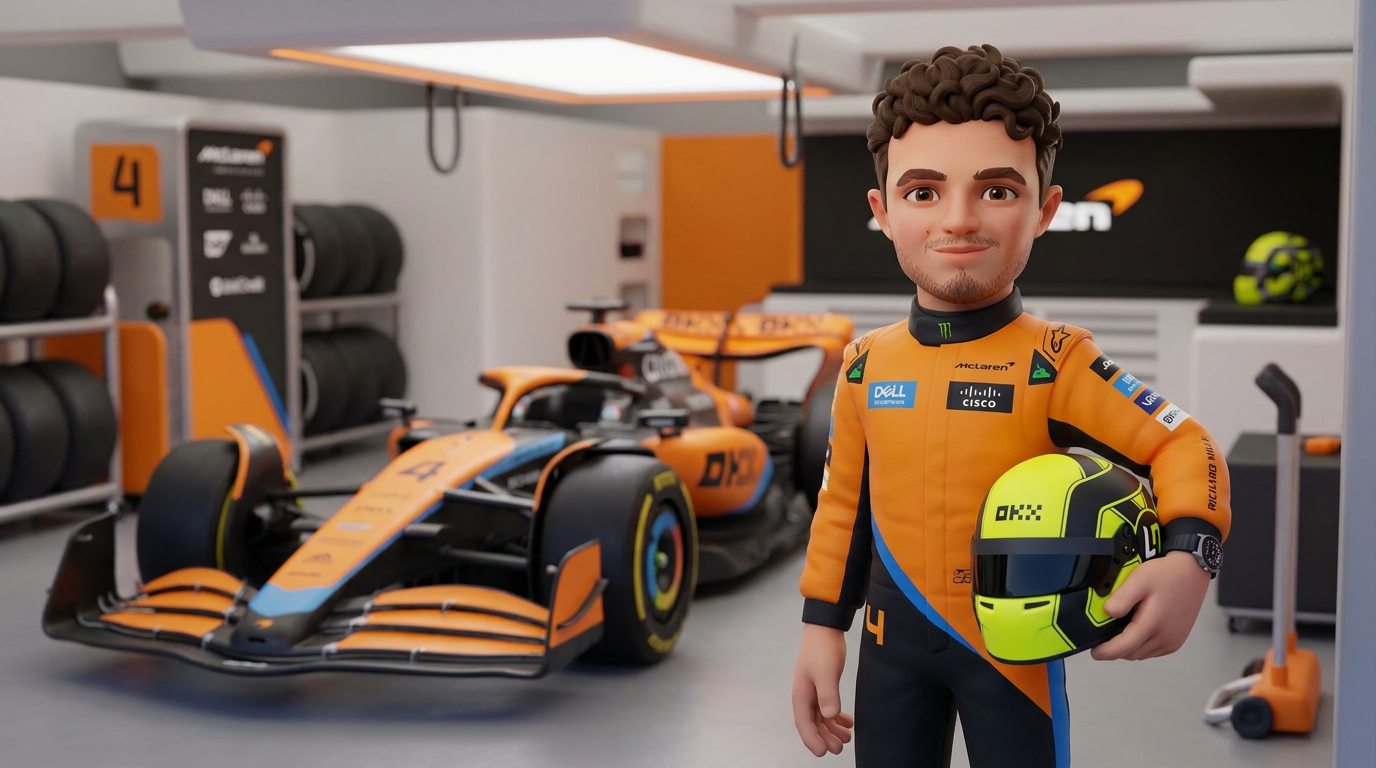
Lando Norris says McLaren must stay patient after its first win of 2026 in Hungary, with Zandvoort set to test the reach of its major upgrade.
Lando Norris has his first victory of 2026 after what he regards as some of his strongest driving, but the reigning Formula 1 world champion has rejected suggestions that McLaren’s Hungarian Grand Prix breakthrough changed the title picture overnight. His message is measured. The upgraded car has provided a route back towards the front, and McLaren must follow it patiently.
Hungary delivers a crucial breakthrough
McLaren went to the Hungaroring without a victory in the opening 10 rounds of the season, a sharp reversal for the team that began 2026 as the reigning champion. Mercedes had set the early standard under Formula 1’s new regulations, while Ferrari also secured a significant share of the available wins.
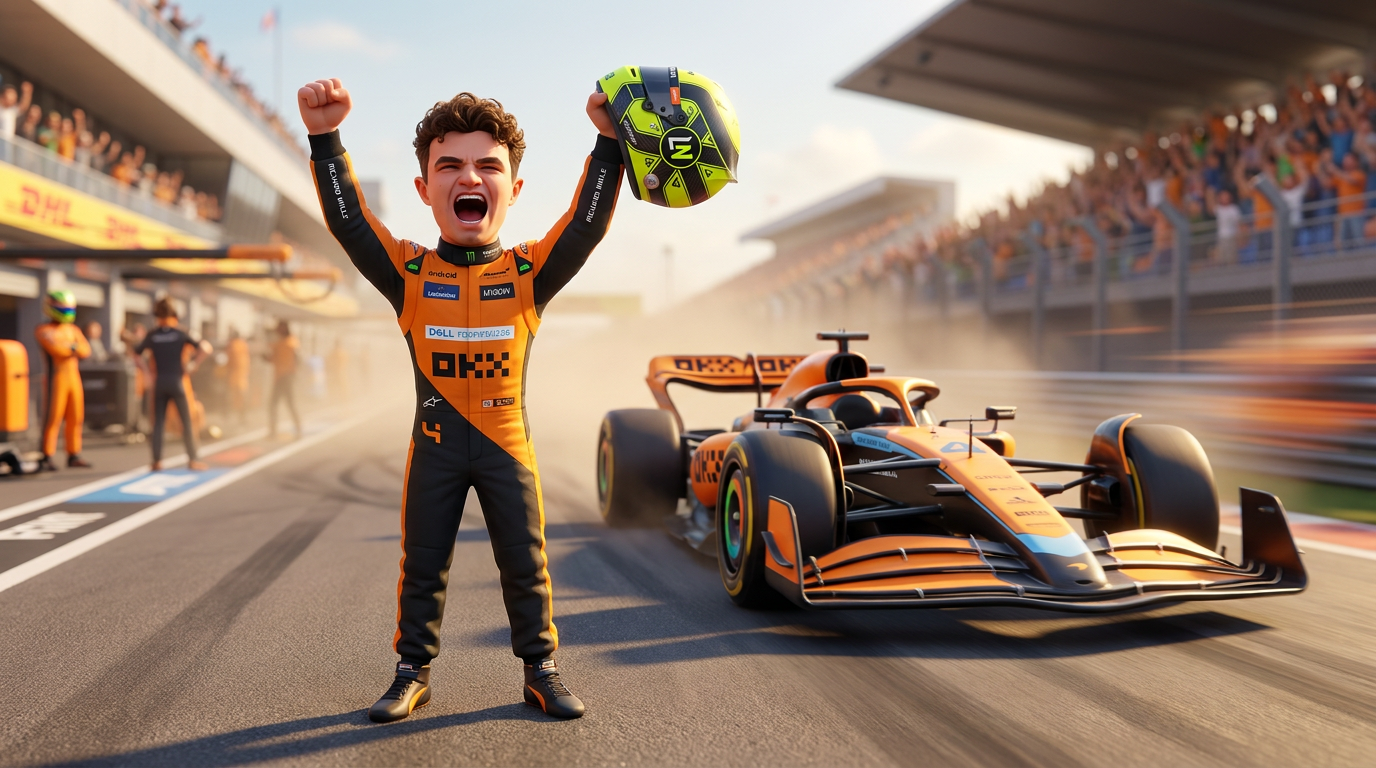
Hungary changed that. A substantial McLaren upgrade helped Norris take pole position and turn it into victory, ending the team’s wait at round 11 and offering concrete evidence that its development programme is heading in the right direction.
The result mattered beyond one successful Sunday. McLaren needed evidence that its work could deliver a genuine competitive step instead of simply narrowing the deficit. Norris said the win reflected the team’s focus on improving its own performance, though he stressed that further development is required to fight consistently.
“We’re starting to see the benefits of that hard work, our win in Hungary came as a result of strong upgrades to the car, but we need to keep pushing and keep developing if we’re going to continue to fight for wins.”
Norris separates performance from results
The first half of 2026 has made Norris separate the standard of his driving from what the car has enabled him to achieve. After 11 rounds, he is fifth in the Drivers’ Championship with 128 points, 91 behind Mercedes leader Kimi Antonelli on 219.
That position is a long way from Norris’s title-winning 2025 campaign, when he recovered from qualifying errors and a collision with McLaren team-mate Oscar Piastri to beat both the Australian and Red Bull’s Max Verstappen. Even so, Norris believes his personal level during the first half of this season has been higher.
“I feel like I’ve driven better in this half of the season than I probably did to this point last year, to a certain extent, but sadly I’m not leading the championship.”
Norris believes he has extracted the available potential, despite receiving fewer rewards for that execution. His view reflects a lasting Formula 1 reality: better driving does not ensure better results when the competitive order changes.
Norris entered the new rules era as champion and expected to defend his crown. Instead, the season has required him to limit losses and retain confidence while helping McLaren pinpoint where its package is deficient, all as Mercedes establishes a commanding advantage.
Championship mathematics remain unforgiving
Hungary has revived McLaren’s hopes of winning further races, but the standings illustrate the size of its broader challenge. The team is third in the Teams’ Championship with 220 points, 159 behind Mercedes after the leader collected 379 through the opening 11 rounds.
Norris also knows that matching Mercedes is different from reversing the advantage it built earlier in the season. McLaren may now reach a similar level of performance at selected circuits, but it is unlikely to hold a comparable margin over its rival for an extended run.
That leaves a drivers’ title recovery especially difficult. Norris has 91 points to make up and must also deal with the cars and drivers separating him from Antonelli. One victory has lifted the mood at McLaren. It has not removed the cost of the team’s slow start.
His call for patience is practical, rather than caution for its own sake. Pursuing an instant and dramatic turnaround risks taking attention away from the incremental improvements McLaren needs to compete across different circuit types.
Zandvoort will test the upgrade’s range
The next issue is whether Hungary suited McLaren’s revised package or exposed a platform that can perform throughout the remaining calendar. The Dutch Grand Prix at Zandvoort on August 23 will be the next major test following the summer break.
McLaren knows the car still has weaknesses in certain areas, and Norris has pointed to several coming races where he is not fully confident. Hungary’s layout and conditions produced one competitive picture. Zandvoort, followed by a varied run of circuits, will indicate whether the upgrade has widened the car’s operating window.
Norris hopes further wins are available, but he is avoiding firm forecasts. Experience has taught him restraint. Performance can shift rapidly under new regulations, and McLaren needs repeatable results before it can regard Budapest as the beginning of a sustained push.
“One thing I’ve learned for sure is just to have no expectations of the future and just to work in the present.”
McLaren’s recovery turns into a development race
McLaren no longer needs to show that it can win in 2026, because Hungary answered that question. Its challenge is turning a promising upgrade into a dependable base for the second half of the season as its rivals continue to develop their cars.
For Norris, the task is to maintain the execution he believes has exceeded his championship-winning form, even with little encouragement in the standings. McLaren must address its remaining weaknesses without treating one successful weekend as proof that last season’s competitive position has returned.
Budapest has supplied the team with momentum, technical validation and the first victory of its title defence. Zandvoort will start to show how well that progress transfers. If McLaren repeats its Hungarian pace at contrasting circuits, patience may produce several further wins in 2026 and lay the groundwork for a more complete championship challenge.